![MaritimeJournal[Seawork]](https://www.maritimejournal.com/wp-content/uploads/2026/09/MaritimeJournalSeawork.svg)

Saturation diver shares story of survival after 41 minutes without oxygen
A saturation diver who survived for 41 minutes after his umbilical cable snapped 90 metres below sea level shared his story with delegates at a recent conference.
The Netflix documentary Last Breath tells the story of Chris Lemons and a remarkable story of survival, teamwork and never giving up hope.
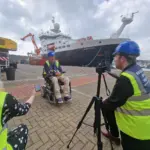
Lemons last month presented his story at the IMCA conference in Utrecht.
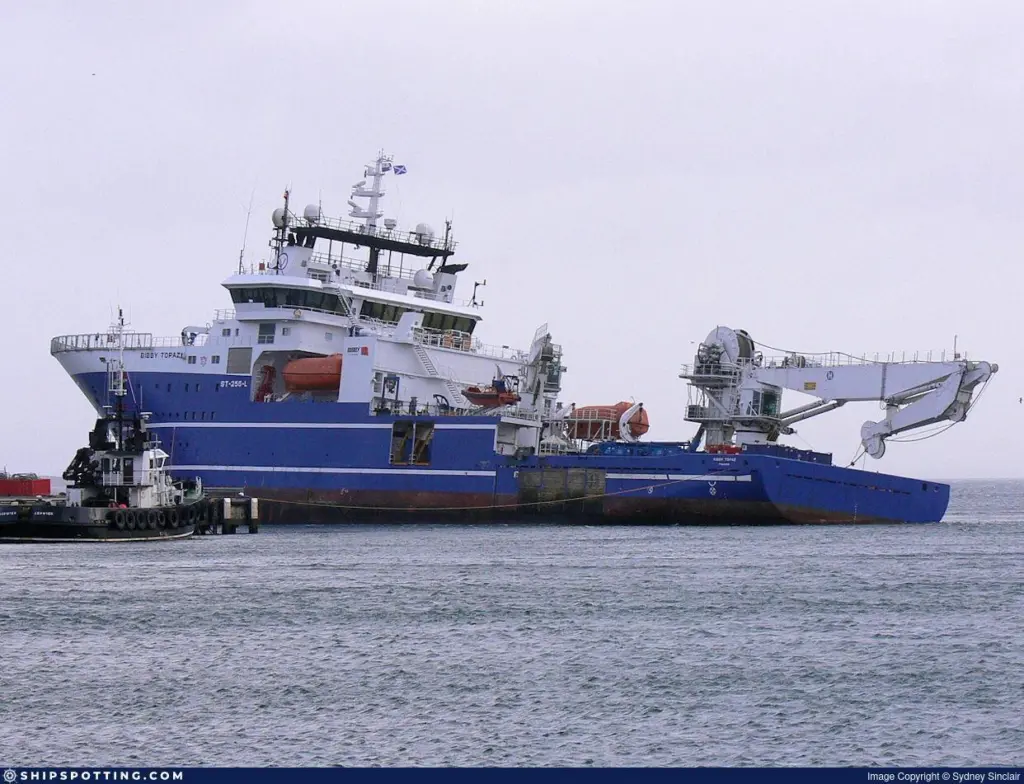
On September 12, 2012, the vessel Topaz, formerly owned by Bibby Marine and now owned by Boskalis, had taken a team 90 miles east of Aberdeen to work on a well template 91 metres beneath the surface of the North Sea.
Weather conditions were rough – 35-knot winds and a six-metre swell – but not too unusual, and with its dynamic positioning system and back-up power, Topaz should have coped.
As usual, the team were housed in a compression chamber for 28 days, using a diving bell to get to and from their subsea site to do the work.
“We were pushing the envelope because the water doesn’t affect us that much on the seabed,” said Lemons. “There was no land anywhere near, it was open water. On the bottom it was a normal day at the office.”
But unknown to them, back on board the mothership, all hell had broken loose – as DP officer Michal Cichorski said: “I saw alarms I’d never seen before – more faults coming one by one, losing control of the vessel, losing position.”
The bridge had lost control of all navigation systems and Topaz was drifting, with no more control than a sailboat. Dive supervisor Craig Frederick decided he wanted the divers back on the bell as soon as possible.
Back at the ‘office’, Lemons and Yuasa were just about to remove a section of pipework on the underwater structure – the visibility was fairly good, the diving bell was visible, and it was quite run-of-the-mill work – when an alarm sounded.
“Alarms are not that unusual to hear as a diver – there are often CO2 alarms, oxygen alarms, testing alarms,” said Lemons. “When we hear alarms it isn’t a cause for panic, but we pricked our ears up.
“And then we received an order to put our tools down and get back to the diving bell. Something in his voice told us this wasn’t a drill. We did as he said, put tools down and started to make our way out of the structure.”
Diving bell disappears
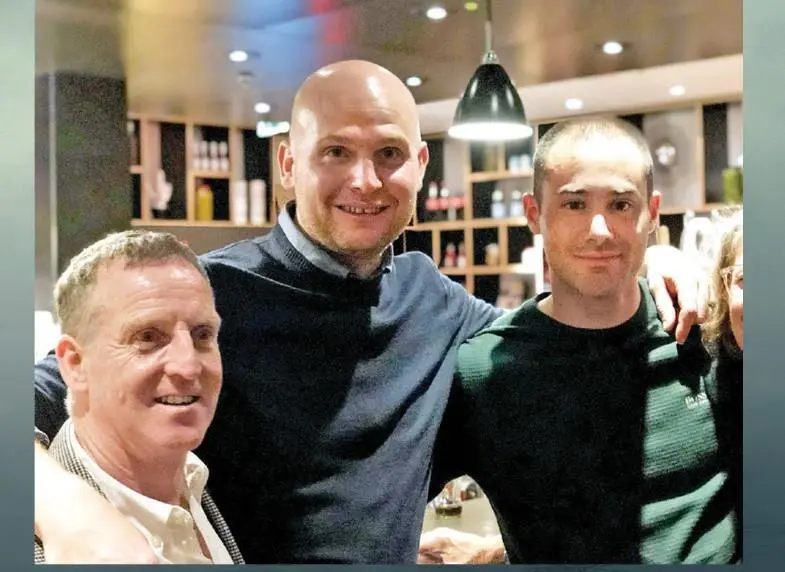
Chris Lemons and Dave Yuasa made their way off the structure and back to the seabed quite quickly – but when they got there, the diving bell was no longer where they had left it because a now powerless Topaz had dragged it so that the structure was now between it and the divers.
It meant they had to climb back over the structure to get to the bell – and this is where Lemons came unstuck – or rather, stuck.
“As I climbed to the top it created a loop,” he said. “I got caught on something on the structure and at that point I knew I was in serious trouble. The umbilical was getting tighter and tighter. On the bridge the DPS on the Topaz had failed. Those computer systems had a back-up, but it failed. It was a single point failure we didn’t think could happen. The computers lost control of the vessel and we were at the mercy of the conditions. The ship was moving away and I was trapped on the structure.”
The umbilical grew tighter and tighter, and back in the diving bell, Duncan Allcock thought the umbilical equipment would be pulled through the floor.
The cable is 50 metres long – and the vessel was now 50 metres away.
“I was an anchor for an eight-tonne vessel which continued to move away,” said Lemons. “All I wanted was for them to give me more slack and they were telling me to get back to the diving bell. Then the communications cable was cut and we couldn’t hear each other.
“It was a very lonely moment.”
Last breath
The gas hose in the umbilical was so strained that gas couldn’t flow through it, so Lemons switched on an emergency supply by turning the knob on his helmet. That gives about nine minutes of oxygen.
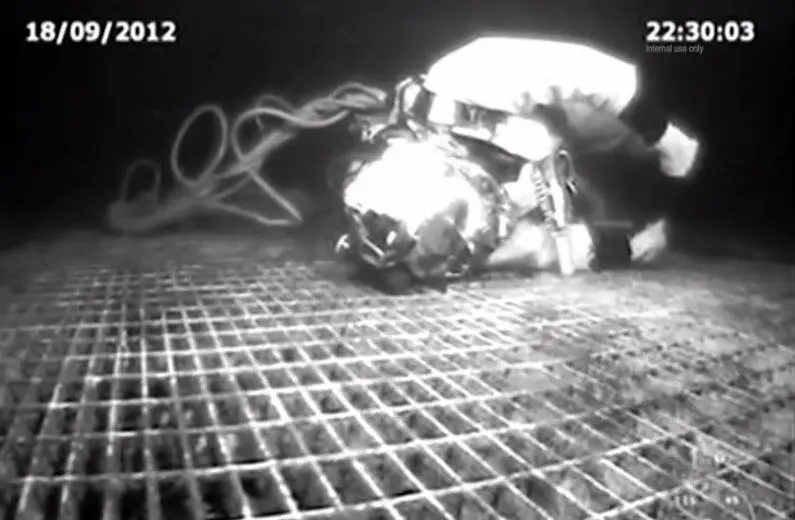
“I could hear a noise that sounded like something was about to break,” said Lemons. “And the umbilical broke. Dave pulled away – I could still see the light on his helmet, then that disappeared. I was tethered to a vessel moving uncontrollably and I had just nine minutes of air.
“I fell down like an upturned turtle in utter disbelief.”
Yuasa had made it back to the bell, which was being dragged along by the unresponsive Topaz.
Lemons got to his feet and climbed back on top of the structure, hoping to see the diving bell – but he was in pitch blackness.
In the bell, Allcock was pulling the other end of the umbilical, knowing there was no one on the end of it.
Lemons knew he had used up about six minutes of the emergency supply, and began to wonder if this was how it all ended.
It had a calming effect, he said – and then the CO2 that had built up in his helmet, he believes, probably knocked him out. And that’s what the footage shows – a twitching diver on top of the structure, not responding.
The only fully functioning piece of equipment on Topaz was an ROV, which finally sent feed of Lemons on the structure, and after a reboot the mothership regained control, some 27 minutes after the cable had snapped. She returned to the scene.
Dave Yuasa could now see Lemons – who was no longer twitching – and immediately recovered his diving mate, some 41 minutes after the cable had been severed.
Back in the bell
On re-entering the bell, Allcock immediately attempted to give him the kiss of life – but Chris Lemons began breathing straight away.
As he warmed up, there was a bit of vomiting and some signs of shock, but there was nothing really wrong with him. He suspects the deep-water pressure may have put his body into some kind of hibernation mode, but he doesn’t really know.
“What it has emphasised is the importance of procedures and drills and they probably helped to make instinctive decisions, freeing up the head space to make decisions in uncharted territory,” he said.
“But to recover undamaged seems more miraculous than the survival itself.”
Related Articles
 OTHER NEWS
 MARINE CIVILS
 MARINE CIVILS