

Thermal Imaging for Calais Port Security
The French cross-channel ferry Port of Calaissaw more than 11m passengers through its facilities last year whilst freighttraffic also increased by a remarkable 11.8% to nearly 2m trucks.
The Calais Chamber of Commerce and Industry, which is the concessionaire of the Port of Calais, is well aware of the security implications of the nearby Channel Tunnel and the number of people trying to use the Port for illegal entry into the UK.
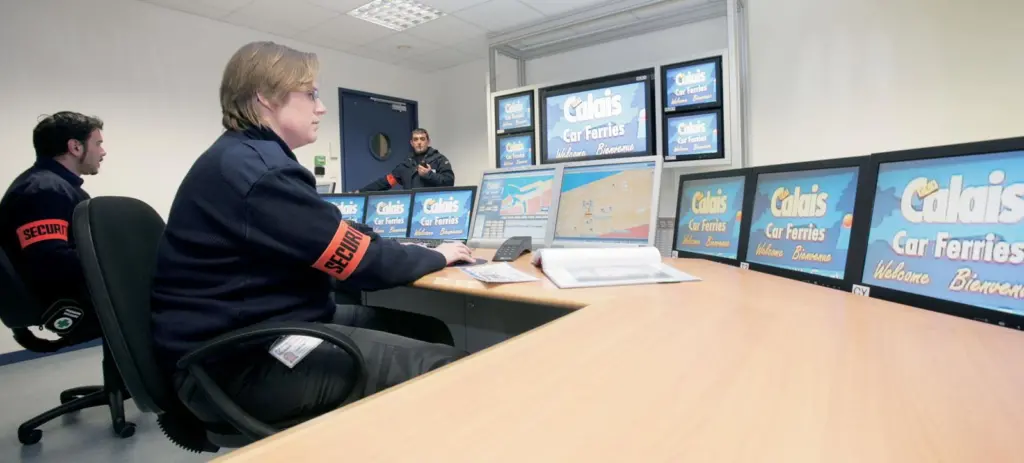
In order to monitor activity in and around the Port during daytime, more than 40 CCTV cameras have been installed, providing valuable information to operators sitting in the control room of the Security Operations Centre. The challenge was how to obtain effective security at night time and in fog, rain or snow, when CCTV cameras cannot provide a clear image.
When writing the specification for its security network, the Port’s Security Department specified that, apart from the CCTV cameras and other measures such as fences, there must be a system in place to deliver clear images in adverse conditions. At that time, thermal imaging cameras were still very expensive because good range performance required a cooled detector.
Last year, Herve Couret, port facility security officer and manager of the Port Security Department, met the French distributor of FLIR Systems at a trade show, where it was explained that thermal imaging cameras had progressed and can now be equipped with uncooled microbolometer detectors that provide excellent range performance at much lower cost. Not only are they less expensive than cameras with a cooled detector, the fact that they do not contain any moving parts considerably reduces downtime and maintenance costs and increases their life cycle.
In subsequent trials, FLIR Systems SR-50 thermal imaging cameras demonstrated their ability to see the head and shoulders of a person floating in the water at a distance of over 400m. The Port purchased two of the cameras and pole mounted them on standard pan/tilt mechanisms so they can overlook an entire area. Their range performance enables them to overlook the shoreline from where attempts are made to cross the Channel illegally.
The two cameras were integrated into the security network of the Port of Calais by Thales Security Systems using common standards. Working within the TCP/IP network, they make it possible for any client embedded workstation to see real time images and can be easily manipulated with a standard joystick.
The thermal imaging cameras also help the Port to comply with the ISPS Code and the ‘Le Touquet Treaty’, a comprehensive set of measures to enhance the security of ships and port facilities.