


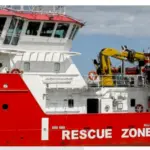



New Cummins engines for oil response vessel
Cummins has provided interesting background to what is a common shipyard procedure, extending a vessel’s life by replacing its engines.
Unlike cargo vessels, for example, tugs and workboats are expected to lead a long and profitable life. Changing trade patterns and efficiency challenges can see many cargo vessels reach their ‘best before’ date sooner than tugs, which are traditionally built to high specifications reflecting the often arduous nature of their work.
Machinery is one area, however, where upgrading to more efficient and perhaps more powerful engines can give an otherwise aged tug or workboat a new lease of life; availability of spares for older engines can also be an issue for a vessel that is probably mortgage free and otherwise still has something left to give.
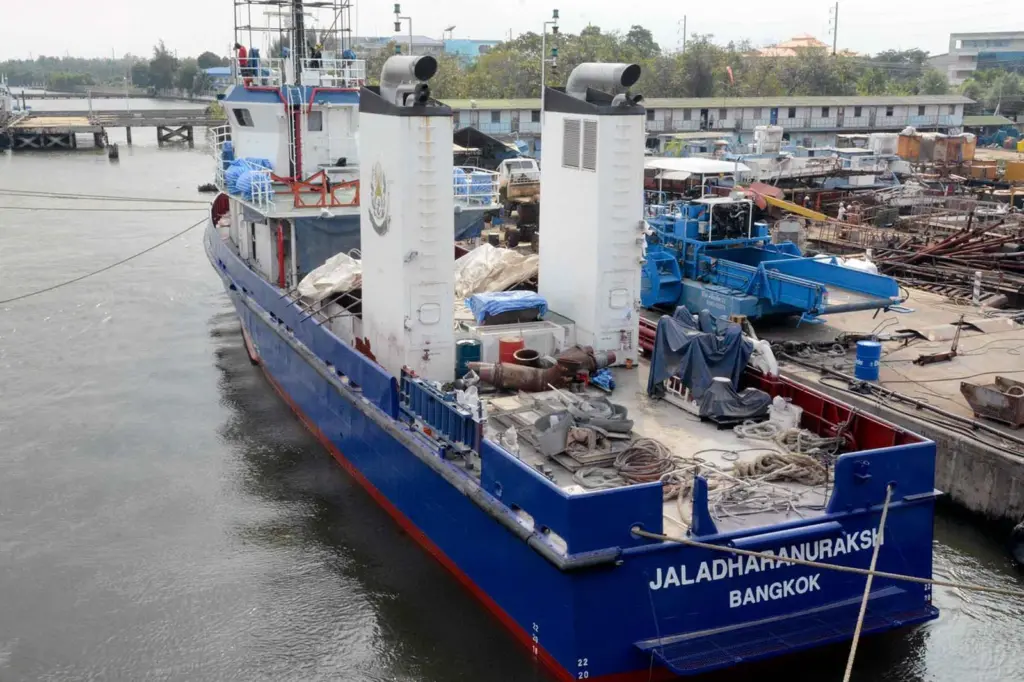
Thailand’s Marine Department faced this situation when its oil response vessel Jaladharanuraksh had to be laid up as parts for its original engines became difficult to find.
After careful thought it was decided to re-engine the vessel with Cummins QSK60 M main engines, developing 5,400hp in total.
Each engine is connected to shafts with controllable pitch propellers via new Reintjes LAF743 gearboxes. The project also involved the overhaul of Jaladharanuraksh’s gensets.
The work was entrusted to Thailand’s Asian Marine Services PCL (ASIMAR), where new engines supplied by Cummins DKSH (Thailand) were officially blessed in a traditional Buddhist ceremony. ASIMAR was established in 1981 as a marine survey company, later expanding into the ship repair and shipbuilding sectors, with recent activities including the launch of a Robert Allan Ltd designed tug for the Royal Thai Navy.
One challenge with re-engining is to get the alignment right, and with the vessel in a floating drydock the shafts were removed and inspected.
Guided by lasers, the newly installed engines were then aligned with the shaft tunnel and after the shafts were re-installed, Jaladharanuraksh was returned to the water. The shipyard team can then carry out a more precise alignment that allows for changes that affect the hull from being in the cooling water and with full flotation support of the water on the hull.
In addition to work in the vessel’s machinery space, the opportunity was taken to check out the wheelhouse electronics from the radar to the echo sounder and gyro compass, where they required replacement by newer models.
Related Articles
 TUGS & SALVAGE
 EQUIPMENT
 MARINE CONSTRUCTION