

Incat Crowther advances hydrogen ferry design
Naval architects at Incat Crowther have started developing a hydrogen fuel cell-electric fast ferry design for New York.
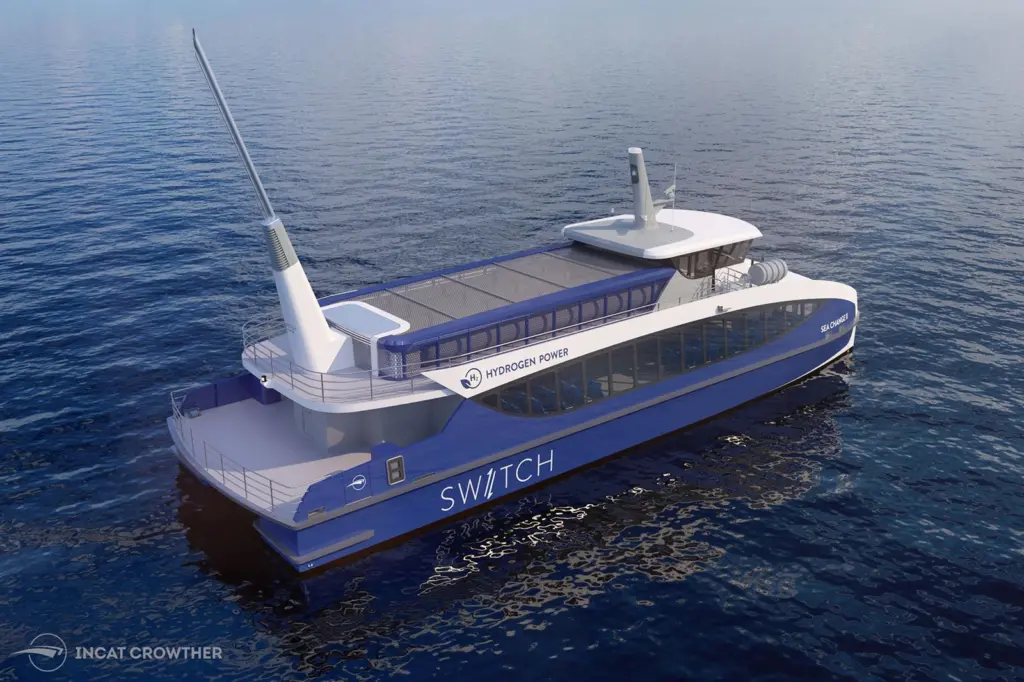
Incat is working with the vessel developer Switch Maritime, which is based in New York, with plans to deploy a 28-metre ZEF-150 demonstration vessel at the Brooklyn Navy Yard.
The new vessel, says Incat, is being designed to align with local operational requirements and pre-existing infrastructure in the same way as a conventional diesel vessel.
“This means parallel service speeds, a daily bunkering schedule, no need to increase dwell time or alter service to account for vessel charging, and no investment in costly shoreside charging infrastructure and power grid upgrades,” Incat says.
“The drop-in nature of the technology ensures the new hydrogen fuel cell-electric ferry will seamlessly integrate into current operations, rather than requiring schedule changes or a system-wide reorientation.
“In this project, vessel modernisation and emission reduction will be achieved through the deployment of hydrogen fuel over other low and zero emission technologies proving there is no one-size-fits-all approach to achieving these outcomes. The use of hydrogen fuel in this case offers considerable flexibility and presents a zero emission transport solution for fleets with longer range requirements and those operating in areas where shoreside charging for battery-electric propulsion may not be technically or economically feasible.”
The 150-passenger ferry will carry 720kg of stored, compressed hydrogen to allow it to operate on a range of routes across New York ferry networks, with a full day’s energy capacity, Incat says.
Sea change
The vessel follows the successful delivery of Sea Change, a hydrogen fuel cell-powered electric high-speed ferry that is up and running in the California Bay area.
“The design of this vessel showcases a feasible solution for mass transit operators looking to begin the fleet decarbonisation process, while maintaining existing operational profiles,” said Incat Crowther technical manager Dan Mace.
“The design of this vessel showcases a feasible solution for mass transit operators looking to begin the fleet decarbonisation process, while maintaining existing operational profiles.”