![MaritimeJournal[Seawork]](https://www.maritimejournal.com/wp-content/uploads/2026/09/MaritimeJournalSeawork.svg)



Sweden works to electrify its ferry routes
The Swedish Transport Administration, Trafikverket, is currently electrifying many ferries as part of its Vision 45 plan for a climate-neutral ferry service by 2045.
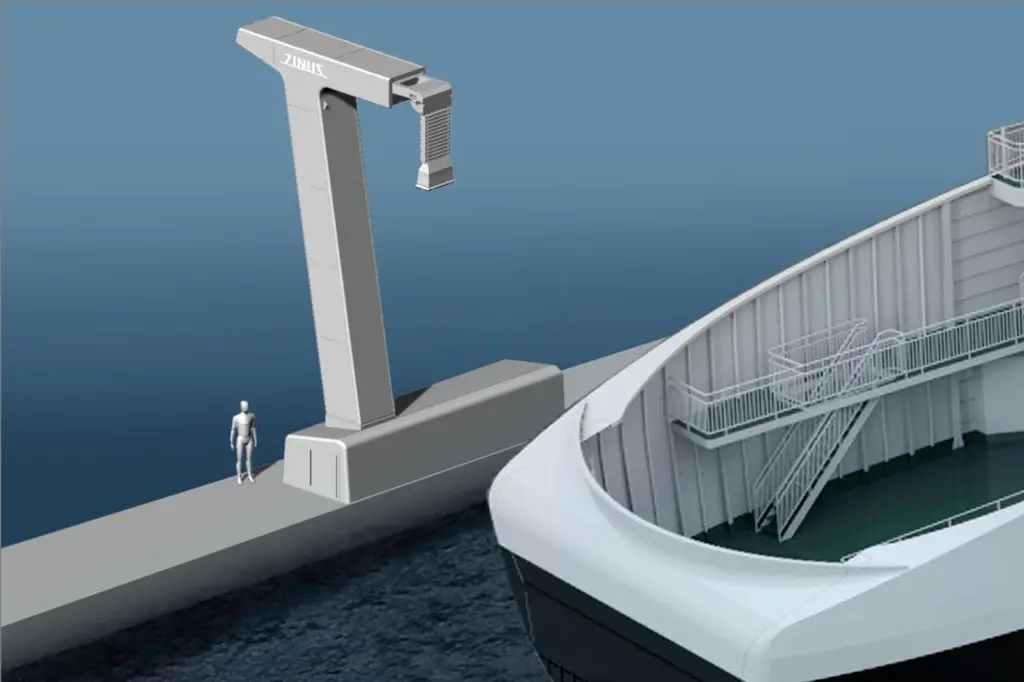
As part of the process, METS Technology, main contractor and integrator of the Gullmarsleden ferry route in Lysekil, Sweden, has awarded a cable management system to Zinus who will deliver a ZPP800, fully autonomous charging tower for the route.
”Sweden is a market of growing interest to Zinus and we look forward to enable efficient autonomous charging to a growing number of ferry stretches,” said Endre Eidsvik, CEO of Zinus.
“What is particularly nice with this project, is that it includes our new solution for a multi-axial connection that will ensure to-the-point connection at any given tidal range in addition to a larger longitudinal docking range. There is an increasing demand for this system which has been offered to several projects already, but Trafikverket will be the first to take advantage of the innovation.”
Clean ferry vision
Since its establishment in 2018, Zinus has launched several innovations to better serve ports and vessels with an efficient and practical cable management system.
The ZPP800 tower with the multi-axial connecting point, destined for this project, is yet another milestone for the company as this will open for autonomous charging also in waters with very large tidal difference.
The complete charging station installation will be fully automated and eliminates the need to manually moor or connect. This makes the process more efficient and makes handling easier for the crew on board.
Upon connection, the ferry will be able to charge at up to three megawatts, equivalent to the capacity of 12 fast chargers for cars.
What makes this charging station unique is that it not only handles the charging, but also includes the automated mooring function for the ferries, which contributes to a significant reduction in energy consumption.
METS undertaking as main contractor also includes an extensive design and build part that includes the construction of buildings for onshore charging equipment, piling and construction of platforms in the water, as well as the conversion of existing ferries to enable connection to the powerful 3 MW charging.
Related Articles
 INDUSTRY NEWS
 OTHER NEWS
 MERGERS & ACQUISITIONS