![MaritimeJournal[Seawork]](https://www.maritimejournal.com/wp-content/uploads/2026/09/MaritimeJournalSeawork.svg)

ZeroUSV reveals shorter timeframe for larger vessel build
UK-based ZeroUSV is building an uncrewed surface vessel (USV) that it says proves it and other SMEs can deliver ultra long-distance, high payload autonomous vessels in months rather than years.The vessel, Oceanus17, is a larger, longer-range successor to the company’s Oceanus12 class and can remain out at sea for around 50 days at a time.
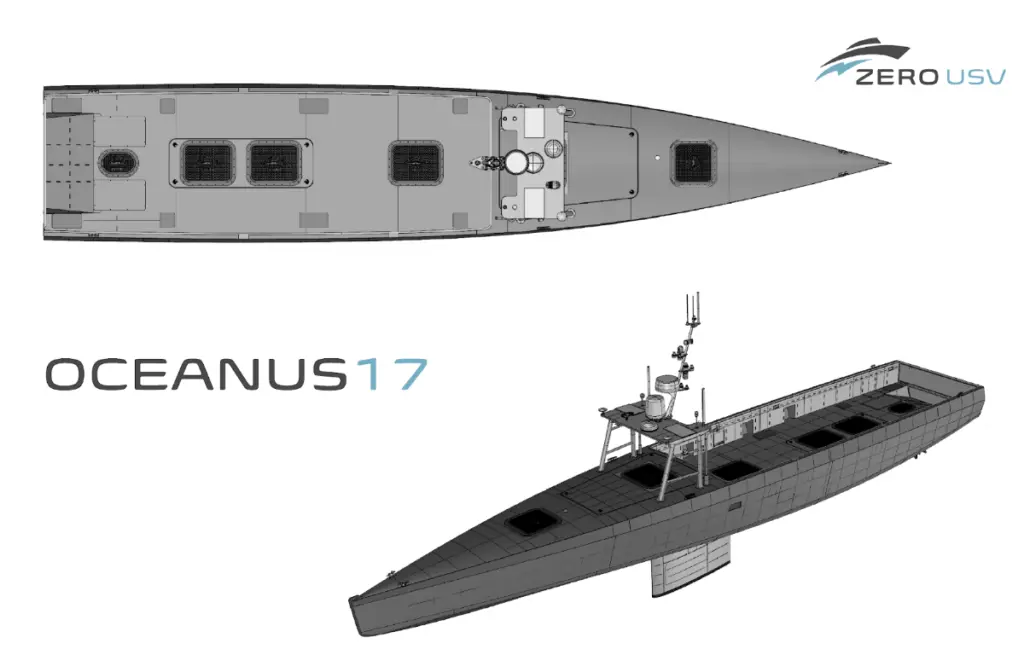
Under build at Manor Marine in Portland, trials, certification and launch milestones will happen next year as the firm pushes its development of maritime autonomous platforms.
The vessel, Oceanus17, is a larger, longer-range successor to the company’s Oceanus12 class and is being developed entirely within the UK supply chain.
This and a ‘spiral development approach’, in which design, engineering and construction move forward in parallel and trial feedback is fed into the build process, means traditional defence development cycles can be shortened, the company believes.
“The platform is being built entirely in the UK, ensuring intellectual property, skills and manufacturing value remain onshore, while keeping sensitive autonomy, data handling and control systems under UK authority,” the company says. “This approach aligns with the Defence Industrial Strategy, strengthening industrial resilience, supporting regional shipbuilding hubs, and delivering cutting edge dual-use technology.”
The vessel features an aluminium hull and has been designed for unlimited area operations, including sustained deployments in harsh Atlantic conditions. Zero USV says it is intended to remain at sea for more than 50 days at a time and as with its predecessor, the platform incorporates dual redundancy in critical systems to reduce the risk of single-point failures during long missions.
Oceanus17 will be fitted as standard with GuardianAI, an autonomous navigation system developed by Plymouth-based MarineAI. The system provides level-4 autonomy, enabling the vessel to operate independently or as part of a coordinated group of autonomous platforms.
ZeroUSV expects the first Oceanus17 to be launched in time for Seawork 2026 in June, where it is intended to be shown with an MCA Workboat Code 3 certificate.
The programme is positioned as an example of how UK shipbuilders and technology firms can deliver large autonomous vessels on compressed timelines, using domestic design, manufacturing and testing capability.
Related Articles
 OTHER NEWS
 ACCESSORIES & EQUIPMENT
 SPECIAL REPORTS