

Ireland is rapidly emerging as a key player in the development of wave and tidal energy technologies. Late last year, Brian Motherway, the outgoing CEO of the Sustainable Energy Authority of Ireland (SEAI), predicted that the country''s marine energy market could be worth €15bn to Ireland''s economy by 2050.
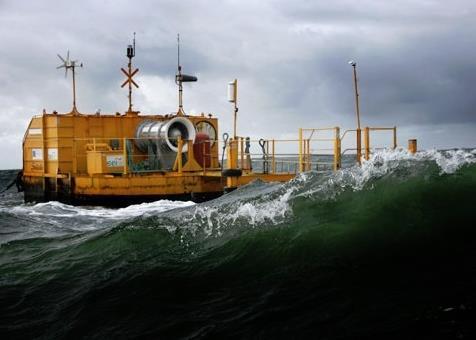
The burgeoning tidal and wave energy sectors in the republic also received a further boost late last year, when the SEAI announced that it had awarded funding to the tune of €4.3 million for the further development and testing of three domestically produced marine energy technologies .
So, what types of wave and tidal technologies are currently under development or testing in Ireland? And what are the prospects for the future growth of the sector?
'ABUNDANT RESOURCES'
According to Dr Brendan Cahill, Programme Manager - Ocean Energy R&D at the SEAI, Ireland's ocean resources provide it with a 'huge economic opportunity' - and he points out that the country possesses a sea area some ten times its landmass, amounting to what he describes as 'abundant' wave, offshore wind and tidal energy resources. Moreover, the Offshore Renewable Energy Development Plan (OREDP) (see box-out), published by the Department of Communications, Energy and Natural Resources (DCENR) in February 2014, suggests that a fully developed island of Ireland ocean energy sector, feeding into both home and export markets, could produce a total Net Present Value (NPV) of around €9 billion and provide 'many thousands of jobs to both the Irish and Northern Irish economies.'
In order to help in exploiting this potential, Cahill reveals that the SEAI is actively supporting the development of wave and tidal energy technologies in Ireland through the Prototype Development Fund programme. Fifteen new projects were awarded grants totalling €4.3M through the Fund in 2015, with three successful applicants alone securing €3.5million to develop novel technologies. These include Ocean Energy - which secured €2.3million to design and build a full-scale version of their OE Buoy wave energy converter that will be deployed and tested at the US Navy Wave Energy Test Site in Hawaii - as well as SeaPower, which will receive over €1million to test their wave energy converter at quarter scale in Galway Bay, and GKinetic Energy, which was awarded almost €200,000 to conduct towing tests of their tidal turbine system in Limerick Docks. Other projects awarded funding in the Republic last year include the physical tank testing of a range of early stage wave energy convertor concepts and feasibility studies of potential deployment sites.
"Ireland has a unique ladder of development and test site infrastructure to support these projects and significant steps continue to be taken to further develop these facilities," says Cahill.
INNOVATION HUB
Such 'significant steps' include the recent establishment of the Centre for Marine and Renewable Energy Ireland (MaREI), a marine and energy-based research, development and innovation hub at Ringaskiddy, Cork - which was officially opened by Taoiseach Enda Kenny during July, 2015. The Building has provision for 135 researchers and support staff in offices and across a suite of start-of-the-art test tanks and dedicated workshops. It also houses Lir, Ireland's National Ocean Test Facility, which will house 4 different wave tanks and a suite of electrical test infrastructure. Cahill reveals that additional funding was also secured recently to allow the addition of an advanced wave basin at the site, known as the 'Open Ocean Emulator,' to accurately replicate real ocean wave conditions.
Elsewhere, Ireland's quarter scale ocean energy test site, located within the Galway Bay Marine and Renewable Energy Test Site has provided test and validation facilities for a number of wave energy devices and components to date. Cahill says that 2015 also saw the installation of a subsea observatory at the site, with a four kilometre cable providing a physical link to the shore at Spiddal, Co. Galway.
"The ocean observatory enables the use of cameras, probes and sensors to permit continuous and remote live underwater monitoring. The cable supplies power to the site and allows unlimited data transfer from the site for researchers testing innovative marine technology, including renewable ocean energy devices," he adds.
Another key development is the Atlantic Marine Energy Test Site (AMETS),which is being developed by SEAI to facilitate testing of full scale wave energy converters in an open and energetic ocean environment. AMETS will be located off Annagh Head, west of Belmullet in County Mayo and will be connected to the national grid.
Separately, Apple has also agreed a Memorandum of Understanding with SEAI, which commits €1 million to help developers who receive an SEAI grant to test their ocean energy prototypes in the Galway Bay Ocean Energy Test Site. This coincided with Apple's announcement of a new data centre in Galway that will use 100% renewable electricity.
BUOYANT PROSPECTS
According to Vincent McCormack, Managing Director of GKinetic Energy, one of the main beneficiaries of last years' multi-million Euro SEAI support, the Irish wave and tidal energy sector is currently 'booming' and starting to gather a great deal of momentum - and he reveals that the support and reception the GKinetic project has received has been 'incredibly supportive, encouraging and highly motivating.'
"Ireland houses some of the very best levels of expertise in industry, why would you need to go anywhere else?" he says.
For McCormack, the whole area of renewable marine energy, particularly tidal, is of 'huge interest' at the moment - largely due to the massive opportunities he claims it presents - and he reveals that the need to develop cheaper technologies for small-capacity and low-head application to enable the exploitation of smaller scale hydro energy has now been 'widely recognised.'
"The untapped potential an efficient hydrokinetic device would unlock would make a significant contribution to future energy needs and open up new market opportunities in the hydrokinetic generation industry," he says.
POWER TAKE OFF
Another interesting development in Ireland is the innovative power take off (PTO) technology created by Limerick Wave. The device, which is designed to harness energy from the ocean in the protected environment of an enclosed nacelle, uses a combination of existing technologies including a gearbox and a flywheel. As Dr Patrick Walsh, CEO at Limerick Wave, explains, the company's PTO technology has already been tested by the Hydraulic Maritime Research Centre (HMRC) in Ireland, which confirmed that it has a impressive power conversion efficiency - from mechanical wave movement to electrical generation - of 70%. According to Walsh, the technology is suitable for integration into most common Wave Energy Converter (WEC) types, including hinged attenuators and point absorber buoys, or anything with relative motion at sea.
Limerick Wave is currently working alongside SeaPower on the SEAI funded project to install a ¼ scale WEC in Galway Bay this year - and is also part of a team led by Romax Limited, which has recently received 100% funding from Wave Energy Scotland (WES) for a feasibility study on PTO technology.
PROMISING FUTURE
In Walsh's view, the prospects for the ongoing growth of the Irish wave and tidal sector are 'very promising.' However, in order to help the sector to maximise its potential, he believes that the authorities in Ireland could do a lot worse than emulate the model of early device development that has already been success elsewhere in countries like Australia and Scotland.
Walsh says that Limerick Wave and four other members of the Irish Wave Energy Developers Association (IWEDA) - which represents 11 early stage Irish device developers - have already been successful in applying for funding from Wave Energy Scotland (WES) global calls, while a further two members have secured funding from global United States calls.
"We could copy the initiatives for renewable energy that are championed in Australia. These initiatives have prompted a major move by developers and investment groups funding projects there because of the financial security afforded to them," he says.
"We could model early device development on the WES model, which funded, staffed and put out two calls within a year. If they can do this why not SEAI?" he adds.
Elsewhere, Cahill points out that, although the energy resource off the Irish coast is 'unquestionable,' he still believes that challenges remain in developing the technologies to harness it. In particular, he argues that wave devices are 'still too expensive' to compete with existing energy technologies like wind, solar and bioenergy.
"Even the leading devices have yet to be fully proven in the range of conditions they will experience when deployed along our west coast. Continued public funding support to facilitate the innovations required to improve the performance and reliability of these systems is essential, particularly in the current absence of significant private investment," he says.
"Collaboration and partnership between the various stakeholders involved in this sector in Ireland is also essential, as well as cooperation with the other countries pursuing the development of ocean energy technologies," he adds.
In spite of these challenges, Cahill remains confident that the 'economic prize' available by exploiting Ireland's ocean energy resource is 'huge' - and he is keen to stress that marine energy could also 'contribute strongly' to reductions in the nations' greenhouse gas emissions, as well as improve the security of its energy supply.
"While the challenge of getting to a commercial scale of deployment is significant, there is now a real sense of momentum gathering in the sector. 2015 was a hugely successful year for ocean energy in Ireland, with a record number of projects supported through the SEAI prototype development fund, significant developments across our range of test sites, the announcement of Apple's support for device testing in Galway Bay and hosting of the Ocean Energy Europe conference in Crooke Park. There is a genuinely collaborative approach in place here, which augurs well for continued success in 2016 and beyond," he adds.
PLANNING AHEAD
A key driver in the ongoing development of the wave and tidal energy sectors in Ireland has been the Offshore Renewable Energy Development Plan (OREDP), which highlights the potential opportunities for the country in relation to marine energy - and sets out the key principles, specific actions and enablers needed to deliver upon Ireland's significant potential in this area.
As Cahill explains, the Offshore Renewable Energy Steering Group (ORESG) has also been established to actively oversee the implementation of the OREDP. This Steering Group consists of the main government departments and agencies with roles and responsibilities that relate to energy and the marine environment, as well as developers and broader interest and user groups when necessary.
"One early success from this collaboration was the launch of the Ocean Energy Portal in 2014 with input from almost 30 partners. The portal acts as a sign-post to guide interested parties, internal and from abroad, through the supports available here and communicates the message that Ireland is 'open for business' in ocean energy," says Cahill.
By Andrew Williams