![MaritimeJournal[Seawork]](https://www.maritimejournal.com/wp-content/uploads/2026/09/MaritimeJournalSeawork.svg)





Sediment surveys underpin top trading year
Geomarine consultant Partrac has reported a busy 2012 as it enters its 10th year of trading.
Technical director Kevin Black said: “We have just completed internal reviews for our 2012 Annual Report, and last year was an exciting year for us with projects in every area of our business but particularly in the geomarine/dredging sector. The projects, some of which are ongoing, provide a firm foundation for continued success within the dredging industry in 2013, and we look forward to working with our clients this year to help them deliver consented projects”.
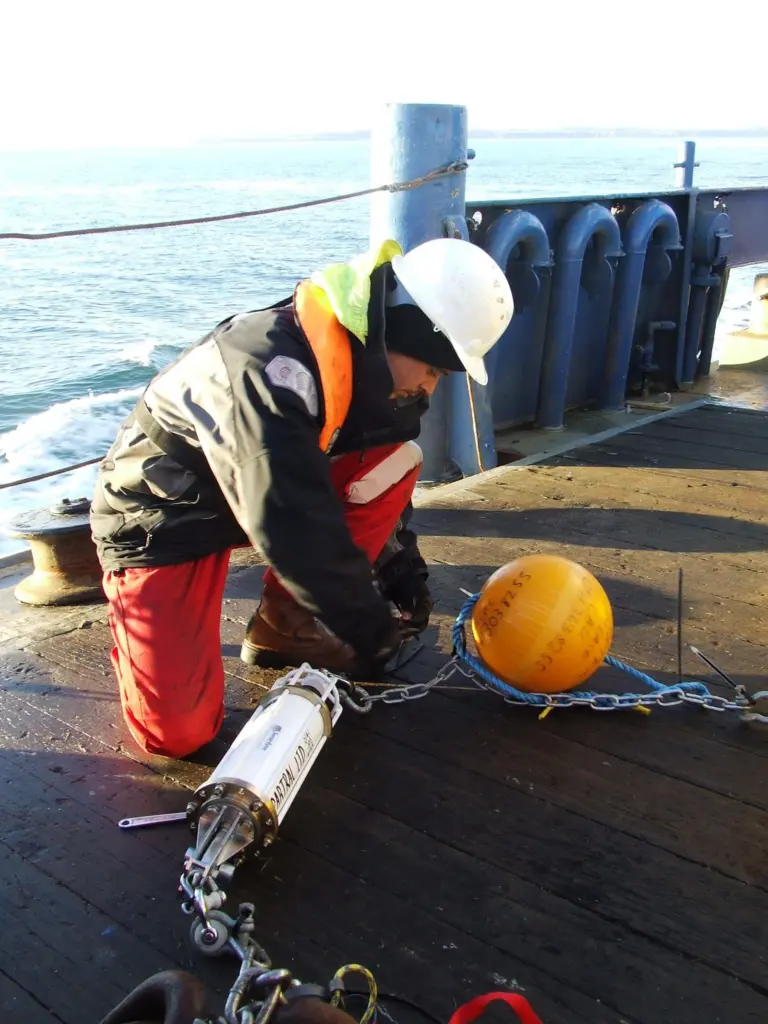
2012 saw Partrac involved in a number of important industry projects. Domestically, in the UK, the company was commissioned within several new port development frameworks to provide sediment monitoring surveys to measure natural (estuarine) and anthropogenically-related (dredging, reclamation related) sediment flux using the ADCP-Sediview methodology, and to provide static, long term real-time turbidity assessments in support of compliance monitoring for capital dredging works.
The survey team has clocked up over 150 ADCP-Sediview surveys making it probably the most experienced team within the UK with this capability. These projects also involved monitoring of sediment (and water) quality and to date over 1,500 samples have been collected, processed and reported on for contamination levels. Into 2013, Partrac will be extending its sediment monitoring services to include real-time bed level monitoring in intertidal zones, and full spectrum automated water quality monitoring using fixed-point buoys and web-portal technology.
The company also reported the conclusion of a project on the Hawaiian island of Moloka’i for the US Geological Survey which provided data on the remobilisation and re-distribution patterns of terrestrially-derived volcanic silts on a fringing reef system. Two fluorescent colours were used to track source loss from two discrete locations, and arrays of powerful in situ magnets together with a modified in-situ bed camera (the ‘Flying Eyeball’) were used to map the tracer following transport. Partrac has also been involved in a project with the US Army Corps of Engineers and US Environment Protection Agency to label a shallow contaminated sediments cap to assess mixing and stability. Finally, in a project funded by UK agency Defra, which is ongoing, the particle tracking technique is being used to assess the effectiveness of buffer strips in preventing soil loss into watercourses.
Partrac also presented a paper on the particle tracking methodology at PIANC/COPRI Dredging 2012 entitled ‘Everything Goes Somewhere: Tracking the Movement of Dredged Sediments in Port and Coastal Environments Using Dual Signature Sediment Tracers,’ and this too will be published in the conference Proceedings. In conjunction with one of its clients, Partrac has had a paper accepted at the forthcoming World Dredging Congress and Exhibition (WODCON XX) conference which will discuss the different facets of environmental monitoring for a port construction project.
Related Articles
 FEATURES & VIDEOS
 MARINE CIVILS
 OTHER NEWS