![MaritimeJournal[Seawork]](https://www.maritimejournal.com/wp-content/uploads/2026/09/MaritimeJournalSeawork.svg)





Salhouse Broad project nominated for award
Work to restore an eroded reed bed and spit of land at Salhouse Broad in the UK, using dredgings from the nearby river has been selected as a finalist for a prestigious national award.
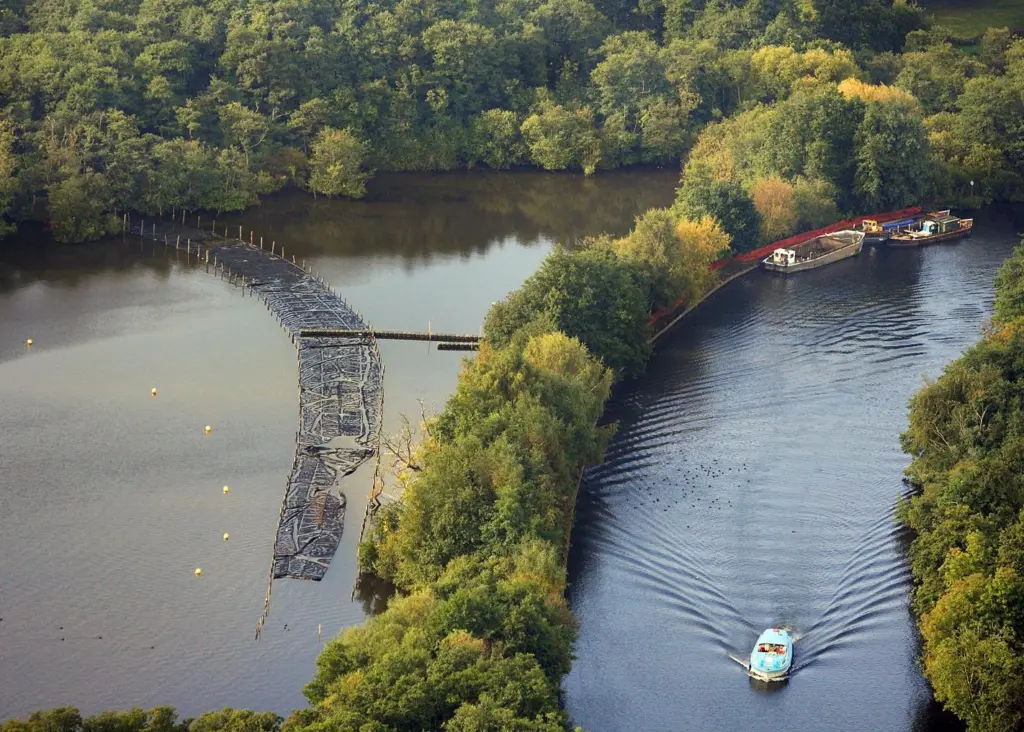
The innovative project has demonstrated how dredging the Broads can become a ‘win-win’ situation for boaters and wildlife alike and it has now been nominated for the 2013 Water Renaissance Awards. The techniques used have attracted huge national and international interest and lead the way for future projects in the Broads and beyond.
Sediment from the River Bure has been used to fill giant woven geotextile bags which have been supported by alder poles cut from nearby river banks. The bags, which have a circumference of 18.6m, have sunk below the waterline to form a 170m retaining wall, and the void behind the bags has been filled in with sediment. The mud has been planted with reed seed and rhizomes taken from encroaching reed fringes in the nearby river to help restore the 7,000m² reed bed as it would have looked 60 years ago.
William Coulet, the Broads Authority’s PRISMA project manager said: “It can often be a problem finding places to dispose of dredged mud. However this pilot scheme has underlined the fact that sediment should be regarded as a resource rather than a waste. It has involved improvements to both navigation and conservation by dredging 12,000m³ of mud, creating a 7,000m² reed bed and rebuilding a spit of land between the river and Salhouse Broad which is popular for moorings.
The project, which cost £230,000, was part funded by the European Regional Development Fund under the PRISMA project (Promoting Integrated Sediment Management ), which was set up to develop innovative solutions for dredging and treating and reusing sediment from waterways. The design was the result of sharing expertise with the Broads Authority’s partners, a water board in Holland, a navigation authority in Belgium and a specialist engineering university in France.
Related Articles
 FEATURES & VIDEOS
 MARINE CIVILS
 OTHER NEWS