![MaritimeJournal[Seawork]](https://www.maritimejournal.com/wp-content/uploads/2026/09/MaritimeJournalSeawork.svg)






Engineering opus to historic River Thames
Multi-disciplinary Opus International Consultants (Opus) has been involved in an array of schemes focussed on preserving the important maritime infrastructure on the River Thames, in and around the Pool of London.
The engineering design is carried out by Opus’ Fareham office, which provides the maritime hub to the consultancy.
A significant project for the team included the sensitive repair of the historic Tate & Lyle jetty at Sugar Quay, which had suffered extensive deterioration due to its location within a tidal zone. Planning permissions resisted any change by demolition or renewal and Opus’ design centred upon replacing the decking and upper parts of the supporting structure with new timber. This work made the facility more suitable for leisure use and the design included a new berth for the Tate and Lyle Thames Barge.
Nearby at the historic St Katharine’s Docks, Opus undertook an asset inspection and maintenance reporting exercise that was used to create an asset register and maintenance schedule, prolonging the life of the historic dock. Routine maintenance of the dock’s infrastructure included work to the entrance lock, listed structures and facilities associated with an operational marina. Asset management of marine infrastructure has become an important focus to develop a structured approach to maintenance, to enable early identification of potential issues which will require capital budgeting. Over the years, Opus has been involved in the design and project supervision of the river side boardwalks and the conception, design and installation of the river pontoons and 48m brow.
Community Moorings
Also on the River Thames, Opus was involved in the design of new community moorings to create a gated community, catering for up to fifteen Thames and Dutch Barges for families to live on. The work involves close liaison with the Port of London Authority, the local borough of Tower Hamlets, the Department for Environment, Food and Rural Affairs (DEFRA) as well as Trinity House, which controls the navigation of the river. The million pound project saw the design of steel box pontoon units and a walkway to a Japanese Pagoda style community building.
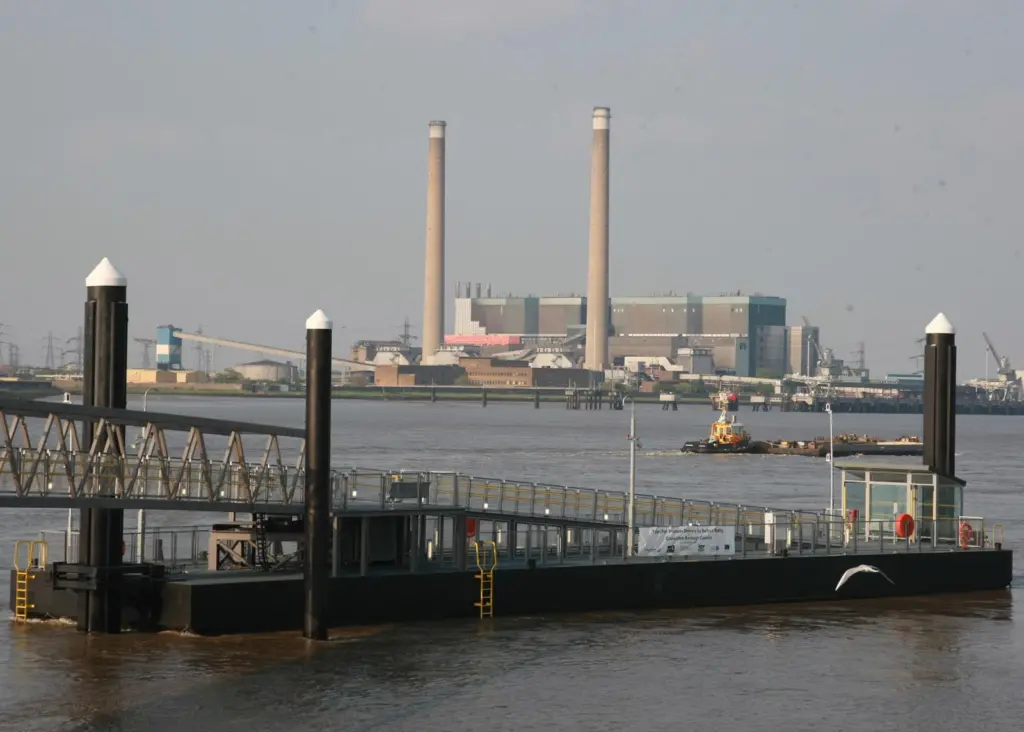
Slightly further afield, Gravesham Borough Council commissioned a pontoon and brow to make access to its Town Pier a lot safer and more convenient, as part of a project conceived over a 10 year period until funding could be put in place. Opus, together with Dean and Dyball and Tema, was awarded the design and build contract for the works.
The large tidal ranges meant it was essential to ensure the slope of the 48m brow was not excessive at low water and to achieve this, a section of fixed ramp was constructed on the pontoon. The 130 tonne pontoon was lifted into the water and towed upstream to Gravesend where it was connected to the piles placed on the seaward end of the pier. The project was funded by Gravesham Borough Council, Kent County Council, South East England Development Agency, and the European Union’s Interreg IVB North Sea Region Programme.
John Berry, technical director at Opus said: “The Thames continues to provide us with both exciting and challenging engineering work. The interest is largely accounted to the history which is evident along the river’s stretch in addition to the mix of clients located there to which we provide services.”
Related Articles
 FEATURES & VIDEOS
 MARINE CIVILS
 OTHER NEWS