![MaritimeJournal[Seawork]](https://www.maritimejournal.com/wp-content/uploads/2026/09/MaritimeJournalSeawork.svg)





Bidding starts to protect London from floods
The Environment Agency has started a bidding process for a multi-million pound contract to manage London’s tidal flood risk.
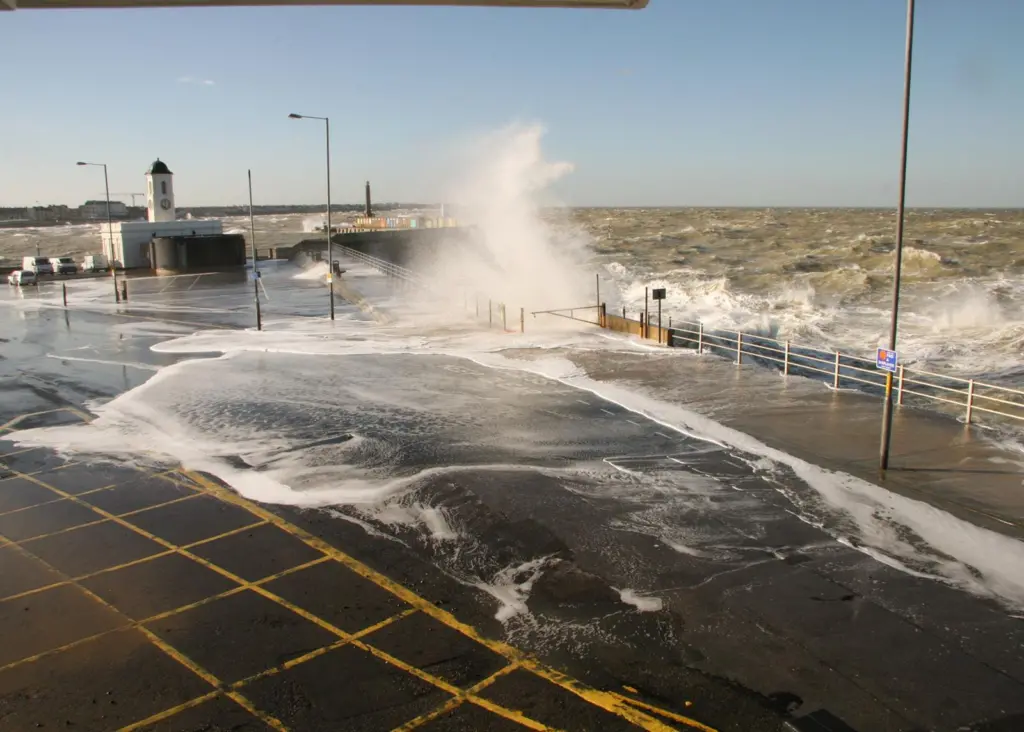
Residents of London and those living in the coastal areas of the outer Thames estuary know from experience the devastating effects of flooding from storm surges, events that in previous generations have led to loss of live and huge financial cost to businesses and society in general. Protecting the area at risk, covering the tidal Thames from Teddington in west London downriver to Sheerness in Kent and Shoeburyness in Essex, is constantly evolving, and suppliers from across Europe will now bid for the Thames Estuary Phase 1 programme including projects to maintain, refurbish and replace Thames tidal defences in London and the estuary.
Just two weeks after the bidding announcement, the Intergovernmental Panel on Climate Change published their long-awaited study on the human influence on climate change. The report included a warning that world sea levels could rise by between 26 and 82 centimetres by the late 21st century posing potential threats to coastal communities. Climate change and rising sea levels are just part of the story for Thames flood defences which also includes addressing the natural evolution of ageing flood defence structures.
The stakes are high; the existing Thames Barrier at Woolwich and associated tidal flood risk management infrastructure protects 1.25 million people (the number of people living and working in the floodplain is increasing) and £200bn worth of property, major infrastructure and businesses. The Environment Agency points out that every £1 invested in protecting London’s communities saves £38 in damage repair.
THAMES ESTUARY 2100 PLAN
Thames Estuary Phase 1 programme covers the first ten years of capital investments, part of the Thames Estuary 2100 plan. The programme consists of a comprehensive list of capital works including: major refurbishment works of fixed assets, such as tidal walls and embankments; refurbishment works of active assets (including major flood barriers); new assets such as pumping stations; capital renewals and replacements; packages of major complex maintenance works, such as repairing long lengths or fixed flood defence walls or subsidence of earth embankments.
Assuming continual maintenance and improvements it is expected the Thames Barrier will remain viable until 2070. A decision will need to be made around 2050 (based on government’s current climate change guidance) on any changes to the flood risk management system, allowing changes to be planned and commissioned ready to use by 2070. It is perhaps worth mentioning that part of the proposed Thames Hub London airport plans from Foster + Partners includes a new lower Thames crossing including a tidal barrier.
The programme is part of the Thames Estuary 2100 project, led by the Environment Agency and formed in 2002 with the brief of developing a comprehensive action plan to manage tidal flood risk for the tidal Thames. While acknowledging that communities in London and along the Thames estuary benefit from world-class flood defences it is recognised that flood risk is increasing.
Over 300 studies and investigations were undertaken to assess tidal flood risk and it was established that there were unlikely to be any major changes to the existing system for around 25 years but from 2035 the current tidal defence system may need to be upgraded allowing opportunities to landscape the riverside, preparing it for the impacts of climate change. Current climate change guidance was used for the plan including an element of adaptability to changes in predictions for sea level rise and climate change over the century. Major new research was undertaken by the Environment Agency covering aspects including changes to fluvial flows, sea storm surges and sea level rises, this research took up one year’s capacity of the Met Office supercomputer.
The plan considered various options to manage flood risk with consideration given to their economic costs, benefits and environmental impact, recommendations followed on what actions would be needed in the short term (next 25 years), medium term (the following 15 years) and long term (to the end of the century).
Short term measures include: maintaining current flood defence systems, ensuring effective flood plain management is in place across the estuary, safeguarding areas required for future flood defence changes and monitoring change indicators including sea level rise and climate change.
In the medium term, existing walls, embankments and small barriers will be raised, refurbished or replaced. As these measures could be considered major it would provide an opportunity to reshape riverside environments involving spatial planners, developers, designers, environmental groups and those living and working in the estuary area.
In the final fifty years (2050 to 2100) consideration would be given to the ‘end of the century’ option involving planning and preparation for implementation. This could include construction of a new Thames Barrier, operational by 2070. Connected with this, defences may need raising and adapting to keep new barrier closures within operational constraints.
Related Articles
 FEATURES & VIDEOS
 MARINE CIVILS
 OTHER NEWS