![MaritimeJournal[Seawork]](https://www.maritimejournal.com/wp-content/uploads/2026/09/MaritimeJournalSeawork.svg)





Flood control contract for Royal HaskoningDHV
A major Colombian flood control contract has been awarded Netherlands based Royal HaskoningDHV, aimed at preventing a repeat of the catastrophic La Niña disaster in 2010.
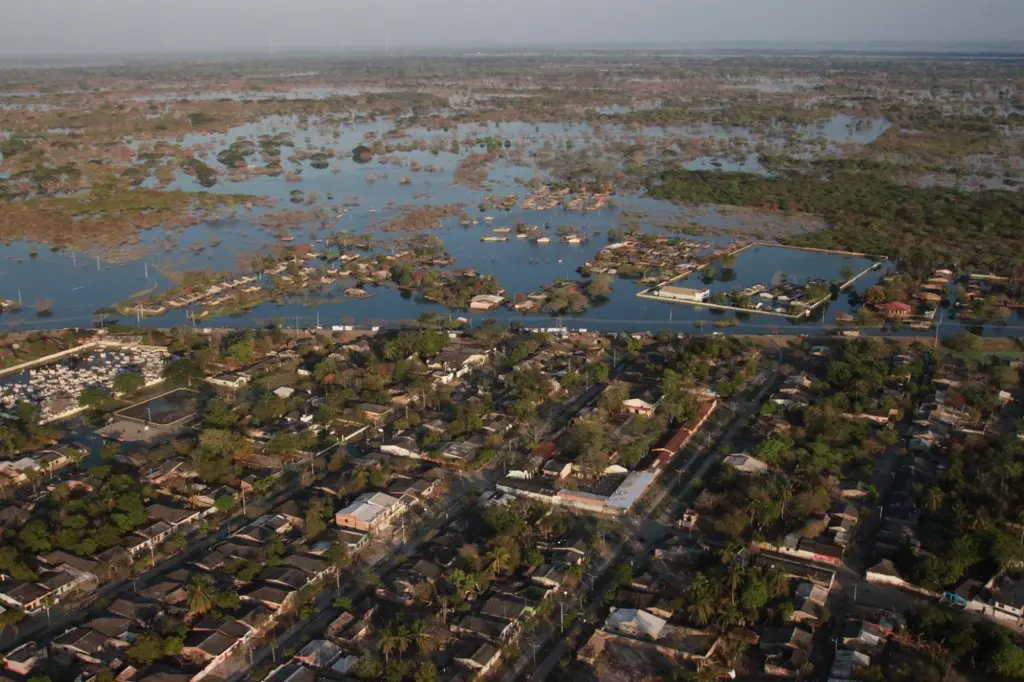
Royal Haskoning DHV has been awarded the €22m contract (leading a consortium) by Fondo Adaptción Colombia, the public institution founded by the Colombian President, Juan Manuel Santos, with the brief of overseeing construction and restoration of the infrastructure affected by La Niña in 2010 when 147 people lost their lives and thousands were left homeless.
During the disaster, the banks of Canal del Dique burst, resulting in the flooding of riverside towns and leaving huge amounts of sediment on the land adjacent to the canal, in turn leading to the destruction of crops. According to weather experts, La Niña used to occur once every five to six years but, due to global warming, has become increasingly frequent and stronger. While this may be a non-European project (awarded to a European based company), reporting on such projects that cite global warming as a factor is becoming an increasingly regular topic in the columns of MJ.
The 400 year old, 120km long Canal del Dique is a navigation route of major socio-economic importance and by designing effective flood control measures, 1.5m people living in the region will be protected from major flood events such as La Niña. The project is expected to take four years and focuses on the canal, which connects Cartagena Bay to the Magdalena River at the city of Calamar in northern Colombia. The canal’s route passes through a series of marshes and wetlands and is vital to the economy of the region.
The project will include studies and designs for the restoration of the old channel and dikes, new locks and marsh improvements. Royal HaskoningDHV will be partnering with national engineering firm Gómez Cajiao for the project and will also be working with Dutch knowledge institute Deltares for expertise in early warning systems and modelling.
For the first time in Colombia’s history, navigation locks and flow and sediment control structures will be conjoined within an integrated water resources and flood control project, taking climate change into account. The importance of the project for Royal HaskoningDHV is described as immense, as project director Roelof Moll explains: “Our work to design effective flood control measures will help save lives and businesses, by preventing and mitigating the extensive damage by flooding. As well as protecting the people living along the Canal del Dique, this project will safeguard the natural environment and benefit the economy of Cartagena by boosting trade at its ports.”
Related Articles
 FEATURES & VIDEOS
 MARINE CIVILS
 OTHER NEWS