![MaritimeJournal[Seawork]](https://www.maritimejournal.com/wp-content/uploads/2026/09/MaritimeJournalSeawork.svg)





New Broads reed bed nears completion
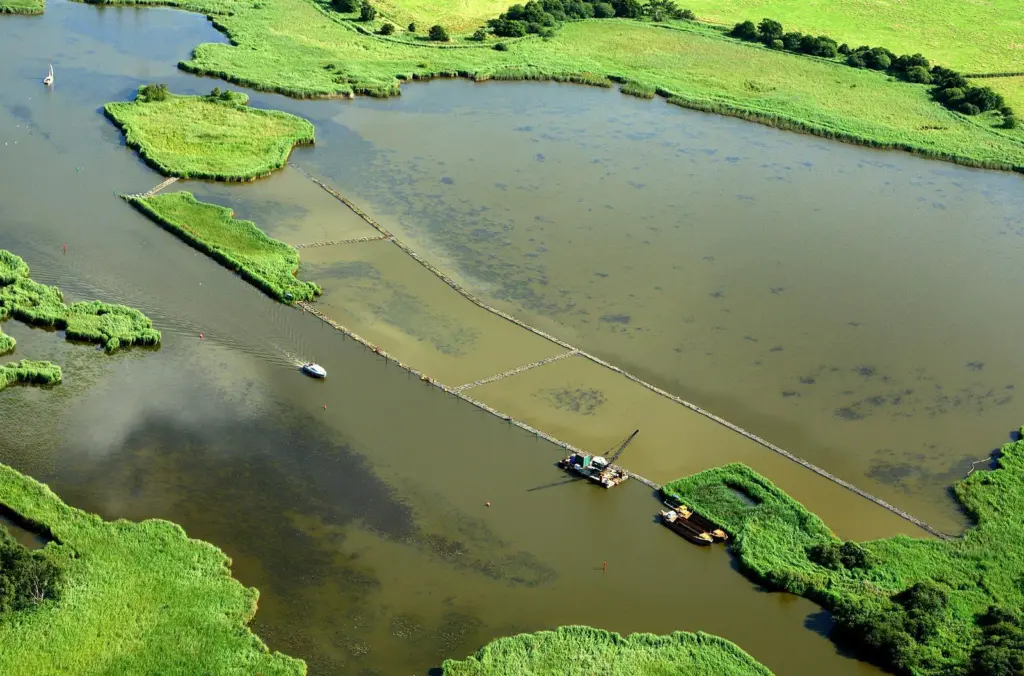
The Broads Authority (UK) has begun the dredging of Heigham Sound signalling final stages of the innovative reed bed creation at Duck Broad, also increasing water depths for small boat owners.
The Norfolk and Suffolk Broads is Britain’s largest protected wetland and third largest inland waterway with the status of a national park. Established in 1989, the Broads Authority is responsible for conservation, planning, recreation and waterways in an area home to some of the UK’s rarest plants and animals.
The work is being carried out by Goodchild Marine Services (based at Great Yarmouth close to the Broads), and involves the pumping of 10,000m3 of sediment from the navigation channel into a void created by 250 mud filled gabion baskets. Once the spit of mud has dried out it will be planted with young reed to restore habitat and provide a quiet area for wildlife in Duck Broad. Dredging is being carried out using a mud pumping method which minimises disturbance to sediment. A silt curtain has been placed around the perimeter of the new spit to prevent the spread of any suspended sediment during the filling process. Dredging in cold water conditions over the winter period also reduces the risk of working when natural populations of the algae Prymnesium are most likely to bloom. This is seen as an important aspect to the project as the algae can be toxic to fish. Weekly water monitoring will check that Prymnesium levels remain within the threshold set by Natural England, sensors recording water quality data every half hour based on research carried out by the John Innes Centre.
The work is being match-funded by the European Regional Development Fund through PRISMA which involves working with Dutch, Belgian and French partners to develop new ways of reducing and re-using sediment.
Dr Dan Hoare, The Broads Authority Environment and Design Supervisor said: “… the increased water depth will be of great benefit to all users of these waterways. It should also help improve water quality in the longer term as sediment on the bottom will be stirred up less”.
Related Articles
 FEATURES & VIDEOS
 MARINE CIVILS
 OTHER NEWS