![MaritimeJournal[Seawork]](https://www.maritimejournal.com/wp-content/uploads/2026/09/MaritimeJournalSeawork.svg)





Lowestoft addresses the flood threat challenge
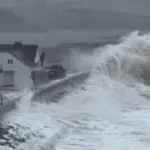
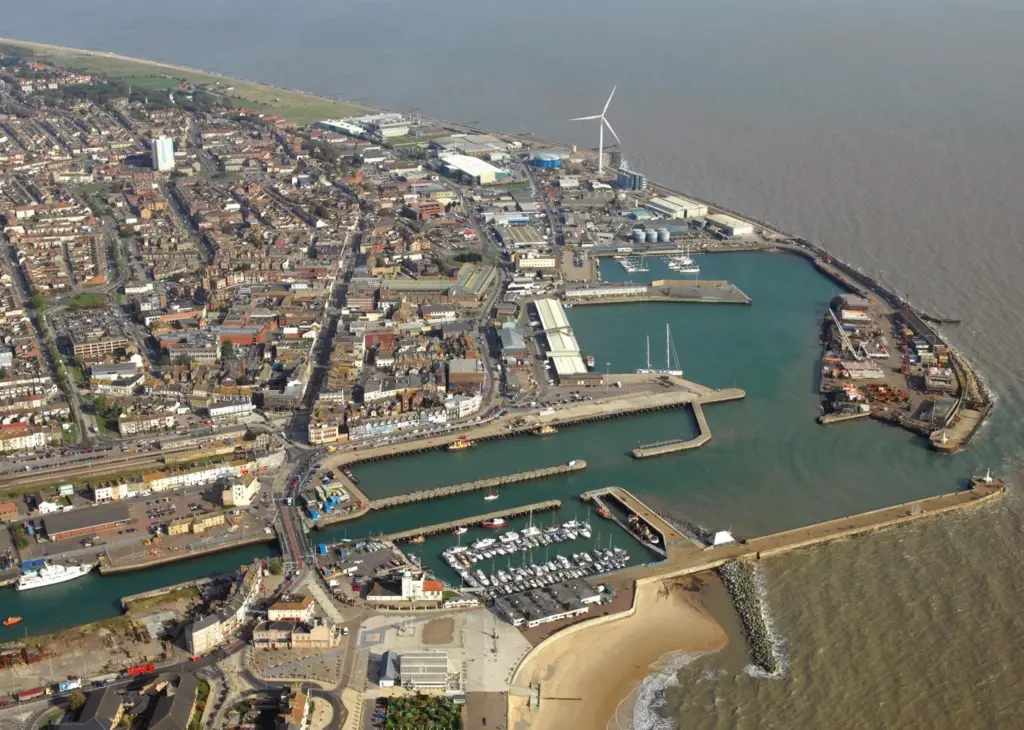
The UK east coast port town of Lowestoft is planning flood defence measures in response to a recent study predicting flood events such as seen in 1953 will become a relatively frequent event.
Residents and businesses of Lowestoft and the surrounding areas may well have been pondering the Tidal Defence Appraisal prepared by Halcrow and Bam Nuttall late in 2013 which concluded that what was previously considered a 1 in 1,000 year event could become a 1 in 20 year event from sea level rises caused by climate change. Any doubts they may have had about the degree of risk will have been put into perspective by the events of December 2013, which saw the largest tidal surge on the east coast since the catastrophic 1953 tidal surge and flooding. The resultant damage over the whole east coast region affected, while not insignificant, was mitigated by long term flood defence measures implemented post-1953.
The appraisal has now delivered a number of options, construction of a tidal barrier appearing as a preferred feature. The appraisal concluded the indicative construction cost to be approximately £18m, including £13m for the flood defence gate. An additional £14m has been added as a contingency cost for design, construction and maintenance, a nationally recognised practise in major construction projects of this type.
OPTIONS
As part of the Tidal Defence Appraisal seven design options were considered. Option 1 is to do nothing. This scenario is a requirement of the economic analysis and assumes that no maintenance is undertaken and that all the existing defences are allowed to deteriorate. The scenario was represented within the study as the ‘undefended’ scenario, where all raised defences have been removed. Option 2 – do minimum. This scenario represents the current situation at Lowestoft and assumes current defence heights and maintenance regime is continued. No future raising of flood defences is carried out to take into account sea level rise due to climate change. Option 3 – do something (raised outer harbour tidal defence wall). This is the same as Option 2, except with the addition of a raised tidal defence wall around the harbour. A design elevation of 3.8m AOD was assessed, equating to a 1 in 1,000 year present day water level. Option 4 – do something (raised wall and tidal lock gate). This is the same as Option 3 except with a tidal lock gate in the vicinity of the Bascule Bridge to prevent tidal flood flow passing into the inner harbour (for events up to and including 1 in 1,000 years). This option would potentially consist of a mixture of raised concrete tidal walls along the outer harbour, demountable defences and a tidal gate near the Bascule Bridge.
To account for potential impact of climate change, it is proposed that the concrete tidal defence wall be designed to allow future raising to the 1 in 200 year climate change design level of 4.35m AOD, or actually be constructed to that level (depending on location). The gate structure would also be expected to be constructed to provide for the 1 in 200 year climate change level to prevent the need for possible costly future adjustments in required Standard of Protection.
Option 5 – do something (tidal gate), same as Option 2, except with a tidal lock gate in the vicinity of Bascule Bridge, the tidal lock level consistent with adjacent current quay head walls. Option 6 – do something (raised tidal walls and lock gate with climate change), same as Option 4 except with design levels increased to provide a standard protection of 4.35m AOD (200 years plus climate change) throughout the scheme. This option would potentially consist of the same outer harbour defences, demountable defences and a tidal gate as in Option 4, excect with additional demountable or reinforced glass sections on top of the concrete wall at specific identified low points along the proposed defence alignment for approximately 300m (primarily at the corner of Station Square and Waveney Road).
Option 7 – do something (raised tidal wall outer and inner harbour). Same as Option 3, except with raised tidal defence walls within the inner harbour. Defence height set at approximately 3.6m AOD, which is 200mm lower than the outer harbour defence level of 3.8m AOD to account for the expected head loss through the Bascule Bridge. As Lowestoft is a working harbour, it is highly unlikely that a raised flood defence wall would be acceptable to the Port Authority or other stakeholders.
NEXT MOVES
Conclusions about the potential increased frequency of events, along with the actual general extreme weather events being experienced beyond the immediate area of Lowestoft will probably have influenced the preference for more positive measures (such as a tidal barrier) rather than taking a less pessimistic view. Vulnerable points which act as pathways for flood water will influence the final detail of any scheme, the study team also working with ABP to ensure any measures do not adversely affect port operations.
Any potential linkage between the proposed tidal flood gate and a solution to the threat of pluvial flooding at other locations also needs to be addressed. An Economic Impact Assessment is to be undertaken in May and a public exhibition is planned for July. Other steps include progressing with the detailed design of the tidal flood gate, identifying potential funding and, where possible, submitting funding bids. Costs will be continually reviewed to ensure best value for money is achieved.
By Peter Barker
Related Articles
 FEATURES & VIDEOS
 MARINE CIVILS
 OTHER NEWS