



Accolade for ABPs carbon reduction
Associated British Ports (ABP) has been awarded an accolade for reducing its carbon footprint when the company was officially certified by the Carbon Trust Standard for reducing its carbon emissions by 8.3% between 2006 and 2008.
In order to qualify for the award
,
ABP was able to demonstrate examples of its good carbon management such as the introduction of regional Resource Efficiency Groups that monitor
and
seek to reduce carbon emissions in all of ABP’s ports. Investments in new facilities
and
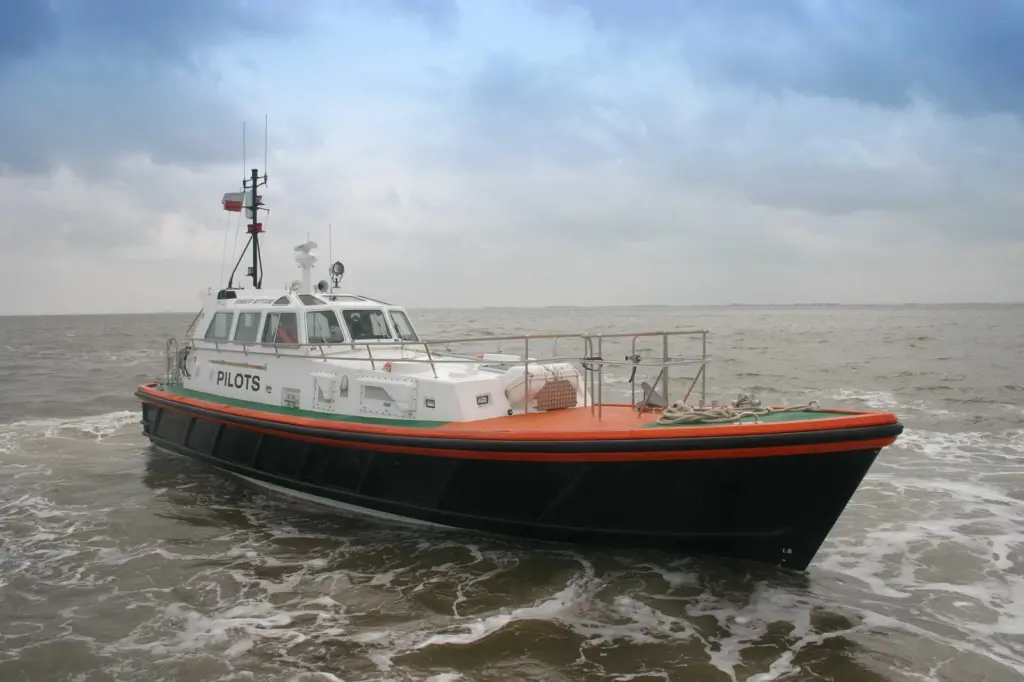
equipment have also shown to result in efficiencies: ABP’s Humber Estuary Services introduced three new pilot launches which use 15% less fuel than their predecessors. The
Humber Neptune
,
Venus
and
Saturn
took up duties in 2006. These were VT Halmatic built Nelson 48/50 class vessels costing £1.9m for the fleet. The 15m pilot boats
Neptune
and
Venus
replaced the older
Gem
and
Rover
,
while the Saturn
replaced both the
Alert
,
which was converted to a survey boat
,
and
the Callisto
,
which was sold around the same time.
ABP operates the ports of Grimsby & Immingham
,
Hull
and
Goole on the Humber
,
with ABP HES employing some 109 pilots in the region. In 2008
,
15
,
000 commercial vessels arrived into the Humber estuary
,
making some 30
,
000 river passages between them. Of these passages
,
nearly 20
,
000 required the services of an authorised pilot
,
so the reduction in fuel use makes savings for the operator’s pockets as well as the environment.
Harry Morrison
,
general manager of the Carbon Trust St
and
ard said
,
‘Both businesses
and
consumers share a desire for one credible way to prove an organisation has not only measured
,
but
,
actually reduced their carbon emissions year on year without the use of offsetting. The Carbon Trust St
and
ard provides this credibility
and
we encourage more organisations to follow ABP in making this commitment.’
Other initiatives by ABP include regional Resource Efficiency Groups which look at the carbon picture across the company’s ports
,
and
carbon efficient investments in new facilities
and
equipment.
Related Articles
 ACCESSORIES & EQUIPMENT
 MARINE CONSTRUCTION
 POWER & PROPULSION