





Aging Queen moves with the times
How would you manage to resolve the needs of an aging quayside structure, an historic dockyard, nearby sites of special scientific interest and the ever increasing ship sizes?
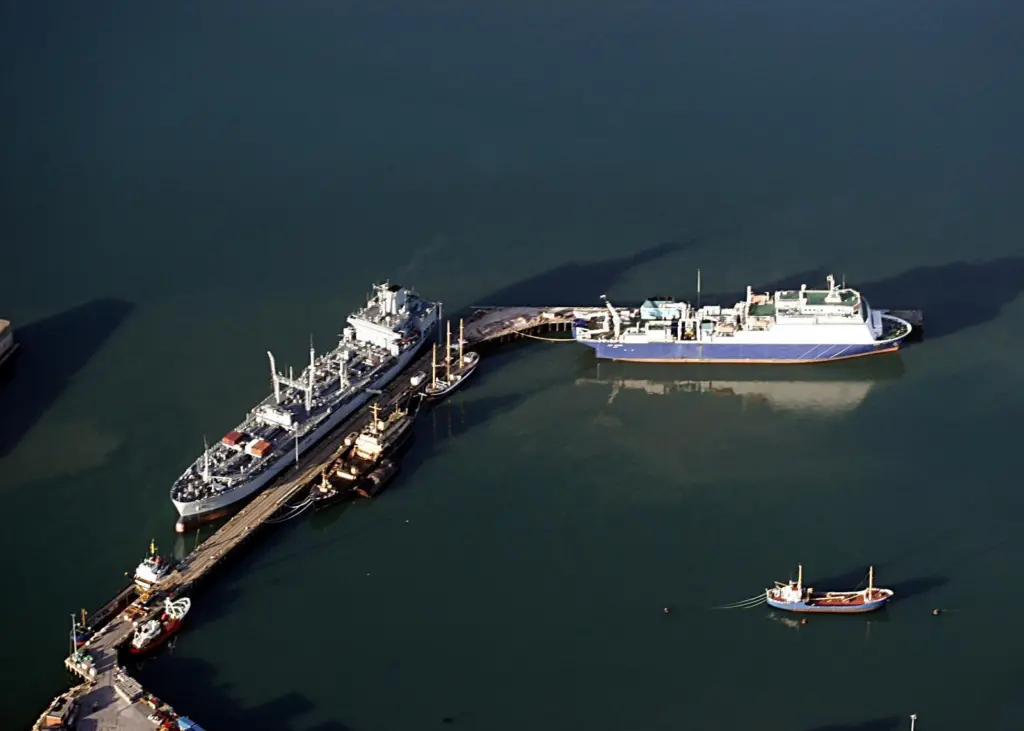
The result of Portland Port’s willingness to tackle conflicting issues is that the local economy is set to take advantage of a multi-million pound boost, thanks to the £5m refurbishment of the Queen’s Pier.
Works to maintain, conserve and extend the pier will allow larger vessels to moor up on the quayside, such as the RFA Bay class, as well as the bigger commercial ships. A naval dockyard for over 150 years, Portland Harbour still maintains a close relationship with the past through its ongoing contract to support the RFA, so the upgrade is much needed to keep the commercial viability of the port.
Project manager David Hallett of contractor Kier Construction explained that the refurbishment has had to be a sensitive operation because not only is the pier an item of historic interest, but it is now being called upon to serve these larger ships. “It’s a perennial problem, the growing size of vessels has had an impact and the loads have made the pier suffer, so the relief of the old structure was a priority.”
The new fenders are a propped cantilever system. These, in short, are a system of steel walls piled into seabed, that are then propped into the existing deck. The transfer of load is then limited, by a pneumatic bridge, to a specific figure so the old structure doesn’t become over-stressed.
The second part of the upgrade is the addition of three mooring strong points. These are based on dolphins piled into the seabed, and although they fall within the footprint of the jetty they are separate from it, taking the mooring loads off the quay.
Also assisting in the mooring up of larger vessels has been the extension of the pier’s outer arm, the far end of an L shape, by a dolphin structure giving an extra 50m of length, making 230m of berthing in all. The depth there varies between eight to 10m below chart datum, so another 2.5m of draught is available given the tidal windows. This is despite the fact that dredging and reclamation work has been disallowed by the port due to the nearby ecologically sensitive areas.
Mr Hallet concluded, “We are also taking great care to make sure we do not disrupt over-wintering birds at the Fleet, Ferrybridge and Chesil Beach. And we also have had to demonstrate that we are not going to upset the shellfish population by disturbing the mud too much.”
Care has been taken to limit disturbance to the human population also, keeping works outside of night hours. The team will be taking special measures to monitor the noise levels and keeping in touch with the public to tell them when works will be taking place.
The work is due to finish by late summer.
Related Articles
 MARINE CONSTRUCTION
 EQUIPMENT
 MARINE CONSTRUCTION