![MaritimeJournal[Seawork]](https://www.maritimejournal.com/wp-content/uploads/2026/09/MaritimeJournalSeawork.svg)




Ecocoast launches mooring block to support marine habitats
Ecocoast has launched a new eco-engineered mooring block designed to combine conventional anchoring functions with marine habitat creation.
As ports, marinas and coastal asset owners face increasing pressure to integrate biodiversity measures into marine infrastructure, the company, which is based in the UK, Saudi Arabia and United Arab Emirates, has launched a system that promises to do just that.
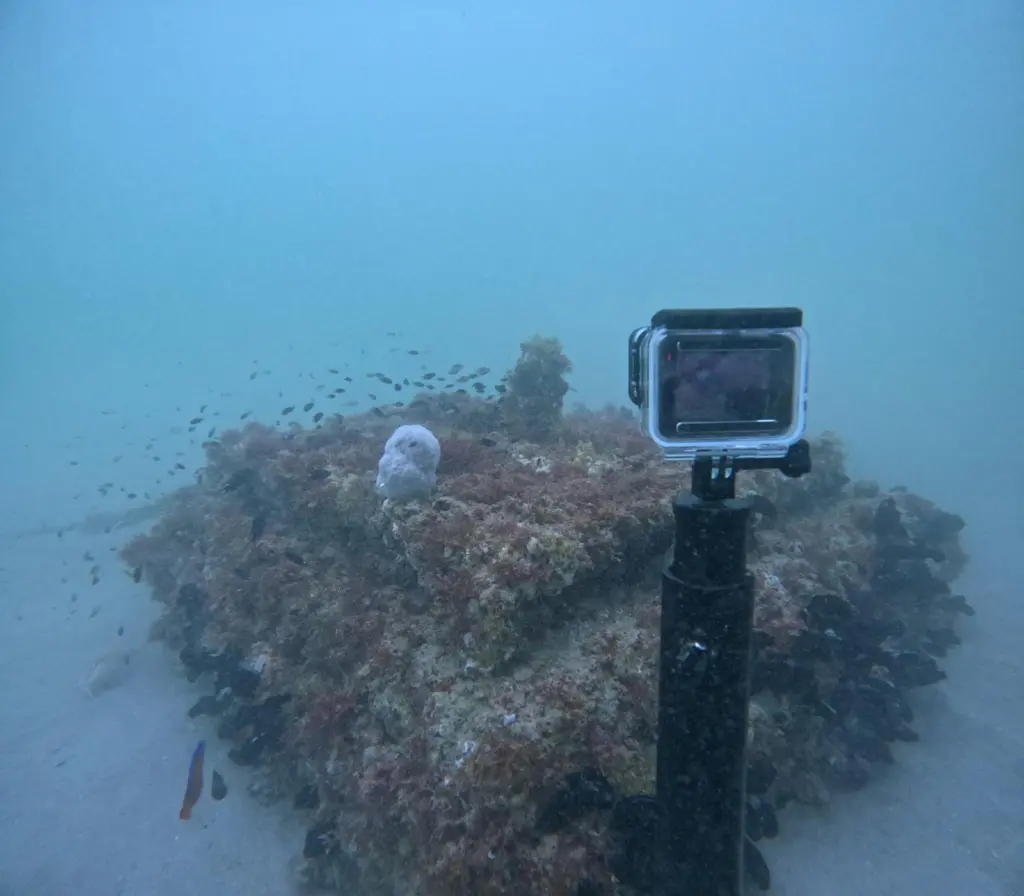
The Ecoreef system is intended to replace traditional concrete mooring blocks with engineered reef structures capable of supporting juvenile fish, corals and wider marine biodiversity around operational assets.
The patent-pending technology has been developed for use around ports, harbours, marinas, aquaculture facilities, tourism developments and offshore infrastructure, and is designed to work alongside Ecocoast’s buoyant Ecomoor mooring line system to reduce seabed scouring associated with conventional steel chains.
The system was designed by Ecocoast specialists working with artificial reef expert and marine ecologist Dr Aaron Bartholomew and included collaboration with the Fujairah Research Centre in the UAE.
Bartholomew said the concept aimed to transform passive marine infrastructure into habitat capable of supporting marine ecosystem development.
“Initial results have exceeded expectations, with strong early evidence of juvenile fish using the structures as refuge habitat,” he said.
The company said Ecoreef has already undergone trial deployments in the UAE since August 2025, with early monitoring indicating uptake by juvenile fish species including snappers and groupers. The structures have also been designed to encourage coral settlement and support filter-feeding and cryptic species.
Dr Philip Sanders, aquatic ecologist and sustainability strategist at Ecocoast, said marine infrastructure had traditionally been developed with limited ecological consideration.
“Ecoreef represents a different approach, actively contributing to healthier marine ecosystems while still delivering the operational performance required by ports, marinas and coastal projects,” he said.
“One of the most important aspects of Ecoreef is its focus on juvenile fish survivorship. Many artificial reef systems attract existing fish populations. Ecoreef has been specifically designed to help protect younger fish during vulnerable life stages, supporting the development of local aquatic populations and healthier marine ecosystems over time.”
Manufacturing of the mooring system is split between the UK and UAE, with Ecocoast targeting deployment across Middle East and European markets.
Living Seawalls
A similar approach to increasing marine diversity around port infrastructure was on show at the commercial marine exhibition Seawork in 2024.
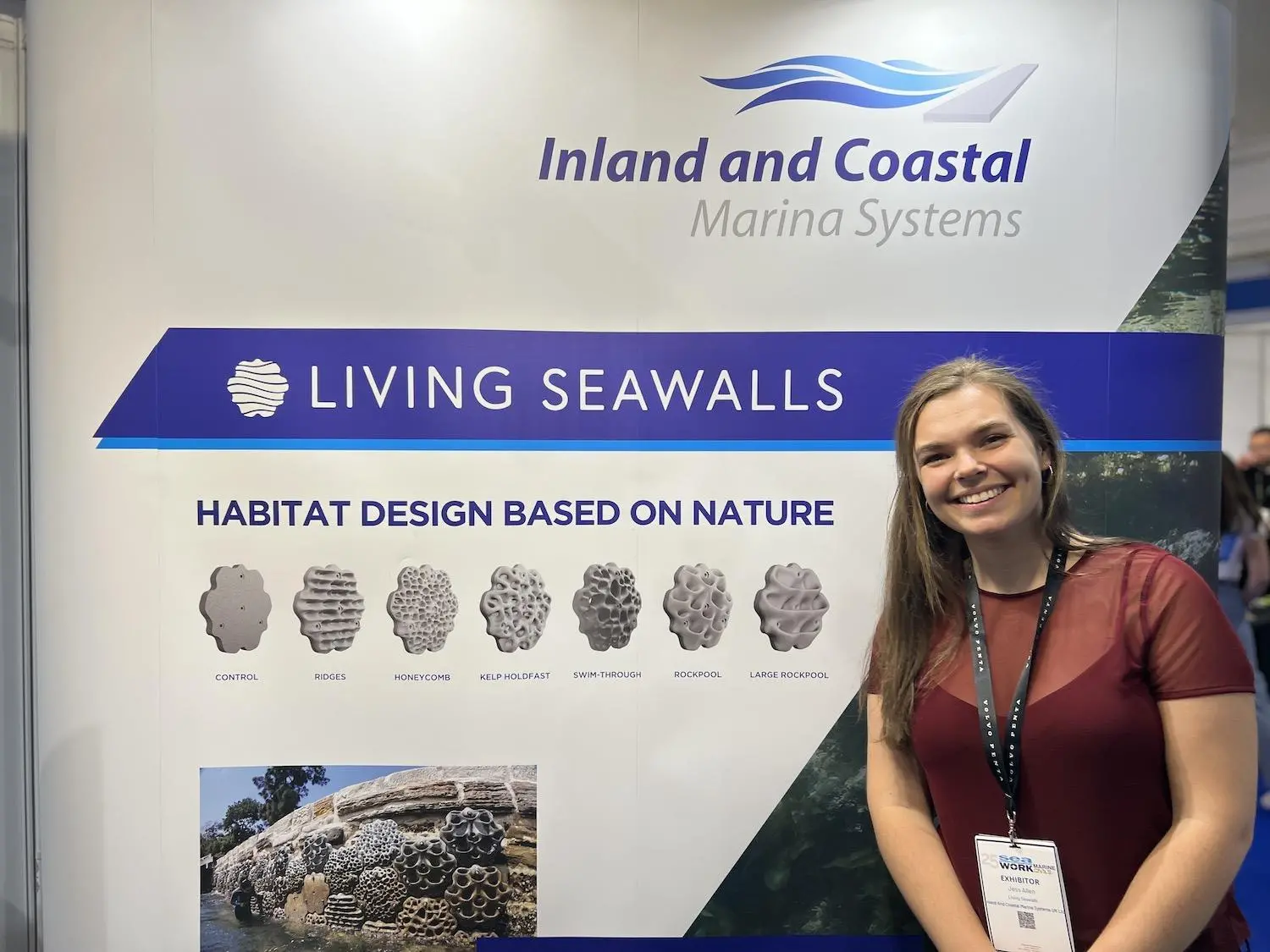
The ’Living Seawalls’ initiative was originally developed in Sydney and later introduced to the UK through work led by researchers at the University of Plymouth in partnership with ocean conservation charity Our Only World.
The project involves attaching modular habitat panels to harbour walls, quay structures and marina infrastructure to replicate natural foreshore and intertidal environments typically lost through coastal development. Different panel designs are intended to support different marine species and environmental conditions.
Some units are designed to mimic rock pools, retaining water during low tide to create refuge areas for species that require permanent submersion, while others provide textured surfaces and crevices that encourage colonisation by algae, shellfish and other marine organisms.
A pilot installation at Sutton Harbour in Plymouth was completed over a two-week period across multiple tidal windows. Monitoring carried out during the following year indicated increasing biological activity on the structures, beginning with biofilm formation before progressing to algae growth and the arrival of species including mussels and oysters.
Researchers involved in the project said such systems demonstrate how conventional marine infrastructure can be adapted to deliver ecological benefits without compromising operational performance.
Jess Allen, a PhD researcher specialising in eco-engineering solutions for coastal infrastructure, said Living Seawalls had shown how “flat, lifeless walls” could be transformed into “havens of biodiversity” through the integration of ecological and engineering design principles.
Related Articles
 INSURANCE, LEGAL & FINANCE
 SUBSEA SERVICES
 ENVIRONMENT