




Esbjerg’s milestone in the EU’s CO2 capture strategy
Port Esbjerg’s new CO₂ terminal marks a milestone in the ambition to establish the first full value chain for carbon capture and storage (CCS) in the EU.
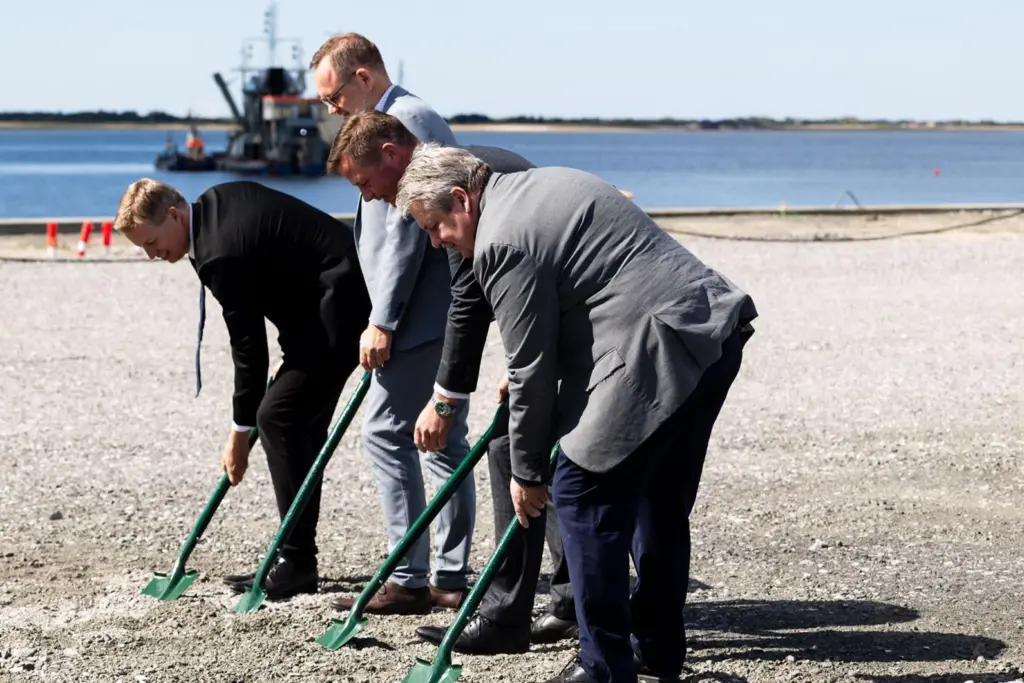
The terminal will serve as a key hub for the temporary storage and shipping of liquefied CO₂ under the auspices of Project Greensand, enabling permanent and safe offshore storage in the North Sea.
“The new terminal in Esbjerg unlocks the development of CCS in both Denmark and Europe. For us at the port, this is just the beginning of a new reality where CCS will play an increasingly important role,” says Dennis Jul Pedersen, CEO of Port of Esbjerg.
“We are not just starting a construction project – we are opening a new chapter, where Port Esbjerg plays a central role in the infrastructure needed for a greener Europe.”
Storage hub
The terminal will feature six large holding tanks, each capable of storing approximately 1,000 tonnes of liquefied CO₂ to be shipped for permanent storage in the Greensand reservoir.
When the tanks are full, the liquefied CO₂ will be loaded onto a dedicated carrier from Royal Wagenborg and shipped to the INEOS Nini platform in the Danish North Sea.
From there, it will be safely injected via pipeline into subsurface reservoirs approximately 1,800 metres beneath the seabed for permanent storage.
Construction of the terminal in Port Esbjerg is expected to complete in the Autumn this year, at which point INEOS Energy will take over the operation the first gateway for CCS logistics in EU, on behalf of the Greensand consortium.
There are plans to initiate offshore injection at the end of 2025 or beginning of 2026.
The European Commission estimates that by 2040, the EU will need to store 250 million tonnes of CO₂ annually to meet the Paris Agreement targets. CCS is also considered a key technology for reaching Denmark’s 2045 net-zero goals.
This development comes as Port Esbjerg is expanding significantly: Deepening of the fairway, new quay areas and increased capacity are all paving the way for the next generation of energy infrastructure – from offshore wind to CCS.
Related Articles
 ELECTRICAL SYSTEMS
 ENVIRONMENT
 ENVIRONMENT