![MaritimeJournal[Seawork]](https://www.maritimejournal.com/wp-content/uploads/2026/09/MaritimeJournalSeawork.svg)





UK carbon capture project given green light
UK government backing of £21.7 billion (€25.5 billion) has been given to an Eni-operated carbon capture project being called ‘the backbone’ of one of the world’s most advanced clusters.
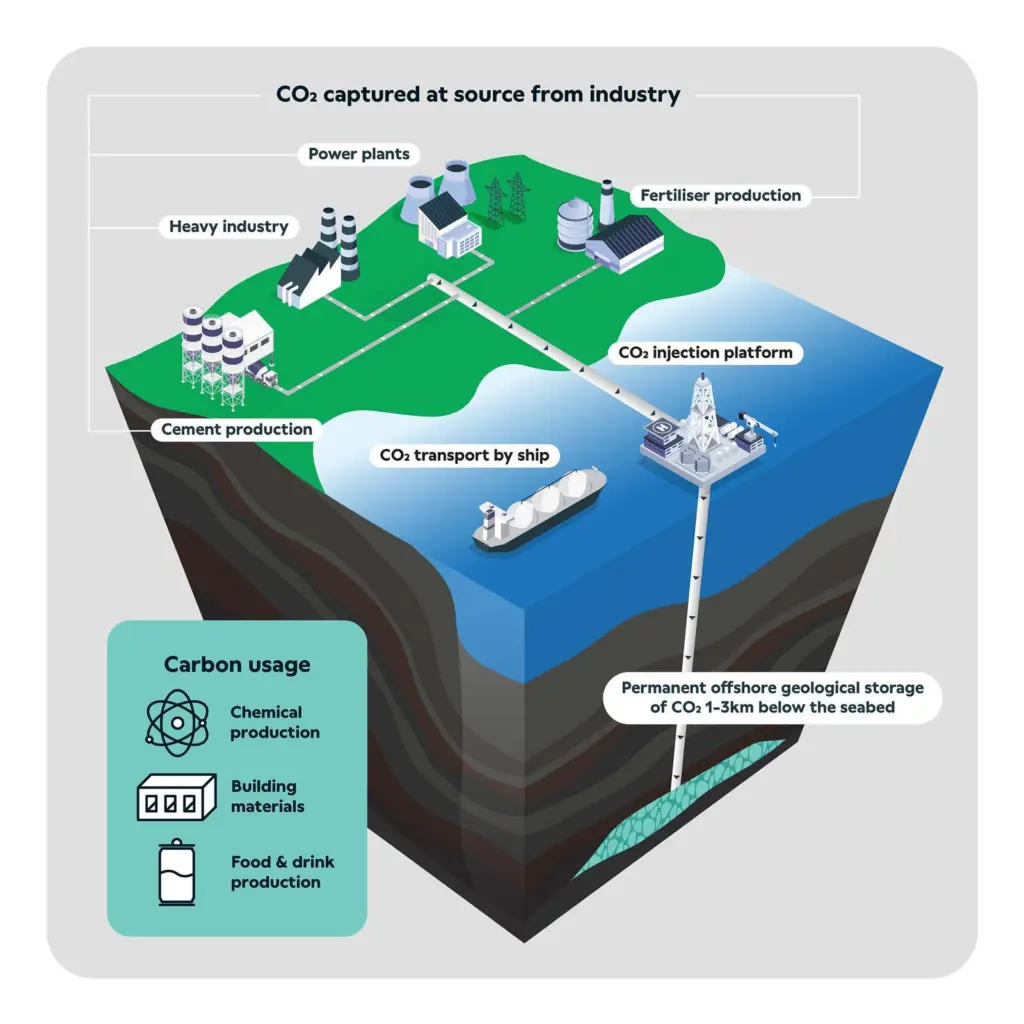
Construction will begin this year on the Liverpool Bay CCUS project, which will be operated by Eni, the Italian multi-national energy company whose depleted natural gas reservoirs under the seabed in the bay will be used to store CO2. It is part of the HyNet project.
“The project itself foresees the efficient re-purposing of part of the offshore platforms as well as 149km of onshore and offshore pipelines, and the construction of 35km of new pipelines to connect industrial emitters to the Liverpool Bay CCS network,” Eni says.
Industries such as cement manufacturers, waste plants and hydrogen production plants across the northwest of England and North Wales will send emissions through the pipelines to the reservoirs, which have a storage capacity of 4.5 million tonnes of CO2 a year in the first phase, with the potential to increase it to an annual 10 million tonnes by the 2030s.
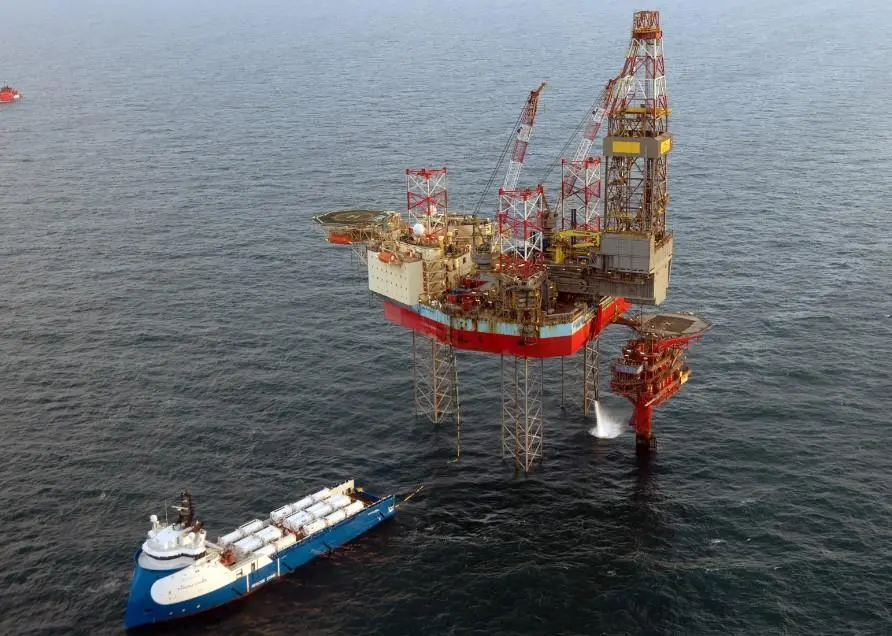
Existing gas infrastructure will be re-purposed, such as the pipelines and injection wellheads, so a large range of vessels will be required to support the work – as well as the cable layers, Platform Supply Vessels, Anchor Handling Tug Supply Vessels, dive support and ROVs. Monitoring equipment will include seismic monitoring systems, well pressure sensors and leak detection systems.
”The strategic agreement with the UK government paves the way for the industrial-scale development of CCS, a sector in which the United Kingdom reaffirms its leadership thanks to the promotion of a regulatory framework that aims to strengthen the development of CCS and make it fully competitive in the market,” said Eni CEO Claudio Descalzi.
Other European CCUS projects
The UK is far from being alone when it comes to CCUS projects, a handful of which include the following:
- Norway is running many offshore storage projects, notably Sleipnir & Snøhvit, which has been operational since 1996; Northern Lights, which announced completion in October 2024; and Trudvang, which is aiming to store 9 million tonnes a year by 2029.
- In the Netherlands, the Porthos project aims to store 2.5 million tonnes a year beneath the North Sea, also in depleted gas fields, and Aramis has a more ambitious target of 22 million tonnes a year with operations due to be going ahead by 2030, according to Reuters.
- In Denmark, CO2 emissions from Antwerp, Belgium were injected into the depleted Nini West oil field in the North Sea as part of Project Greensand. Carbon dioxide was transported by ship to the field before being stored beneath the sea.
- And in Germany, the Wilhelmshaven CO2 export terminal is being developed to build a CO2 liquefaction and temporary storage facility at Wilhelmshaven, Germany’s only deep-water port, from where the gas could be shipped or piped to permanent storage sites under the North Sea.
Back in the UK, three other notable projects include the Northern Endurance Partnership, led by BP, which aims to store 20 million tonnes a year under the North Sea off the northeast English coast; Viking CCS, operated by Harbour energy, in the depleted Viking gas field in the North Sea; and Poseidon, by no means the smallest, with a planned capacity of 40 million tonnes a year in the Leman gas field.
Related Articles
 FEATURES & VIDEOS
 ENVIRONMENT
 OTHER NEWS