



First offshore charger in positive breakthrough for MJR
Charge Offshore has reached a major milestone after completing factory acceptance testing (FAT) for its 2MW Aquarius Eco offshore wind turbine charging system.
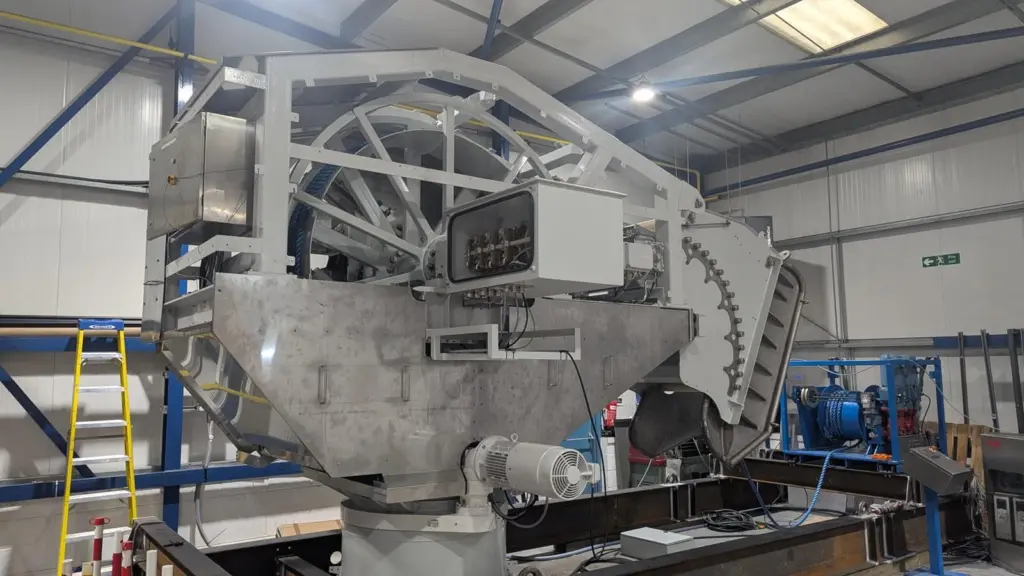
Charge Offshore, the spin-out from MJR Power & Automation with partners Tidal Transit, Elsys and Blackfish Engineering, says its wind turbine power system, to which support vessels can hook up and charge while in the field, is now on sale.
“We’re incredibly proud to announce this latest milestone,” said Paul Cairns, chief executive of Charge Offshore. “Crucially, the thorough testing procedures proved that our innovative charging systems go above and beyond the stringent crew safety and technical durability standards required by the industry.
“The positive results mean that Aquarius Eco is now ready for a wider commercial rollout, and we’re looking forward to installing the system on new and existing offshore sites across the North Sea and beyond.”
The 2MW system has undergone extensive mechanical, electrical and control system testing to validate its safety, durability and operational performance in harsh offshore environments. The completed FAT programme included stress testing and full system verification to ensure the charger meets the stringent technical and safety requirements demanded by offshore operators.
The first commercial unit will be used to charge Tidal Transit’s e-Ginny, a crew transfer vessel that has been retrofitted from diesel propulsion to operate on 100% electric power.
‘Reeler’ and ‘catcher’
The automated, modular Aquarius Eco system is designed for hands-free connection of vessels in challenging offshore conditions.
It consists of two main components: a ‘reeler’ module and a ‘catcher’ module.
The reeler is installed on a fixed offshore asset such as a wind turbine, offshore substation, or fixed or floating foundation, whereas the catcher is permanently mounted on the electric or hybrid vessel.
During charging operations, the reeler lowers a connector into the vessel’s catcher to establish a secure electrical connection without the need for crew on deck, because all operations are controlled remotely from the vessel’s bridge by a single operator.
Once the vessel positions itself within a safe distance of the offshore asset, the connector is automatically dropped into the catcher. The vessel then moves to a designated downwind charging position, typically around 30 metres from the asset for CTVs, 80-100 metres for SOVs, while the reeler automatically controls cable length and tension with the vessel on minimal economical thrust.
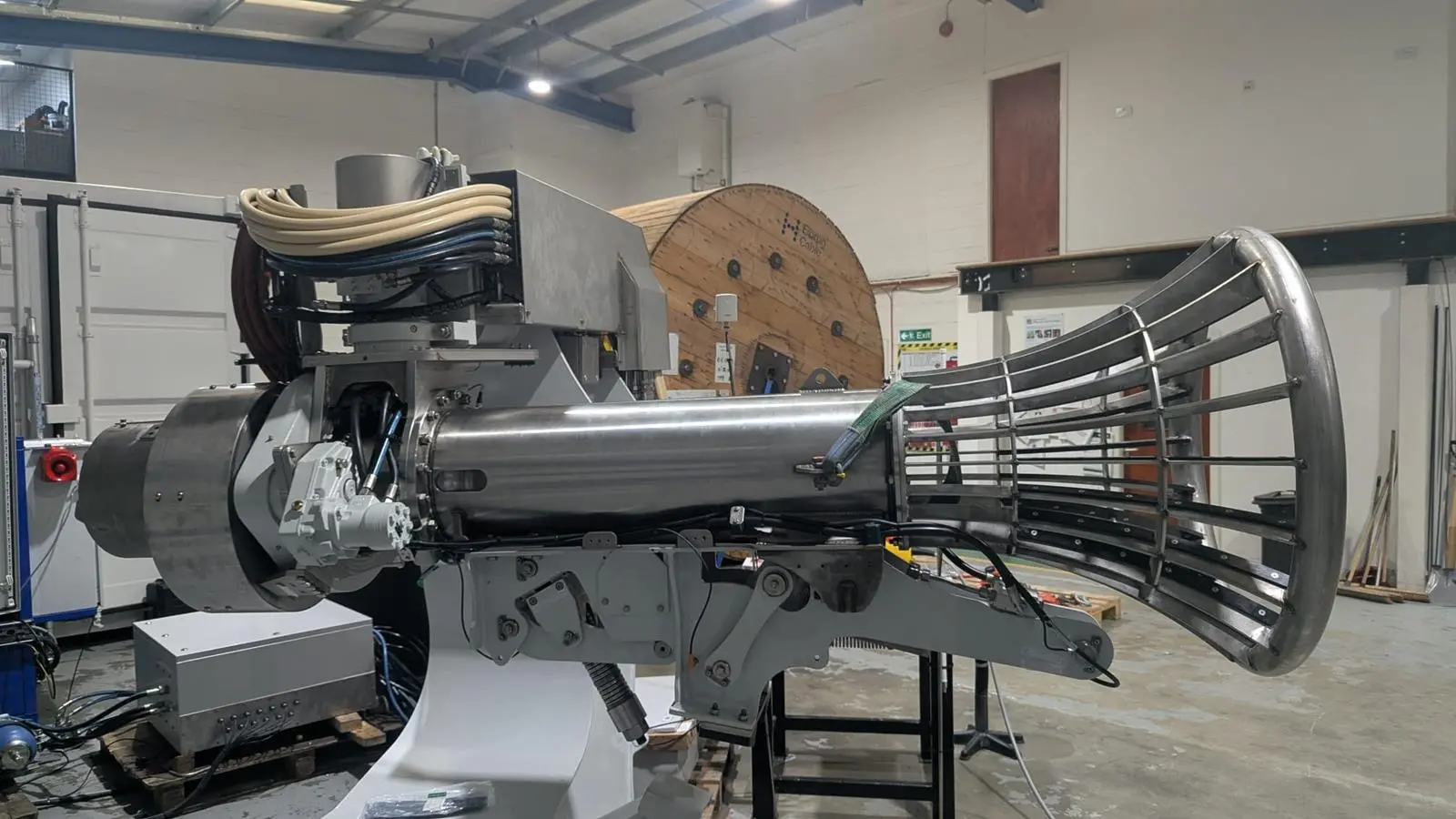
Throughout the charging process, the system automatically maintains cable tension below pre-set thresholds to prevent mechanical stress. A slew function allows the vessel to weather-vane freely, enabling charging operations in a wide range of sea and wind conditions.
This design also ensures that, in the event of a blackout or failure, the vessel naturally drifts away from the asset rather than towards it.
Safety features
Multiple safety features are built into the system.
Charging power is instantly shut down if a malfunction or overload is detected, and the connector can be released either actively by the vessel master or passively if safety limits are exceeded.
The subsea-rated connector is then ejected into the water and reeled back to the asset, allowing charging to be re-initiated without maintenance and without the need to dry it once conditions are safe.
At the end of the charge cycle, the system is de-energised, the connector is automatically recovered clear of the splash zone, and control is handed back to the onshore electrical system – all without requiring crew on deck.
By combining high-power offshore charging with full automation and built-in safety redundancy, Charge Offshore aims to remove one of the key barriers to large-scale electrification of offshore support vessels.
Next steps
While the Aquarius Eco system is now commercially available, Charge Offshore is also progressing development of its higher-capacity Aquarius Plus product range.
The company is currently qualifying and certifying the 8MW system to DNV standards, targeting the service operation vessel (SOV) market. SOVs typically require between 5MW and 7MW to support full electric field operations with a single daily charging cycle.
Aquarius Plus is expected to undergo factory acceptance testing before becoming commercially available.
Related Articles
 OTHER NEWS
 ACCESSORIES & EQUIPMENT
 EQUIPMENT