![MaritimeJournal[Seawork]](https://www.maritimejournal.com/wp-content/uploads/2026/09/MaritimeJournalSeawork.svg)



OPINION: The financial case for electrifying
In the UK alone, offshore wind capacity is set to quadruple by 2030, delivering more than 50GW to the national grid, while in countries like Denmark, Germany and the Netherlands the sector is continuing to expand at an unprecedented rate. Charge Offshore CEO Paul Cairns has a look at why it should all be done electrically.

O&M fleets – comprising crew transfer vessels (CTVs) and service operation vessels (SOVs) – are the backbone of offshore wind farm functionality – yet the vast majority of them still run on diesel, producing significant emissions over their lifetimes and slowing down the rate at which the sector can decarbonise the energy system.
Here we have a paradox. The industry tasked with driving the clean energy transition continues to rely on one of the dirtiest fossil fuels available. The solution to this contradiction is actually quite straightforward: electrify the O&M fleets; and this goal is not as far-fetched as one might presume.
Electrification: It’s not just about going green
Beyond the obvious environmental concerns, there is a compelling financial and regulatory case for electrification.
The European Union’s Emissions Trading Scheme (ETS), for example, is expanding scope to include offshore vessels, meaning that before the decade is out, operators will be required to start paying for the carbon emissions produced by their fleets.
As these costs begin to mount, early adopters of electric vessels who already have strong charging infrastructure in place will be at a distinct economic advantage.
Electrification also aligns with broader maritime industry trends. The UK Chamber of Shipping proposed a 2030 deadline for offshore wind installations to include vessel charging capabilities, which would act as a strong catalyst for more widespread adoption. In the US and Asia, similar discussions are emerging as governments look for ways to decarbonise maritime operations. The momentum is there – the industry simply needs to act.
Breaking the infrastructure barrier
Sceptics may argue that the biggest hurdle to vessel electrification is the lack of charging infrastructure, but this is far from an unsolvable problem.
Offshore charging solutions, particularly “in-air” systems mounted on turbines and substations, have already been established as proven, viable and scalable solutions for transitioning to electric.
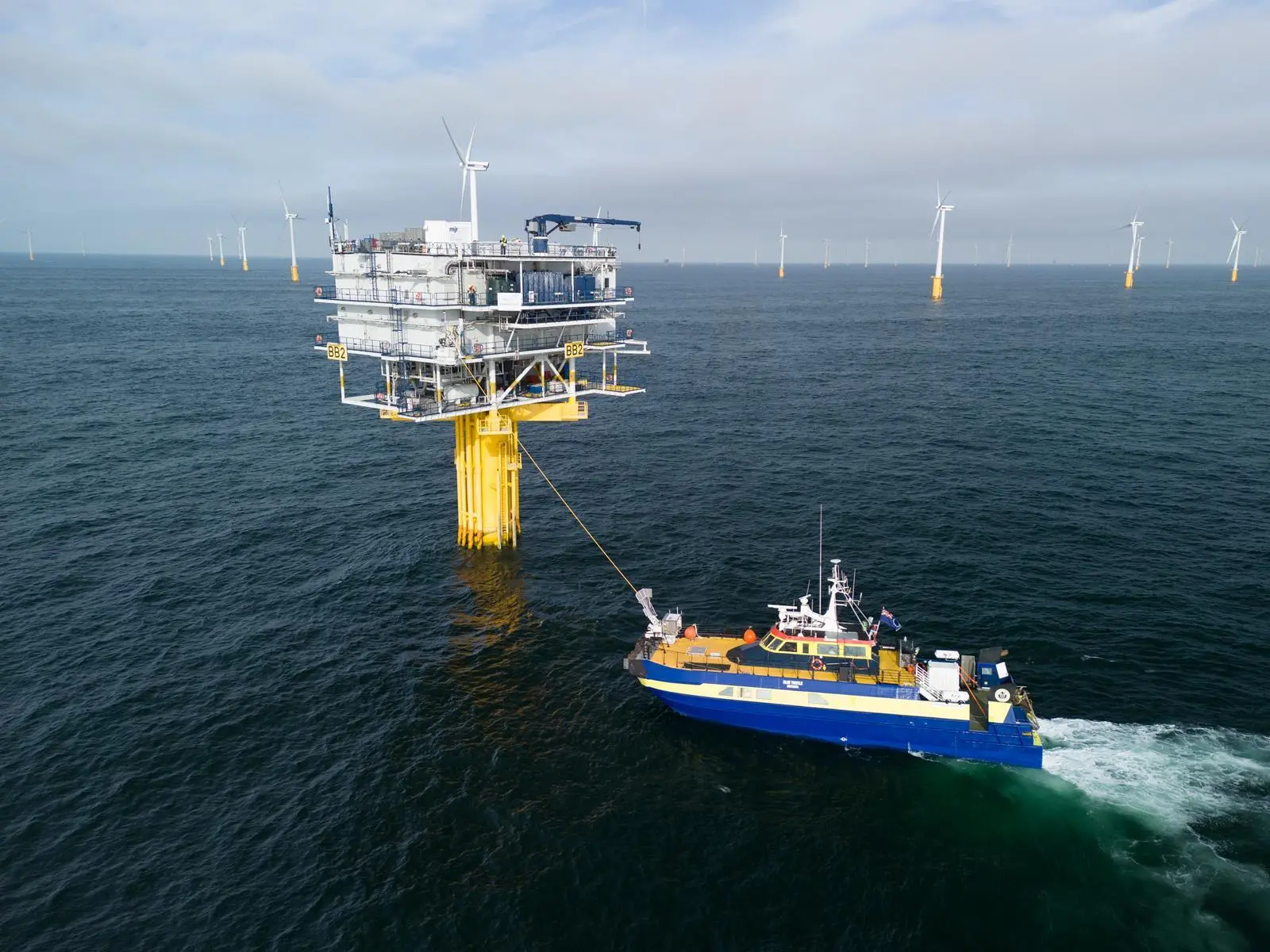
It therefore falls to wind farm developers to take a proactive role in integrating these technologies into their planning processes, and while retrofitting charging infrastructure onto existing wind farms still offers low CAPEX and OPEX options for fleet electrification, designing in offshore charging from the start will reap the greatest rewards.
This is why industry-wide collaboration between wind developers, vessel operators and technology providers is essential to making electrification a reality.
The sector now stands at a crossroads – it can continue expanding without paying due attention to the carbon footprint of its support fleets, or it can take decisive action and lead by example.
Transitioning to electric has quickly become an economic and strategic imperative.
By electrifying O&M vessels and embedding offshore charging infrastructure into existing and future wind farm developments, the industry can take the critical next step towards true sustainability.
A clear path to decarbonisation
There are a number maritime electrification projects under way that prove the feasibility and scalability of electric propulsion, alongside rapid technological advancements in supporting vessel charging infrastructure.
Take Artemis Technologies, for example, which last year revealed its 100% electric foiling CTV, or Damen’s E SOV, the first large offshore vessel to operate fully electrically.
In addition to the design and engineering works focused on electric new builds, some companies are taking a different approach.
Tidal Transit, for example, is undergoing a project to retrofit a diesel vessel with multiple years’ existing service to instead run on 100% battery electric power.
Of course, the viability of electric and hybrid vessels would amount to little without robust port-side and offshore charging infrastructure to support their operations.
Offshore charging systems, such as those offered by Stockon on Tees-based Charge Offshore, enable vessels to charge their batteries on-site by drawing power directly from offshore wind turbines. Not only does this greatly reduce operational emissions, it also reduces the downtimes associated with returning to port to refuel or charge.
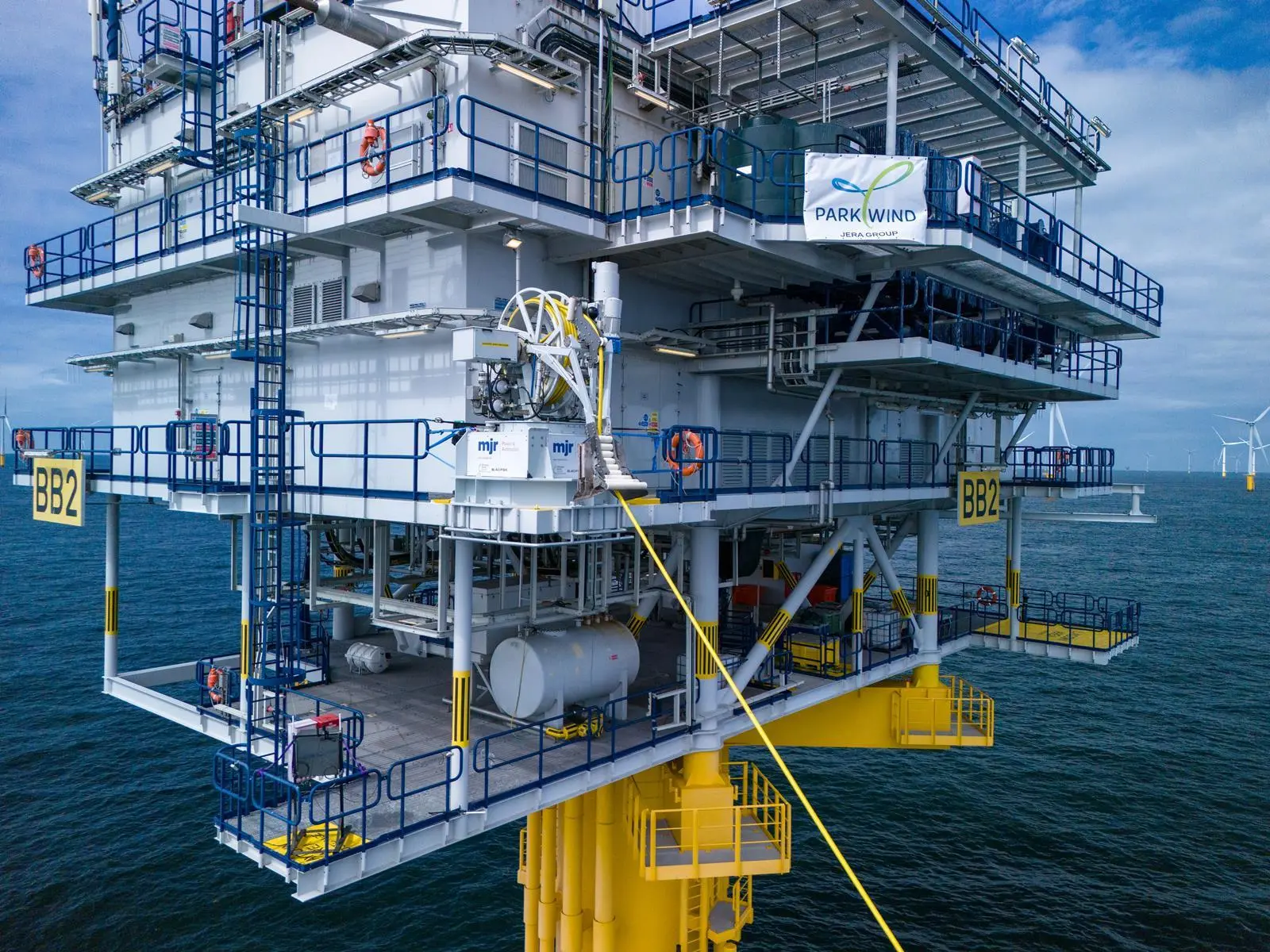
Last year, Charge Offshore partner MJR Power & Automation successfully trialled its innovative charging technologies at the Nobelwind offshore wind farm in the Belgian North Sea, operated by Parkwind.
By integrating charging infrastructure into sites like Nobelwind as the sector expands, O&M fleets could eventually transition to operate on 100% emissions-free electricity and work towards alleviating the industry’s reliance on fossil fuels.
And the green maritime revolution is by no means limited to offshore wind – the marine sector has so far made terrific headway in the electrification of passenger ferries, trailblazed in Norway but now being adopted more widely in the UK and Europe.
The advanced stage of strong supporting charging infrastructure for electric short sea ferries, like those developed by Siemens, means that electric vessels are quickly gaining momentum and are set to be the de facto mode of transport for short passenger journeys.
With the ferry industry indicating a strong direction of travel towards vessel electrification and charging infrastructure development, offshore wind has the opportunity to take the helm by embedding electrification into all future wind farm developments and ensuring that installations are “charger ready” from day one.