


A new joint venture aims to commercialise dual fuel diesel/ hydrogen engines as well as mono-fuel hydrogen engines for vessel propulsion, writes Dag Pike.
The major Belgian shipping company CMB has announced the formation of BeHydro, a joint venture with Belgian engine manufacturer ABC.
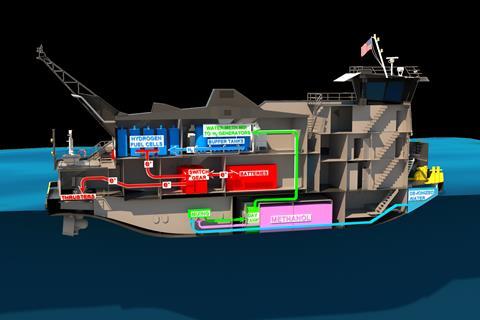
BeHydro’s engines are aimed at tugs, ferries and other small commercial craft and for use as auxiliaries on larger ships. This development comes after CMB announced its acquisition of hydrogen engineering specialist RTL, which aims to put hydrogen at the front of the company’s research development. While much of the focus of using hydrogen as a fuel is by way of converting hydrogen into electric current via a fuel cell, BeHydro is focusing on the use of hydrogen as a combustion fuel for conventional diesel engines.
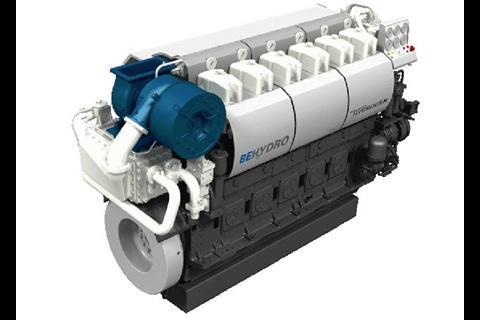
While operation of large commercial vessels remains the core business of CMB, its CMB Technologies division has been involved in developing the use of hydrogen as a marine fuel for some time. CMB said that the first hydrogen medium-speed engine should be available around 2020. Engines currently under development by ABC have a power range between 0.8 and 2.8 MW and will be available in 6, 8, 12 and 16 cylinder configurations all based on the same common engine design.
CMB Technologies has announced two European projects that will use the ABC engines as the main propulsion. Working with Windcat Workboats, they plan to develop hydrogen-powered crew transfer vessels for use in Dutch offshore wind farms. The hydrogen CTV, named HydroCat, will be able to transport 24 service engineers from the coast to the offshore wind farms at a cruising speed of 25kn, propelled by 2 x 1,000 hp ABC engines that will consume 170kg of hydrogen per day and be emission free.
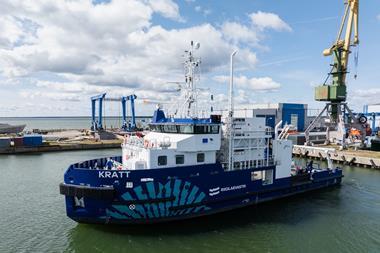
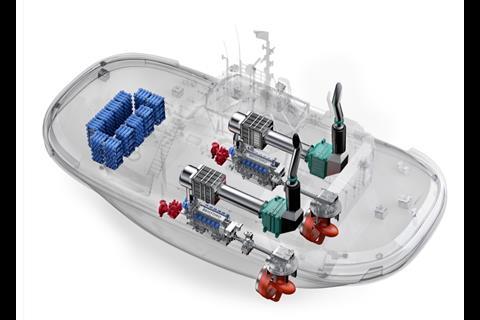
The Port of Antwerp has ordered a tug fuelled by hydrogen, the first in the world. The unique ‘Hydrotug’ is driven by combustion engines that burn hydrogen and diesel as an alternative fuel. These ABC engines comply with the very strictest emission standards, the EU Stage V, making them the lowest-rated for emissions on the market. The hydrogen fuel will be stored on board in a bank of small pressurised cylinders, rather than one large tank, as a more economical solution.