

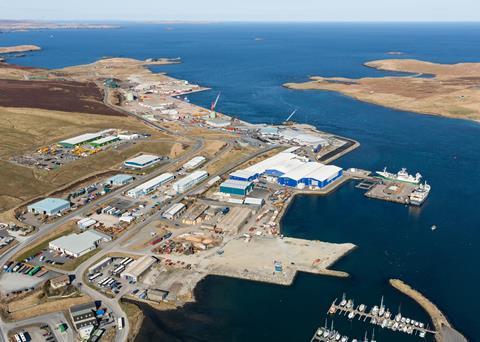
Building on high levels of activity and recent investment, Lerwick Harbour in the Shetlands is positioned for another busy year and continuing development of infrastructure to meet users’ future requirements.
In his foreword to Lerwick Port Authority’s newly published Strategy and Business Plan 2013, chairman Harry Jamieson notes that the harbour “is set up well for the future following the Port Authority's recent performance, along with the activities of the many port users, which has seen a period of growth in overall terms.”
It is anticipated that 2013 will be a busy year, with a continuation of significant harbour traffic from the four main industry sectors operating at the port: oil & gas, ferries and freight, fishing, and marine tourism from cruise ships and yachts.
Mr Jamieson states: “Forecasts for offshore oil and gas projects being supported from Lerwick overthe next three years are very encouraging and the Authority's endeavours to keep pace with the size of ships now operating in this sector has paid dividends, with deep-water quays continuing to be provided on the back of a huge dredging project in 2008.
“A significant list of new capital projects continues to be delivered by the Authority, at the same time as costs and staff numbers are kept steady at a sustainable level.”
The Plan continues the Authority’s commitment to maintain the port as an economic hub for Shetland, building on another successful year in 2012. As a Trust Port, all profits are reinvested in the harbour, with over £74m having been invested in port assets since the 1960s.
The Plan notes: “With an ongoing Capital Programme of planned investment which will take several years to deliver, the Authority is conscious of its customers’ needs and strives to provide the infrastructure necessary to allow the industries using the port to flourish. 2013 is an exciting time, with many projects on the drawing board and challenges ahead to prioritise these in an affordable manner.”