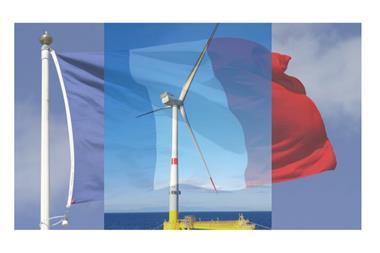


The Netherlands has committed up to €4.758 billion in offshore wind subsidies after a failed auction last year highlighted the growing financial challenges facing developers.
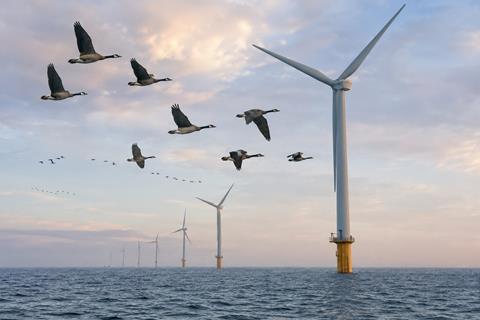
New rules have also been introduced, including a regulation that turbines are switched off during times of bird migration.
The Dutch government moved away from its zero-subsidy approach after no applications were received for the Netherlands Enterprise Agency’s (RVO) tender for the 1GW Nederwiek I-A site, which closed in October 2025.
Rising developer costs and slower-than-expected industrial electrification were cited as key reasons for the lack of interest, prompting Minister for Climate and Green Growth Sophie Hermans to conclude that government support had become essential to prevent offshore wind development from stalling.
Government increases support
Following the unsuccessful Nederwiek I-A tender, the Dutch cabinet began preparing a subsidised tender round for 2026, initially reserving €948 million from the Climate Fund as the precursor to a wider shift towards Contracts for Difference.
RVO subsequently announced the IJmuiden Ver Gamma-A tender with €4 billion in subsidy and a bid cap of €0.104/kWh before expanding the programme to include the neighbouring Gamma-B site. In June, the agency increased the total subsidy available to €4.758 billion and raised the bid cap to €0.117/kWh to protect developers from uncertainty surrounding a possible new grid feed-in tariff being considered by the Dutch markets regulator ACM.
Applications for Gamma-A will open between 26 November and 10 December 2026 through two parallel routes: a subsidy competition, where the lowest subsidy request wins, and a subsidy-free auction, where the highest bid secures the permit.
A decision is expected during the first quarter of 2027, with commissioning targeted for 2032.
DEME to install Zeevonk foundations
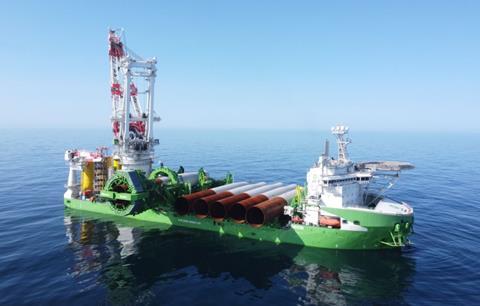
Against this backdrop, Belgian marine contractor DEME has been awarded a contract to transport and install foundations for Phase 1 of the Zeevonk offshore wind project in the Netherlands.
Jointly owned by Vattenfall and Copenhagen Infrastructure Partners, Zeevonk will have an installed capacity of 1GW. DEME will be responsible for the intermediate transport of monopiles, marshalling services for both primary and secondary steel, the transport and installation of 69 monopile foundations, and the installation of a filter layer for scour protection.
The project will also include a 50MW floating offshore solar array and a large electrolyser planned for Maasvlakte in Rotterdam to produce green hydrogen.
“The hydrogen produced will be fed into the local infrastructure, providing a renewable fuel supply for industrial clusters and potentially for export,” said Vattenfall. “Zeevonk demonstrates how integrating offshore wind with solar and hydrogen production can support the electrification and decarbonisation of heavy emitting industries.”
Offshore construction is scheduled to begin in 2028, subject to a final investment decision.
New rules for developers
Alongside the move to subsidised auctions, developers will also have to comply with a series of new regulatory requirements.
Amendments to the Wind Farm Site Decisions introduced in January 2026 require turbines across the Borssele, Hollandse Kust, IJmuiden Ver and Nederwiek zones to shut down during periods of mass bird migration, for up to 60 hours each year.
Further amendments introduced in February require wind farm management systems to be operated from within the European Economic Area to meet new EU cybersecurity and data security requirements.
The final regulations for the IJmuiden Ver Gamma-A tender were also updated to reflect the EU’s Net Zero Industry Act, requiring 40% of net-zero technology components to be sourced from within Europe by 2030.