![MaritimeJournal[Seawork]](https://www.maritimejournal.com/wp-content/uploads/2026/09/MaritimeJournalSeawork.svg)

Anschütz unveils advanced autonomous navigation
German navigation systems specialist Anschütz has unveiled its new range of autonomous navigation and mission automation technologies under the brand name Anschütz Autonomics.
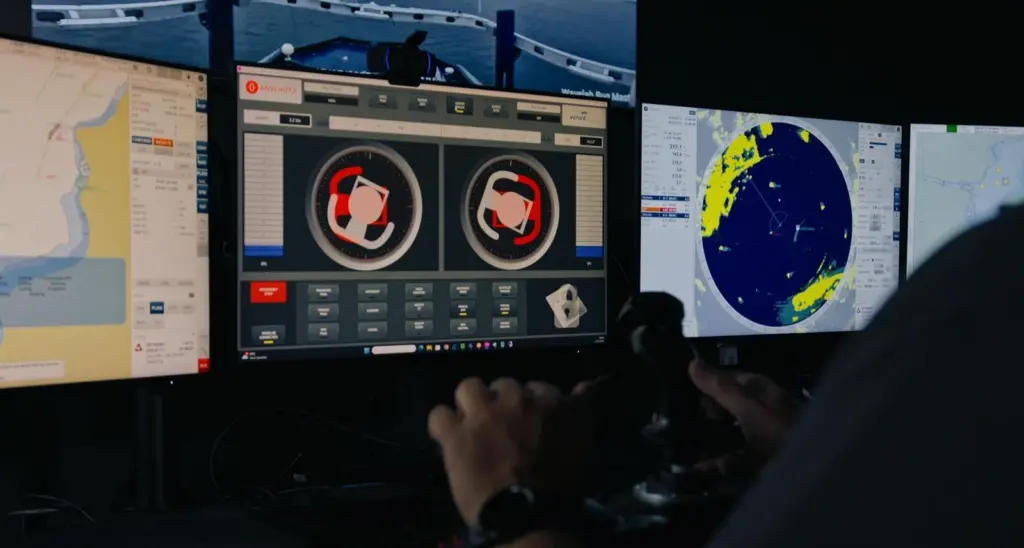
The launch follows a series of successful real-world demonstrations showcasing the system’s capabilities across maritime security, defence and commercial sectors.
“Anschütz Autonomics represents a true innovation for unmanned operations,” said Andreas Weidner, managing director at Anschütz.
“Scalable from assistance systems to highly automated solutions – and from monitoring and controlling unmanned surface vessels to automating large, manned ships, it delivers new value across a wide range of use cases.”
Anschütz Autonomics comprises two core components: the SYNAPSIS Autonomics Navigation Suite and SYNTACS Autonomics mission automation.
The navigation suite builds upon integrated navigation systems, adding features such as optical target tracking, COLREG-compliant dynamic collision avoidance and precise motion control for manoeuvring and station keeping. Meanwhile, SYNTACS Autonomics automates mission execution, including threat management, tactical behaviour and payload control.
Key functionalities include high-speed tracking, dynamic collision avoidance, targeted interception, automated escorting of high-value or suspicious vessels, data fusion into a common operational picture and full remote control from mobile tactical centres.
Beyond commercial use, Anschütz Autonomics supports defence applications, enabling software-defined missions such as intelligence, surveillance and reconnaissance, target shadowing, asset escorting and underwater operations like mine detection.
The system has been successfully tested with partners including German Naval Yards, CMN France and the German Navy. During trials, unmanned vessels performed precise high-speed manoeuvres, obstacle avoidance and target interceptions – all controlled remotely.
Since joining the CAPTN initiative in 2023, Anschütz technology has completed over 250 autonomous collision-avoidance manoeuvres under real-world conditions in Kiel Fjord.