![MaritimeJournal[Seawork]](https://www.maritimejournal.com/wp-content/uploads/2026/09/MaritimeJournalSeawork.svg)






Dynamic positioning supercharges offshore precision
ABB has completed successful sea trials of its new DP2 functionality, marking a significant step forward in precision vessel control for offshore operators.
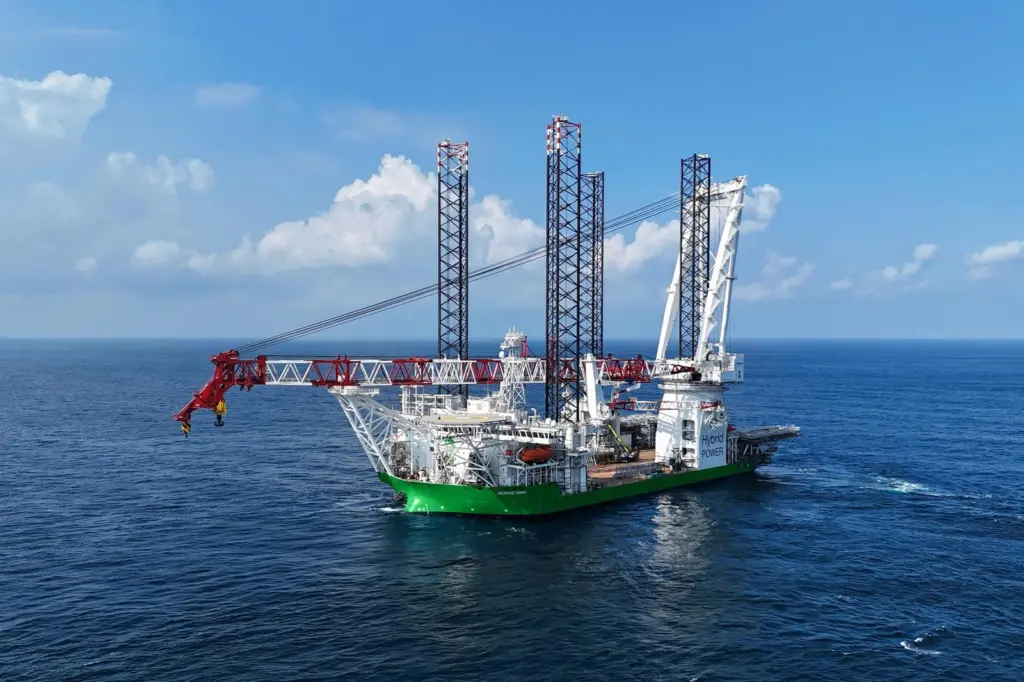
Tested on DEME’s new windfarm installation vessel Norse Wind, the Dynamic Positioning Class 2 solution integrates ABB Ability Marine Pilot Control with Azipod propulsion to unify vessel control, maneouvring and transit operations.
“As an industry leader in innovation and advanced technologies, we sought a dynamic positioning solution that would raise the benchmark beyond the long-standing standard,” said Jeroen Vanden Branden, head of fleet at DEME.
“ABB’s new DP2 control system delivers an advanced, intuitive, and user-friendly experience, providing operators with all essential information in a clean, modern interface.”
Optimal performance
During the sea trials, the Norse Wind demonstrated improved operational efficiency through ABB’s PEMS power and energy management system, which enables closed bus-tie operations without requiring standby mode.
The integration of tactile AX Bridge levers and a streamlined interface further strengthened situational awareness and vessel control for crews working in challenging offshore renewables environments.
The advanced DP2 functionality is engineered to maintain optimal performance during all stages of windfarm installation, using real-time hydrodynamic updates to support precision positioning.
“In developing the DP2 functionality for ABB Ability Marine Pilot Control, combining it with Azipod propulsion, and subsequently verifying its performance at sea, our team has shown great vision, craft and dedication,” said Rune Braastad, business line manager, Marine Systems, ABB’s Marine & Ports division.
“DEME has been an excellent pioneering partner, fully buying into our vision for a safer and more user-friendly DP control solution. I am proud of the collaboration and excited to see a safer operating environment for crews and vessels alike.”
Mr Braastad confirmed that the DEME sister vessel Norse Energi will also feature the upgraded system when it enters service in early 2026.