![MaritimeJournal[Seawork]](https://www.maritimejournal.com/wp-content/uploads/2026/09/MaritimeJournalSeawork.svg)


Offshore charging gathers pace with new UK venture
Offshore charging developer Stillstrom, owned by Maersk, has formally set up a UK entity in Aberdeen to ramp up its systems rollout in a signal that a still nascent technology is starting to gather pace.
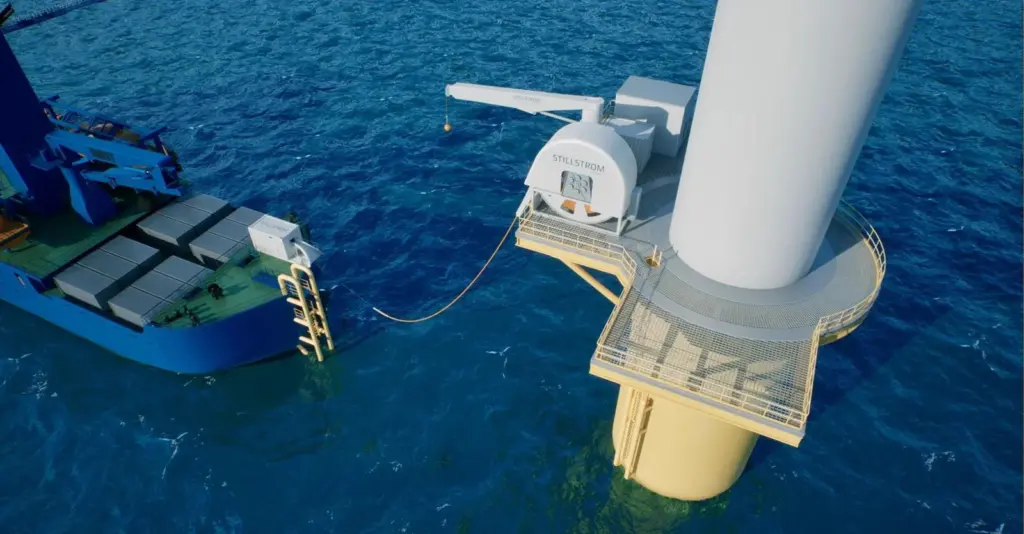
Offshore charging infrastructure for wind farm support vessels remains at an early stage, with only a handful of systems installed or in pilot operation.
One of the few examples is the Nobelwind installation in Belgium by the UK’s MJR Power & Automation, for which the company won a Seawork Innovation Award in 2022.
Many other projects are still in testing or feasibility phases, and progress has been slowed by the limited availability of electrified vessels, a lack of standardisation and the need to integrate charging systems into wind farm design from the outset.
Stillstrom’s move follows seven years of development, testing and collaboration with North Sea shipowners, suppliers and regulators. Since 2019, the company has focused on all-electric charging solutions for service operations vessels (SOVs), which are among the most energy-intensive ships operating in offshore wind.
”Extensive testing and collaboration with developers and fleet owners in Aberdeen has translated into tangible momentum, with significant discussions under way with major wind farms, as well as partnership and compatibility agreements signed with leading SOV owner-operators,” says Stillstrom.
Graeme Wood has been appointed UK managing director to lead the rollout. He brings more than 40 years of maritime and engineering experience, including roles at Rever Offshore, Bibby Hydromap, Bibby Subsea and Vroon Offshore Services, as well as senior positions at ACE Winches, Aker Qserv and Technip.
“The UK is leading the way in offshore wind and maritime decarbonisation,” he said. “Having a permanent presence in Aberdeen allows us to build on the momentum we’ve generated in the North Sea, working directly with operators to deliver a commercially viable offshore charging solution that keeps vessels on station longer without relying on fossil fuels.”