![MaritimeJournal[Seawork]](https://www.maritimejournal.com/wp-content/uploads/2026/09/MaritimeJournalSeawork.svg)





Partnership pushes aluminium anodes over zinc
The UK’s Clean Harbours Partnership has advocated vessel builders use aluminium anodes on their hulls instead of the traditionally used zinc.
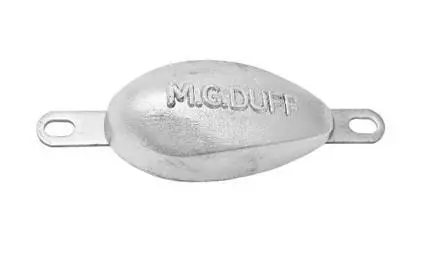
The partnership is urging boat owners to replace their zinc anodes with lighter and more effective aluminium both for performance improvement and because it is kinder to the ocean, they say.
The partnership says it has been looking at the release of metals, in particular copper and zinc, into the ocean and it says the Institute of Marine Sciences at Portsmouth University calculated that in 2020, 900 tonnes of zinc were released into coastal and inland waters, probably by recreational vessels.
“The problem is metals do not degrade,” said James Collings Wells, at the partnership. “They accumulate in the ocean and in sediment on the seabed, where organisms at all levels in the food chain ingest them. Zinc anodes also contain cadmium, which is harmful to marine life, whereas aluminium does not.
“While aluminium anodes are being used by some of the UK’s major boat manufacturers, evidently they are not being used widely enough. We are urging boat builders and boaters across the UK to switch.”
Because aluminium has a higher electrochemical capacity, the same sized anode will last longer than a zinc equivalent. Aluminium is also a lighter metal then zinc and has a higher driving voltage than zinc, which makes it more effective in brackish water.
If an anode is eroding more quickly than expected, it’s worth looking for an electrical problem causing stray current, set callings wells.
Addressing this would reduce the amount of metal shed by the anodes into the environment. Prolonged connection to shore power without a galvanic isolator can have the same effect.