![MaritimeJournal[Seawork]](https://www.maritimejournal.com/wp-content/uploads/2026/09/MaritimeJournalSeawork.svg)


Ports expand to accommodate megaships
The growing size of today’s container ships is resulting in port expansion projects worldwide, not least Lyttleton Port in New Zealand.
One of the most comprehensive marine civil engineering projects in New Zealand’s history has been completed with the help of advanced sensor equipment that can discard incorrect readings and provide immediate real-time data on complex water level fluctuations.
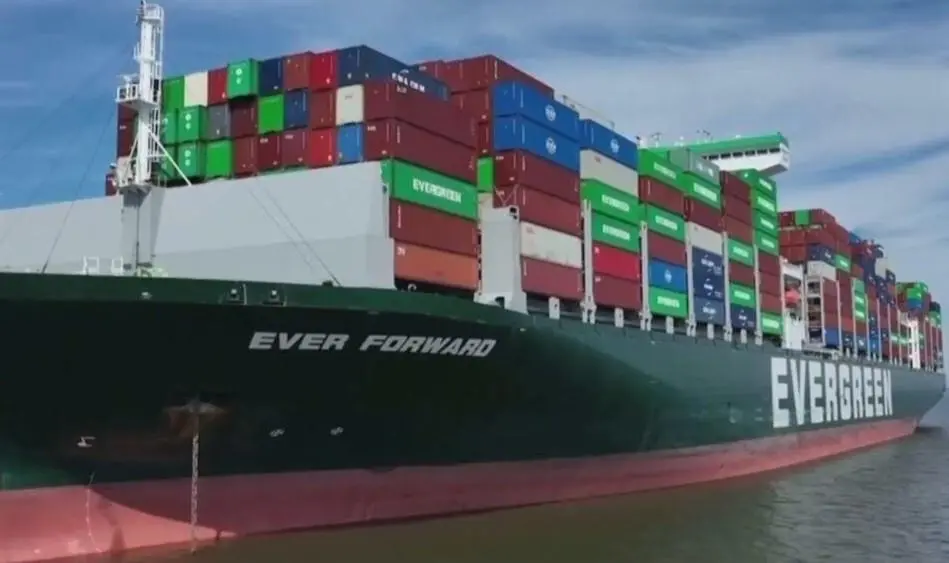
Incidents like the grounding of the Ever Given in the Suez Canal in April 2021, and sister vessel Ever Forward in Chesapeake Bay earlier this year, have not only brought the need for marine salvage to the fore, they have also highlighted an urgent need for port infrastructure to accommodate these ‘mega ships’, which now carry up to 24,000 containers. According to global financial services firm Allianz, capacity for TEU containers has increased by 1,500% in the past 50 years.
To accommodate just a tiny fraction of such shipping, Lyttelton Port has had to undertake a deepening project to lengthen the 7km shipping channel by 2.5km and widen it by 20m, increasing maximum vessel draft from 12.4m to more than 13.3m.
Wave problems
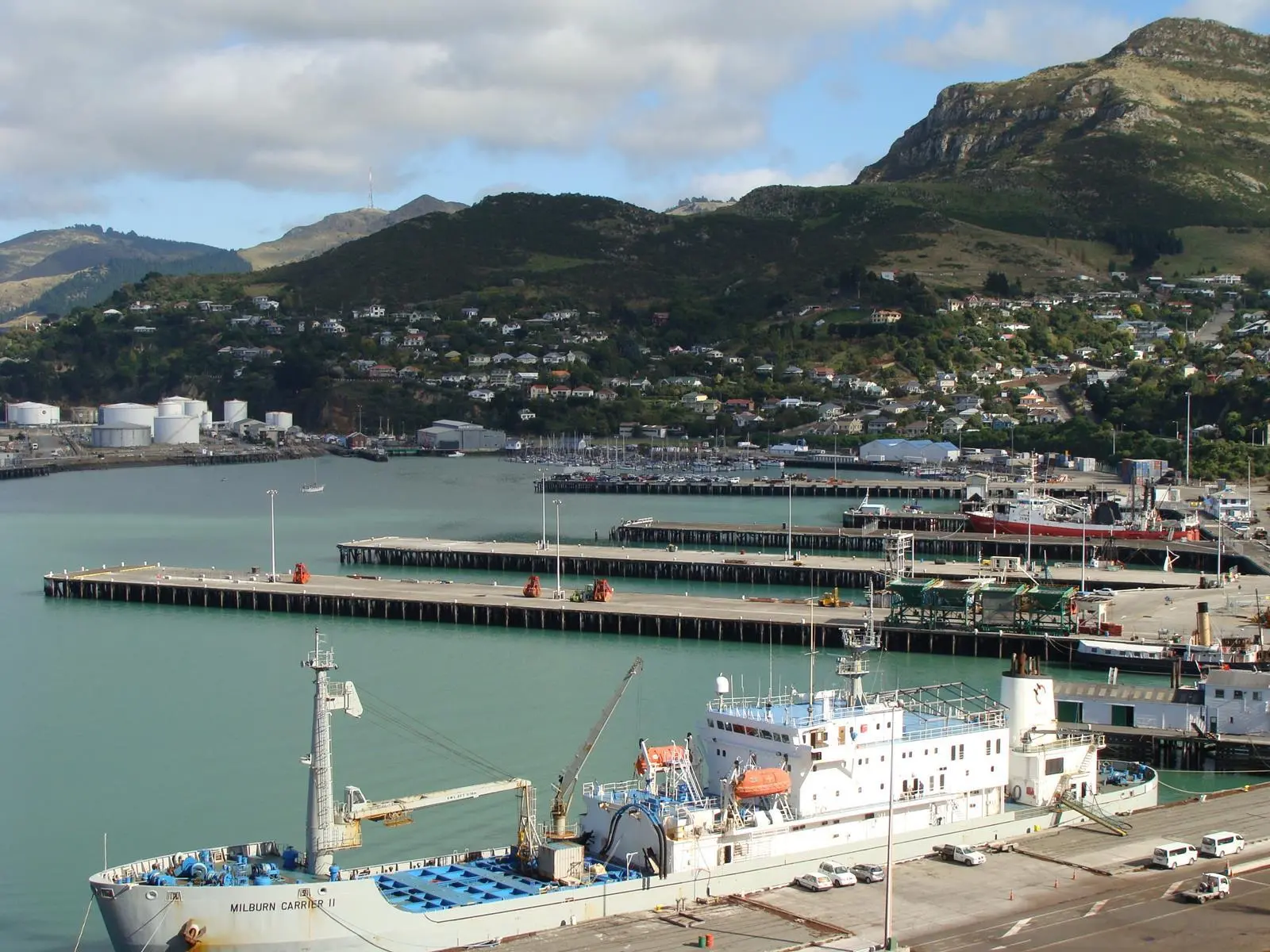
In 2018, major works at Lyttelton Port, on New Zealand’s South Island, began with deployment of one of the world’s largest hopper dredgers, Boskalis’ 230m x 32m, 33-tonne Fairway, which was built in 1997 and modified in 2013.
“The port commissioned a dynamic under-keel clearance system to minimise the impact of dredging to a depth not previously undertaken,” said Emilie Dorgeville, VP Business Development, Ports & Renewables at Norway and Scotland-based Miros Group.
“This used observations and environmental forecasts to analyse the effects and predict safe transit for vessels calling at port. Water level variations in Lyttelton harbour are known to be complex as a result of tide, wind-driven waves, swell, tidal surges, and long waves covering a wide range of frequencies which may differ greatly in space and time.
“Infragravity waves are especially a threat to the safety of operations and transit in most harbours: these long waves are difficult to dampen by port protective structures, such as dykes or breakwaters, due to their large wave length.
“Once they enter a harbour, they can be amplified and excite semi-closed port basins and/or cargo-type moored vessels.”
Miros solution
Dorgeville says that Miros’ RangeFinder SM-140 has been selected by the project managers to provide real-time measurements of airgap, tide, water level and draught with what he says is millimetre accuracy.
Two radar gauges were installed at separate locations in the harbour, one at the port entrance and one in the sheltered inner basin, to measure these complex fluctuations across the frequency spectrum from wind waves, long waves and tidal surge, he says.
Unlike laser sensors, RangeFinder is an IoT-based sensor and is not therefore affected by fog, rain or water spray. It is dry mounted and uses a frequency-modulated continuous wave approach that discards erroneous measurements and makes 50 measurements per second to provide real-time data.
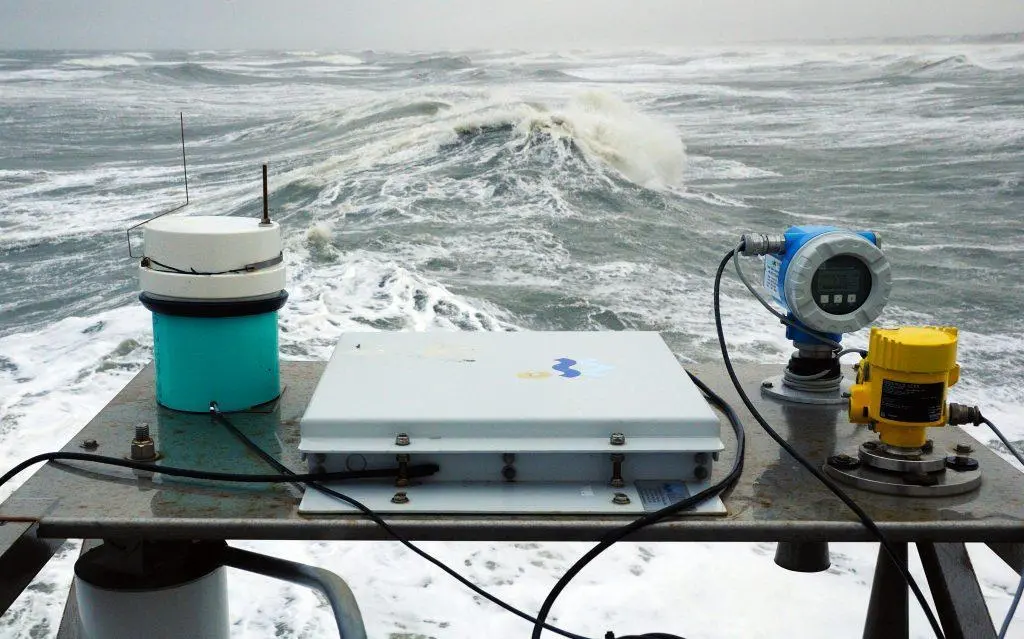
“To provide guidance on the expected long wave climate at sites of interest, a combination of numerical and empirical modelling was performed to establish simultaneous wave measurements at several sites,” says Dorgeville.
“These equations, fed with forecast offshore wave conditions, provided reliable estimates of the operational long wave climate at sites within the port.”
With the RangeFinder continuously measure the sea state, the scheduling of dredging works could be more accurate, thus reducing the duration of the work, minimising impact on vessel accessibility and cutting overall costs.”
“Whilst the initial channel design predicted a dredge volume of 9.7 million cubic metres, the DUKC optimised channel only required a dredge volume of 5.5 million m3, a reduction of 4.2 million m3, or 43%, which resulted in a significant saving in capital expenditure and an ongoing reduction in operating risk,” says Dorgeville.
As shipping grows in size – economies of scale means it makes more sense to increase vessel size – works like this are bound to increase in number. Lyttleton Port is scheduled to be completed by the middle of next year.