![MaritimeJournal[Seawork]](https://www.maritimejournal.com/wp-content/uploads/2026/09/MaritimeJournalSeawork.svg)

Benny Carlsen: A realist with a passion
“This job is all about saving lives. You have to have a passion for it. It simply can’t just be about selling equipment,” explains Benny Carlsen, vice president of Denmark’s Viking Life-Saving Equipment.
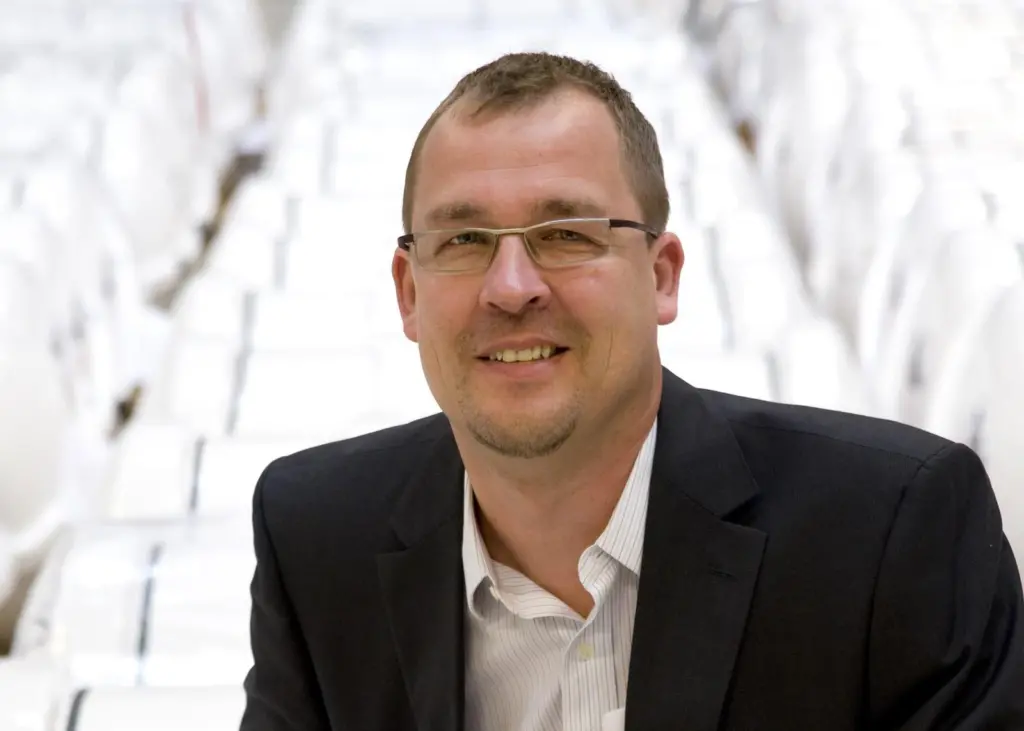
Danish born Mr Carlsen started off as a marine engineer on an icebreaking tug so he understands what can go wrong, both from a technical and a personal perspective. “At one point I was stranded on a dead ship in the sea off Greenland, the engine had cut out.” So he does appreciate what it is like to be at the mercy of the environment.
He adds that testing out the equipment can also be a little unnerving. “Even with all the backup and standby vessels, you are still looking up at 6m waves. Although it’s just a drill it certainly gives you the feeling for what it is to abandon ship and try to survive.”
However, the core of his role rests on a fundamental understanding of the engineering. “In this business you really have to gain the respect of the people you are dealing with, so you need to be able talk about each part of a ship or rig and the challenges these present with the people directly involved.
“To help save lives you have to go way beyond merely complying with the regulation, and this means coming up with new ideas to answer different, changing needs.”
On top of this, he says there are the issues facing the industry as a whole, for example, mass evacuation systems for offshore installations. “We do a lot of lobbying of different governments to try to raise awareness and get appropriate regulations in place but it is a long process and of course it’s political. The truth is that people often don’t take notice until there’s an accident. I guess it is simply human nature but it can be frustrating.”
Mr Carlsen points out there are different parts to the market, some with more maturity than others. “The offshore section is very developed, and the first thing we talk about are the technical aspects, for example arctic systems for Canadian waters. Price is very much second to the solution.”
However, other sectors still have to find their feet. “People who move across from the oil and gas sector to wind farms often find their accustomed safety equipment simply isn’t there. I’d say that the wind farm industry has got some way to go in developing standards, for example, with regard to access and evacuation systems. Those big windmills are like chimneys, and as yet there’s no standard solution for a technician trapped in a nacelle, 70m up in the air.”
He is a realist, and admits that downtime for an offshore support ship is more expensive than a wind farm maintenance vessel so the focus follows the money. However, he believes that the safety solutions, given time and government support, will follow, hopefully before a need gets highlighted by an accident.
By Stevie Knight