![MaritimeJournal[Seawork]](https://www.maritimejournal.com/wp-content/uploads/2026/09/MaritimeJournalSeawork.svg)


Brian Archibald: Answering Orkney’s contradictions
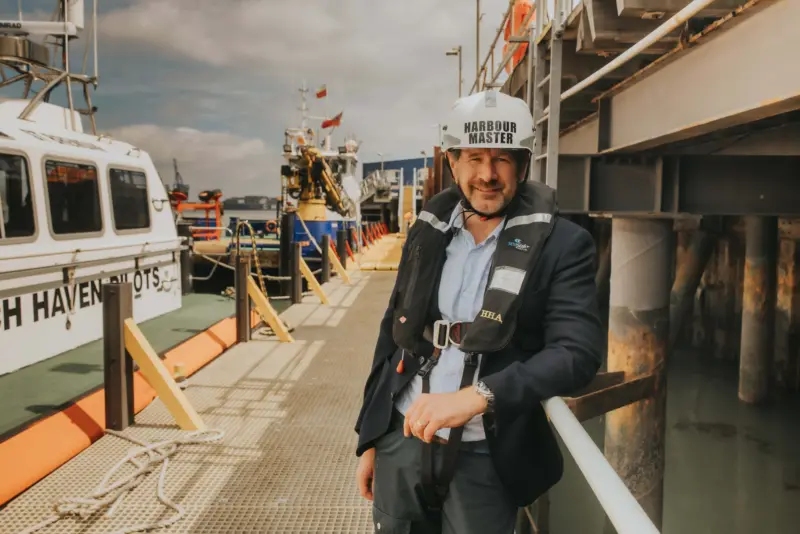
“I have to have my feet placed pretty firmly in two camps,” explains Brian Archibald, head of marine services, engineering and transportation for Orkney, “Even if these sometimes appear to have contradictory aims.”

“Orkney’s vibrant island communities would simply die if we didn’t provide them with internal transport links – but they don’t pay for themselves.” So to help support those transport networks, the council strives to build revenue by pursuing port and harbour business lines “that require some pretty astute commercial decisions”.
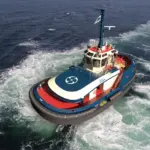
The role, which he took after leaving the Royal Navy two years ago with the rank of Commodore (and the Cross of Honour in Gold for support to the German Navy) is no easy slide into retirement. It makes him Harbour Master for Orkney Islands Council which includes the main port of Kirkwall, the Scapa Flow Oil Port, just under 30 or so miscellaneous piers and harbours, overall responsibility for Orkney Ferries, Orkney Towage and peculiarly, six local airfields. Plus of course a crucial relationship with the democratically elected members of the Council.
This, he says, has brought its own set of contradictions. He obviously is pretty shrewd where it comes to the public sector and commercial relationships – after all he was responsible for £8.5bn’s worth of combat vessel investment programmes for the MOD – and equally understands leadership, having held Defence directorships and active command of a couple of warships, but he is careful about “keeping on the right side of a thin line between giving sound operational advice and influencing policy”.
Still, he admits there are elements he misses since moving to a civilian role beyond the obvious focus which is associated with military tasking. “As a uniformed service you had a tremendous amount of public support,” he says, whereas his present job with a council puts him on the sharp end of “plenty of public interaction and, at times, challenge”.
Certainly Orkney’s relationship with the North Sea oil and gas support market has been widely debated and putting the business case isn’t always easy “as many assume that the oil and gas industry is both in decline and not necessarily environmentally ideal”.
On the other hand he also is deeply interested in the possibilities afforded by cleaner fuels such as LNG and, of course, tidal, wave and other renewable energy sources; after all Orkney is home to a lot of prototype marine energy devices and research – which all provide a steady revenue for Orkney Harbours with opportunities for significant business in the near future.
Once again, the relationship between commerce and service provision is not straightforward: “Orkney waters are busy ferry and fishing areas and the Pentland Firth is a choke point with some 8,000 shipping movements a year. While you might assume commercial shipping and ferries take a direct route, in fact the wind and strong tides mean that they can’t be limited to narrow corridors, so placing these turbines and other devices will require a fair bit of discussion in order that the huge benefits of marine renewables and the daily business of shipping can co-exist.”
By Stevie Knight