![MaritimeJournal[Seawork]](https://www.maritimejournal.com/wp-content/uploads/2026/09/MaritimeJournalSeawork.svg)
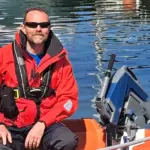

Dirk Illegems: Dockmate
“Five years ago, we had no help at all from any of the other product manufacturers,” said Dirk Illegems of Dockmate: that’s particularly troublesome if you’re producing a highly integrated system.

Kit that allows wireless docking control from anywhere onboard is a case in point, especially one that interacts with engines, motors, thrusters, winches and horn. The challenge, he explained, is that “while you can simply take an analogue system apart and find out how it works in order to link your own technology with it… you don’t have this option with CANbus arrangements, so it’s all far harder to achieve”. Neither is this helped by the plethora of slightly different protocols, “developed partly to protect market share”, he added.
While others have tried to step round the issue by creating mechanical-analogue interfaces, he underlined “that’s just like going back ten years, not a good idea”, especially as it gives rise to errors and lag, putting paid to real-time responses.
It’s just as well that Illegems is particularly stubborn: a lesser man would have given up faced by this particular checkmate. However, he and the Dockmate team slowly and painstakingly built up a whole library of CANbus-to-CANbus gateways “that allowed our systems and the others to talk to each other”, and what’s more, kept it completely up-to-date.
However, he admitted development was a strain. “The finances caused me a lot of sleepless nights. There was no support from the banks, so I sank all my own money into it – but it was slow progress. We made a first batch of 50 units and tested them everywhere for two years before making a second, commercial generation.”
Of course, as Illegems pointed out, safety had to remain uppermost: “Our chief engineer comes from the mining industry where people’s lives are very much at stake, so he won’t let anything through that’s not completely secure.”
Despite this difficult start, it seems that persistence has paid off. After five years, Illegems has experienced a turnaround in attitude: “Rather than trying to threaten us by saying ‘you’re not allowed to do that with our product’, manufacturers have suddenly started to come up to us and begun to offer cooperation, sharing protocols and so on. We are currently involved in projects that allow an even greater level of integration.”
Further, while the development was born in the yacht market, it’s been edging into commercial and workboat segment: he explained that CTV owners are showing interest, “but the technology is useful for any operations where you have limited crew which are needed outside the wheelhouse”.
Finally, it’s not just a high level of physical, but financial control that’s paying off: “We don’t owe anyone anything now – and we don’t need to justify anything to investors,” said Illegems. That’s another freedom he believes has been worth it.
By Stevie Knight