![MaritimeJournal[Seawork]](https://www.maritimejournal.com/wp-content/uploads/2026/09/MaritimeJournalSeawork.svg)


Ed Dudson: BMT Nigel Gee
Really innovative projects still give Naval Architect Ed Dudson of BMT Nigel Gee “one or two moments” of apprehension: “At launch you wonder if the yard has built the vessel to sit at the right load line. And then there’s the sea trials – will it do the speed written on the contract?”
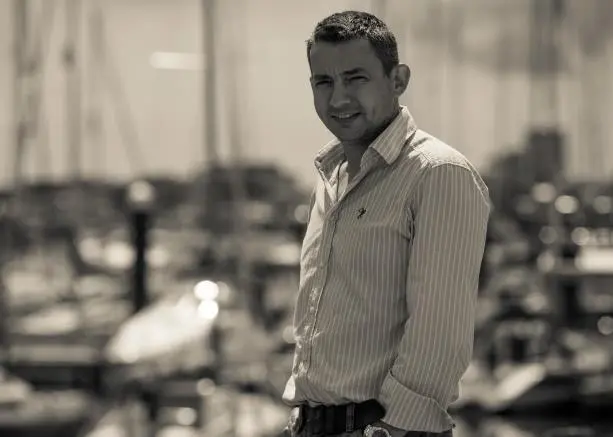
There’s no room for over specification either: “Although a boat that doesn’t make the required speed is plainly unacceptable, if it does a couple of knots over, the yard will say the engines are too big.”
Despite this he’s an old hand at ‘firsts’ having been around BMT Nigel Gee for almost as long as it has been going (it’s celebrating three decades this year), and has, for example, led the design of BMT Nigel Gee’s 55kn passenger-only catamaran – a world record.
More recently, the company has been involved in helping develop the new workboat and high speed offshore craft regulations for both the UK and Germany: the effect is to give transfer craft room to lengthen and break the old 12 person limit he explained. The take-up has been fast: there were two BMT-Nigel Gee designed ‘24 industrial personnel’ vessels on the quay at Seawork 2016, both delivered in the last three months.
However, the response meant “the very first vessel we designed for the new codes, Sure Diamond, had to be built while the rules were still only tentative” he explained, so although he had “a pretty good idea” of how it was going to work out, there was still a moment where he sat there looking at the class society email that had popped into his inbox and wondering exactly what the impact was going to be. Happily, this first vessel got by “without any significant modifications.”
It is, he explained, part of breaking new ground and “when it comes to adjusting any design, you have to decide whether you’re going to argue the point or not.” He added: “If you are doing something very different you will always lose a few of the challenges – but the idea is to make sure you win the major ones.”
He’s very aware nothing is sitting still: “With wind going further offshore it’s not going to be possible to do the furthest farms on a day trip,” he said, and pointed out bigger ‘hotel’ ships are already here. However, according to Mr Dudson, how you get the crew out there “is to my mind nowhere near settled”: bigger vessels are going to be expensive to run while smaller ones won’t handle the steeper seas; interestingly, BMT has a 40m ‘middle ground’ concept that could make the most of both conditions and costs.
Despite this, he pointed out there’s yet more change on the horizon: the next step is to get acceptance for sleeping berths for those industrial personnel, which will open out the operational and design possibilities even further. “Having some influence on the way the industry will finally work makes all this very interesting,” he concluded.
By Stevie Knight