![MaritimeJournal[Seawork]](https://www.maritimejournal.com/wp-content/uploads/2026/09/MaritimeJournalSeawork.svg)






René Berkvens: Long term relationships
“When I finished my studies in Naval Architecture, I decided never to get into shipbuilding as in 1978 the whole industry was in a shambles,” admits René Berkvens, CEO of Damen Shipyards Group.
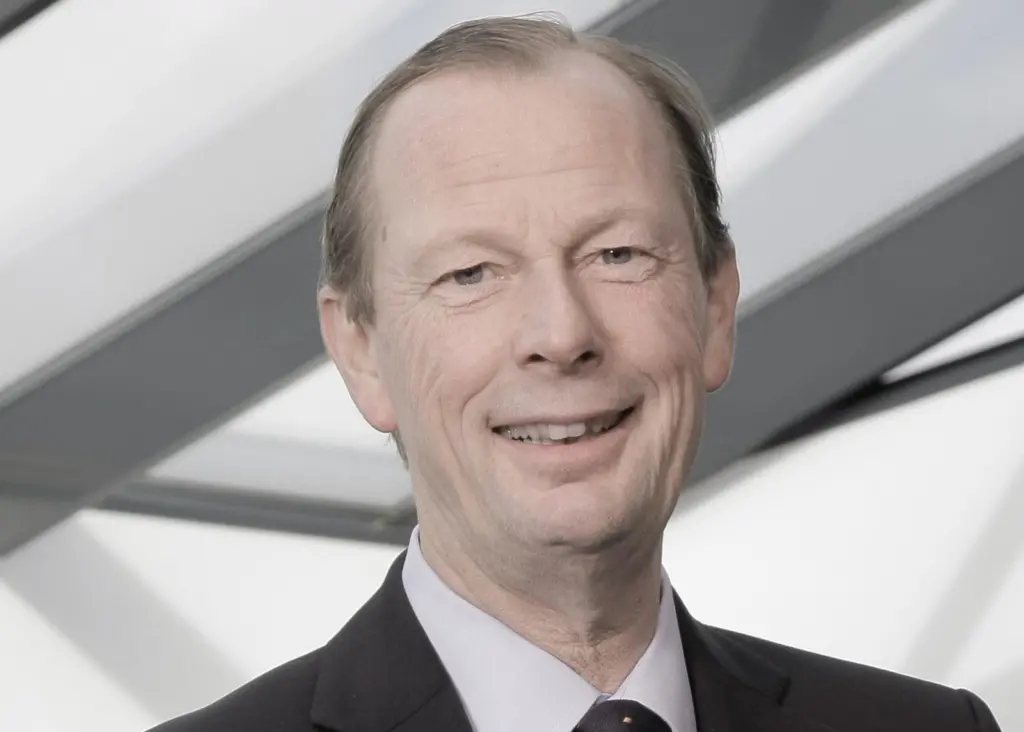
“But somehow after four or five years in the US, I found myself as a junior salesman for Damen… selling boats in Africa.”
“It was an adventure in those days, I was just dropped into Africa pretty much alone, no emails, no fax, and even the telephones usually didn’t work. But when you are 27 years old you are more flexible.” He certainly had to be, as the cultural divide was one of the biggest issues. “Not only does everything take a lot longer, but I had to learn how people were linked, who could help and why things proceeded in a way that, to the European mind, didn’t always seem that logical.”
Cuba and Brazil came next: “The Brazilian market was pretty closed even then, with rules, regulations and maritime laws that made life a bit more difficult – and being competitive is simply not so easy over those huge distances,” he says. “I found the way forward was to cultivate local joint ventures, sometimes formal, sometimes just ‘one off’ partnerships for a single build.” However he admits the company’s attitude and his coincide: “Long term relationships are just more comfortable.”
It almost sounds as if he’s talking about something entirely personal – and in a sense, he is: “You get to know each other’s ways, they know what you have, you know what they bring and there’s less chance of disappointment.” A solid understanding stands the test of both distance and time: there’s one local Brazilian partnership that is still going strong, 25 years later.
However, simple physical distance wasn’t the issue with Damen’s acquisition of Royal Schelde. Mr Berkvens explains it had been a military shipbuilding department that had suffered not from outright conflict but from waves of reorganisation: a war of attrition common to government bodies uncertain of their future. “Given its recent history and the inevitable contrast between a formal, more bureaucratic organisation and a lightfooted commercial group, they obviously felt they might as well have drifted into dark, Antarctic waters…”
So it was important that despite the differences, the two sides find a way to trust each other and cooperate: Mr Berkvens says that although MD, he felt he was really out on a limb, quite a lonely place to be. “However, I somehow managed to push the right buttons” with the new team. When asked for his ‘secret’ he adds: “Maybe it’s about being willing to expose a bit of yourself, and I think bridging a gap like this often comes down to showing them that you can’t, in the end, do it without them.”
Interestingly, the naval architecture training hasn’t fallen completely by the wayside, even now. “Don’t ask me to make a stability calculation, but I have ideas about the boats, and I understand what can and can’t be done – and if it can’t I am honest… but I can suggest something else.”
As Mr Berkvens has headed up Damen Shipyards workboats division at Gorinchem, his take on modularisation is also interesting: “Kommer Damen’s original standardisation concept, typified by the ASD tugs, was really innovative, but I find even now people don’t always understand it completely. When you are talking about economies of scale, you aren’t necessarily talking about cheaper, you are actually talking about better.”
He explains: “When we develop a new model, it’s always with the intention of building a series. This means you can put more into research and development, including partnerships with universities and institutes like Marin.” It gains over the ‘one-off’ approach “simply because it’s much more difficult to recover the costs of the R&D on a single boat”.
So, the boats too are part of a ‘long term relationship’. And although after 30 years of working with one company one might expect things to have worn a little thin, Damen has grown and evolved along with the man: “It’s still fun,” he concludes.
By Stevie Knight