![MaritimeJournal[Seawork]](https://www.maritimejournal.com/wp-content/uploads/2026/09/MaritimeJournalSeawork.svg)




UK Government celebrates London Gateway survival
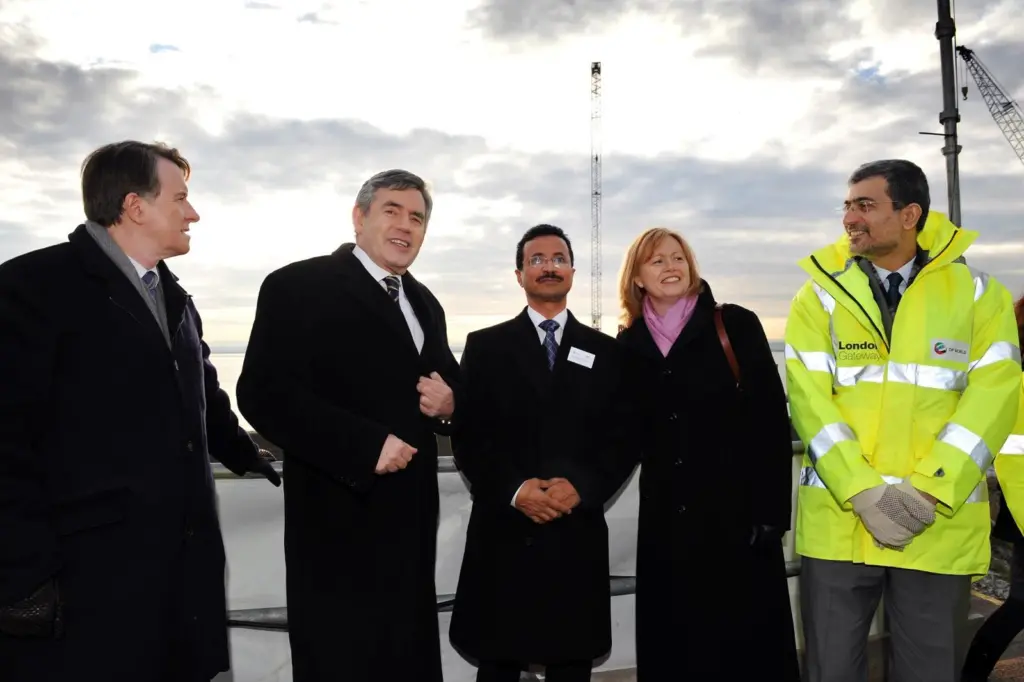
The UK Prime Minister Gordon Brown and Business Secretary Lord Mandelson visited London Gateway’s port construction site earlier this week to mark the start of work on one of the nation’s largest infrastructure projects.
DP World is behind the £1.5bn development, which will be Europe’s largest combined deepsea port and logistics park. The 1,500 acre site is situated at the former Shell Haven oil refinery on the north bank of the River Thames near Thurrock in Essex. It promises deep sea shipping access to with 25 miles of central London and to improve the movement of freight around the UK, reducing road haulage and cutting CO2 emissions.
DP World acquired the proposed 3.5m TEU container terminal and integrated logistics park project as part of its £3.9bn purchase of P&O. DP World then froze the project last March in response to the global shipping slowdown. It looked in further jeopardy in November when DP World’s parent company Dubai World requested a deferment of debt repayments. But DP World kept the project alive this month with the purchase of an additional 1,000 acres of land for the logistics park and for Shell’s remaining interest.
The European Investment Bank has approved £300m of funding for the project and the local authority, Thurrock Council, has asked the Government for permission to borrow money to support London Gateway, which it considers vital for the regeneration of an economically depressed area.
The Prime Minister said, ‘The London Gateway is a significant foreign investment into the UK. It is a massive vote of confidence in the UK’s economic recovery and in this region. UK Trade & Investment and other Government departments have worked closely with DP World over a number of years to make this project possible.’
According to an independent survey commissioned by DP World, the development will generate 36,000 jobs in total, including 12,000 jobs in logistics and construction that will be created in the short term.
On completion, the London Gateway will link road, rail and sea. The company estimates it will save over 60 million HGV miles per year, equal to about 2,000 truck movements per day on the nation’s roads. This will amount to a reduction of 148,000 tons per annum of CO2 emissions. With the London Gateway acting as a hub, containers can be sent via smaller ships to other ports around the UK.
The London Gateway is one of the main economic drivers for helping the regeneration of a large part of the Thames Gateway, the UK’s largest regeneration area covering a 40 mile stretch across East London, South Essex and North Kent.
London Gateway will be the first new deep sea container port in the UK for over 25 years. The European Commission is providing up to €14 million to this project through the TEN-T Agency.