![MaritimeJournal[Seawork]](https://www.maritimejournal.com/wp-content/uploads/2026/09/MaritimeJournalSeawork.svg)

Danish consortium aims to map oil spills
Danish industries are cooperating together in a new project beginning this month to try to help improve recovery efforts following an oil spill.
They say that a reliable detection and mapping of oil in sea water using new sonar technology could have a revolutionary effect on the recovery efficiency in the wake of an oil accident, to the benefit of the fishing industry, the coastal areas, and the environment in general.
There are currently no methods to efficiently map oil in the water column or on the seafloor but with this new technology, it should be possible to get a detailed picture of oil in both those areas, helping recovery operations to remove as much oil as possible after a leakage.
A consortium comprised of RESON A/S and the Center for Energy Resources Engineering at The Technical University of Denmark (DTU-CERE) has received the go ahead for the new project under the Danish National Advanced Technology Foundation (Højteknologifonden).
During the course of the project CERE DTU Chemical Engineering will develop a model of oil contaminated seawater. Based on this model RESON A/S will, in collaboration with CERE DTU Informatics, develop an efficient detection method which, based on sonar technology, can perform a reliable detection and consequently mapping of the oil contaminated areas.
RESON A/Swill be working together with Cashmann Industries, which recovered around 75% of the oil after the Deepwater Horizon incident, and Marine Pollution Control, involved in the recovery after the Exxon Valdez spill in Alaska in 1989.
‘Through this development project, funded by the Højteknologifonden, we will give Denmark a central location on the map as the leading nation in detection of oil in the water column and we will consequently be able to revolutionise the recovery efficiency after oil disasters’,said Kim Lehmann, CEO at RESON A/S.
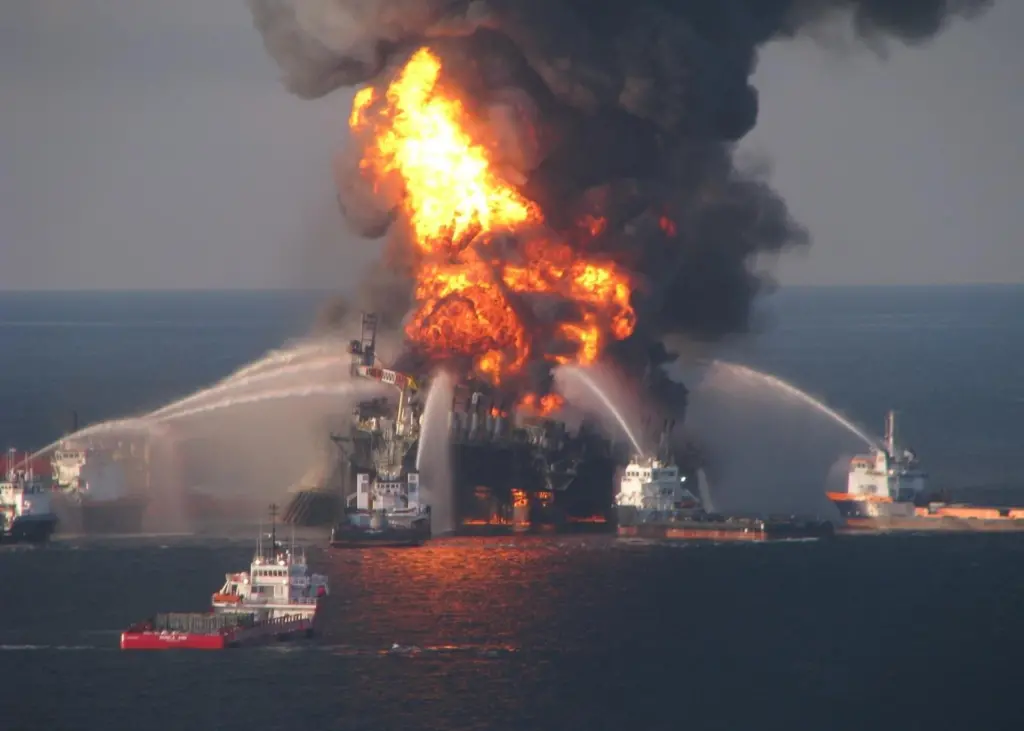
The accident with the oil rig Deepwater Horizon in the Gulf of Mexico last year was one of the biggest oil disasters in history. More than 4.9m barrels of crude oil spilled into the ocean. Following concentrated efforts, an estimated 0.8m barrels have been collected. More than 4m barrels of crude oil have never been collected.
Related Articles
 ACCESSORIES & EQUIPMENT
 ENVIRONMENT
 MARINE CONSTRUCTION