![MaritimeJournal[Seawork]](https://www.maritimejournal.com/wp-content/uploads/2026/09/MaritimeJournalSeawork.svg)






Sniffing drone to catch sulphurous offenders
The maritime authorities in Denmark have deployed a large drone with the capability of sulphur sniffing writes Dag Pike.
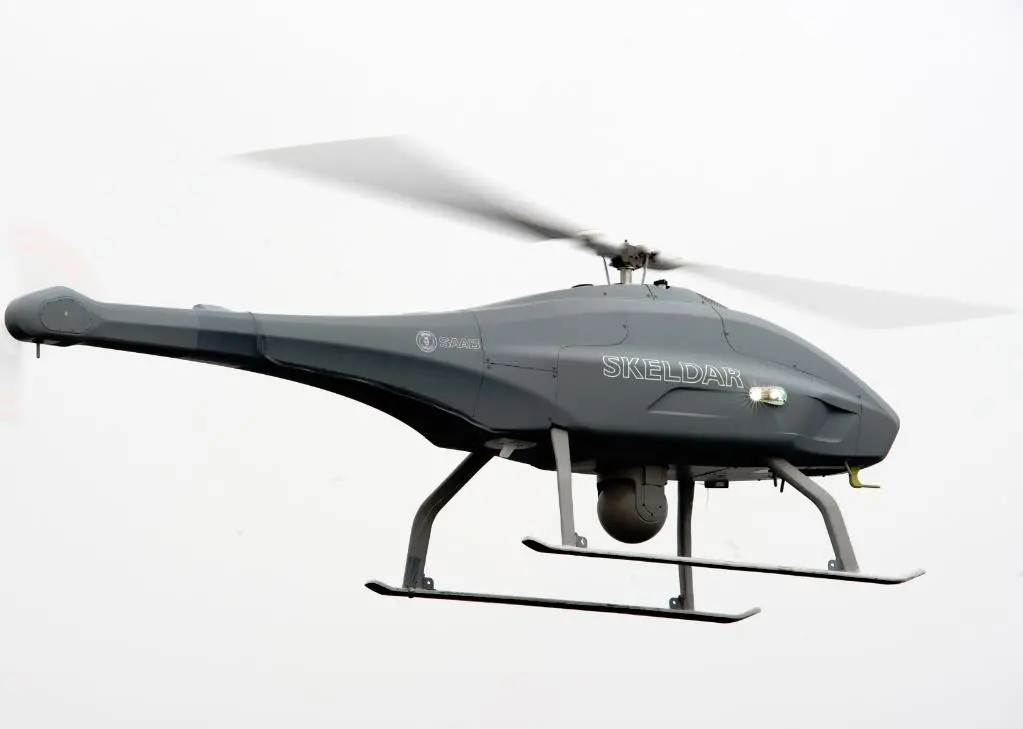
The device has been developed to monitor shipping exhausts in the Great Belt area which may be breaking EU rules governing the sulphur content of marine fuel.
The drone is being used by the Danish Maritime Agency to monitor ship emissions in Danish waters as a means of enforcing the regulations regarding the sulphur content of marine fuel as new regulations come into force. A considerable number of large tankers transit to and from the Baltic Sea through the Great Belt as well as other shipping and the first aerial sulphur emission inspection using this drone system took place on a ship in the area in the middle of April.
The drone used for this operation is a helicopter type drone with a single rotor that has a diameter of 3.4 metres so it is much larger than many of the drones in common use. Designed primarily for military requirements the UMS Skeldar V-200 drone is marketed by the Swedish company Saab. It has a duration of over 5 hours and operates on standard jet fuel with a top speed of 81 knots.
The drone is fitted with a gas sniffer system that is capable of measuring the sulphur emissions by flying into a ship’s exhaust gas plume. The payload of the drone also includes daylight and infrared cameras so that ships can be identified and it also has an AIS receiver to allow its location to be monitored. It is operated from a control station on shore.
This drone technology has been provided by the European Maritime Safety Agency (EMSA) as a further means of preventing ship pollution by ensuring compliance with the legal requirements for European Emission Control Areas which limits the amount of sulphur in marine fuel to 0.10%.
“These kinds of RPAS operations are expected to contribute to a more efficient enforcement of the Sulphur Directive, thereby reducing air pollution from ships while ensuring a level playing field for the companies involved,” commented a spokesperson. In Denmark, the Danish Environmental Protection Agency is responsible for enforcing the sulphur rules, while the Danish Maritime Authority conducts ship inspections in Danish ports and now also with drone monitoring.
Related Articles
 ACCESSORIES & EQUIPMENT
 ENVIRONMENT
 MARINE CONSTRUCTION