![MaritimeJournal[Seawork]](https://www.maritimejournal.com/wp-content/uploads/2026/09/MaritimeJournalSeawork.svg)

ACUA OCEAN: Pioneers in hydrogen USV technology
 Part of our special report
Autonomy at Sea · January 2026
All 10 features
Part of our special report
Autonomy at Sea · January 2026
All 10 features
After more than three years on the drawing board, the hydrogen powered USV Pioneer last August completed the world’s first continuous, remotely operated, 24-hour offshore operation on zero emissions.
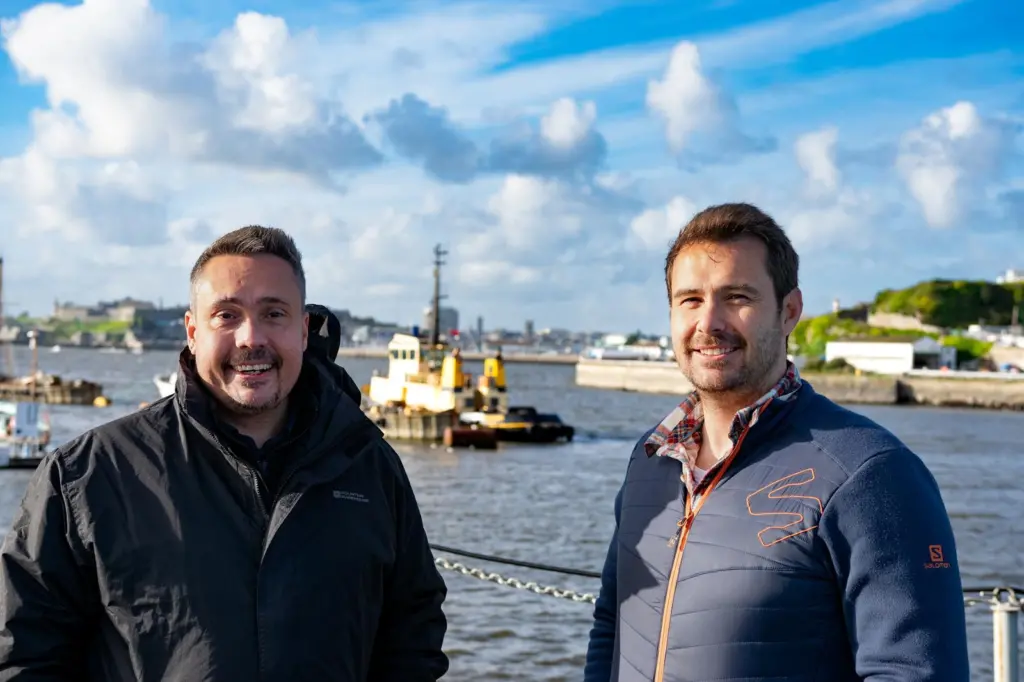
Founded by brothers Neil and Mike Tinmouth in 2020, ACUA Ocean has set out a mission to enable the sustainable and scalable collection of ocean data through technology solutions and services, with a vision to become the leading platform for full ocean data collection for the benefit of our oceans and our planet.
“Two sea trials took place after we first received certification under the UK Maritime and Coastguard Agency’s Workboat Code Edition 3 Annex 2, a world-first approval for a remotely operated, hydrogen-powered vessel,” says Mike Tinmouth. “This meant we were able to go out into open sea. The first mission was from Plymouth to the Eddystone Lighthouse and a couple of days hours later we conducted a 24-hour uninterrupted operation at sea, marking the first time an autonomous vessel, powered by hydrogen, had achieved such a mission.”
Tinmouth says the operation went smoothly and Pioneer performed well with no interruptions. She was remotely operated from Turnchapel Wharf, using Acua Ocean’s own Remote Operations Centre, which is the base of all missions, and travelled beyond the breakwater to a distance of 12 nautical miles.
“We put Pioneer through different manoeuvres, different speeds and different wave heights and critical information was fed to the ROC,” Tinmouth says. “The vessel was monitored during both day and night operations, a first opportunity for the USV operators crewing the ROC to test night-time operations procedures.”
At command they had the ability to see the ROC data, where remote-based engineers dialled in to support the mission, monitoring how the camera and communications systems performed and also weather reports.
Hydrogen power – remote control
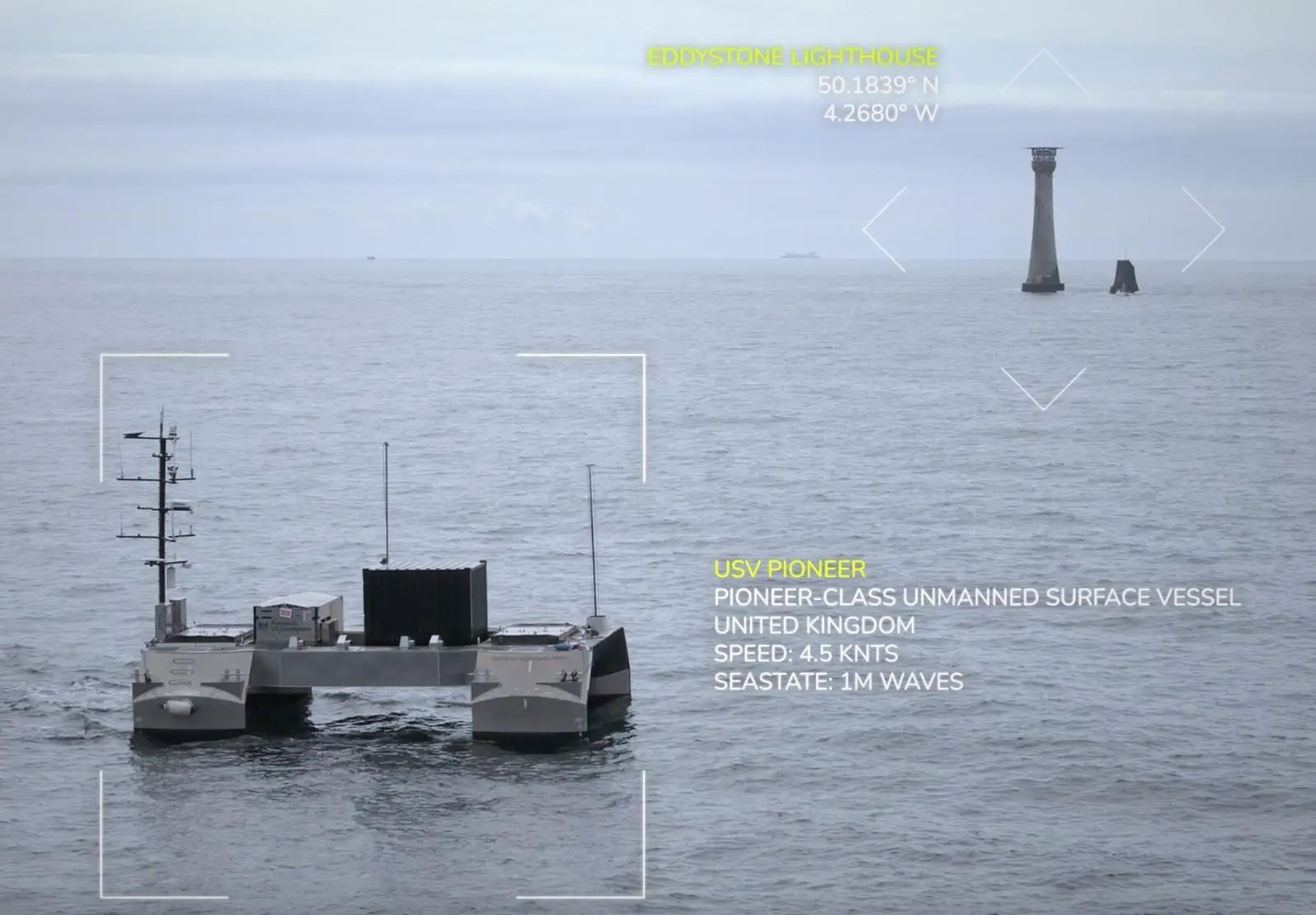
For this first trial Pioneer performed in a range of sea conditions including 1-2m wave heights at 4.5 to 5 knots with a 4-tonne payload performance ballast, but Tinmouth says Pioneer has, in the past, achieved speeds of 6 knots.
“The hydrogen-electric hybrid has essentially been built to be two boats in one, providing us with systems redundancy and increased reliability,” he says. Hydrogen is held in three tanks in the fuel cell module on deck at 175 bar and charges the battery system, which comprises two 43-kilowatt lithium-ion batteries.
“The electric system manages peak power and redundancy so if power is lost from one side of the vessel, we have sufficient power to hold stationary or return to port.”
Autonomous systems, stability and hydrogen performance were monitored around the clock, generating valuable data now being shared with research partners including the University of Southampton and MarRI-UK.
“Facilitating this was USV Pioneer’s operational control, which is managed through a dual-system approach,” says Tinmouth. “For close-quarters manoeuvres like berthing and in-harbour pilotage, a handheld PCN controller is used, whereas for beyond-line-of-sight control, including mission management and real-time data transfer, the vessel is operated via satellite communication from our dedicated ROC equipped with the necessary proprietary software to control missions.”
For longer-term operations, the ROC can be integrated into traditional maritime operations centres providing proximity to decision makers or other platform and payload operators to deliver the best insights from operational situations.
Unique design – unique capabilities
Acua Ocean believes the 14m USV Pioneer has a reliable and persistent offshore capability designed to operate effectively in inclement sea conditions and integral to that is a unique, SWATH hull form which ensures exceptional stability.
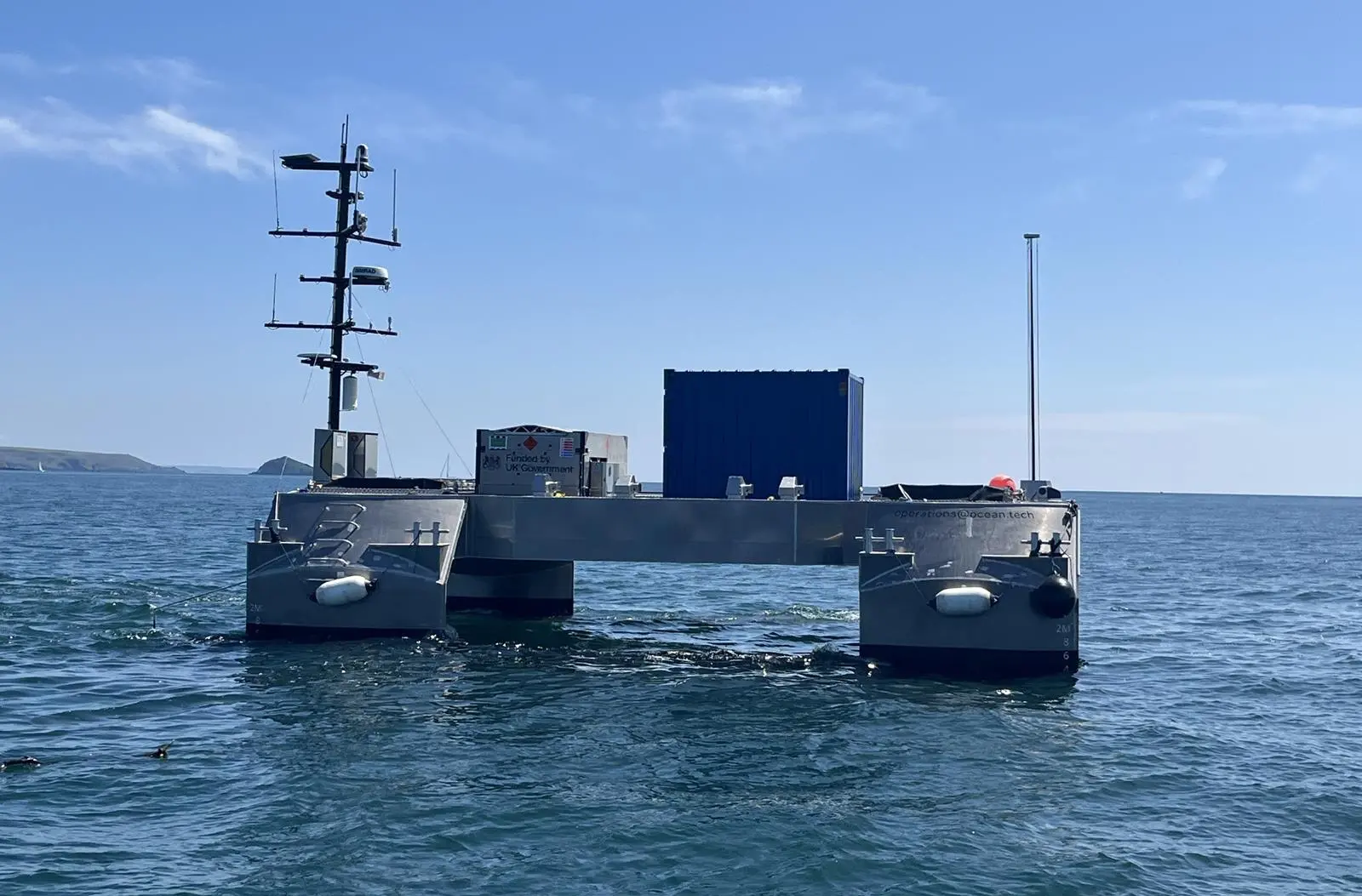
The integrated central moonpool simplifies the installation and safe deployment of payloads, from sensors to robotics, and provides the space, weight and power to deploy modular sensor and system cargo of up to 6 tonnes from a 20ft ISO container.
“With a focus on versatility, scalability and cost-efficiency, the H-USV was designed by John Kecsmar of Ad Hoc Marine Designs Ltd, who is a world-leading expert on SWATH designs – a very unique and stable design which suits the end customers,” says Tinmouth. This was made possible through funding from the UK government Department of Transport’s Clean Maritime Demonstration Competition after numerical and wave tank testing at the University of Southampton.
“John Kecsmar had previously designed dozens of commercial SWATHs, but never an autonomous design. From the outset we knew Pioneer would be a robot with no bridge or cabins; essentially not a traditional concept.”
Pioneer was built by Aluminium Marine Consultants on the Isle of Wight, a shipyard for aluminium workboats. Its robust design comprises aluminium sheets for a modular build that were welded together for final assembly and integrations in four sections in Plymouth.
“Acua Ocean bench tested the internal systems before arrival and the ethos of the design was about reliability and reconfigurability, so that sections could be taken out and replaced,” he says. “The plan all along was to work in a novel way with hull form and robotics, following lessons learned from Acua Ocean’s first autonomous build: the concept vessel Protector, which rapidly iterated Pioneer.”
First of class Pioneer is, however, capable of being adapted to the needs of the end customer, bearing in mind current limitations.
“As power lasts eight to 10 hours on a battery-electric only vessel, running on hydrogen-electric, Pioneer has an endurance of four to 10 days and if operating a diesel system, 40-50 days. Considering hydrogen is currently 12 times more expensive than diesel, the commercial reality is that both the commercial requirements as well as the necessary short side infrastructure aren’t in place to fully realise hydrogen’s potential from an application perspective,” says Tinmouth.
“We therefore decided that a diesel-electric propulsion system can replace hydrogen if requested by a customer.”
That being said, Pioneer continues to deliver zero-emission fuel demonstrations and has so far spent 47 autonomous days at sea, powered by hydrogen and electric propulsion, which is believed to be a world first, certainly for an autonomous vessel.
A future-focused concept
Pioneer’s recent achievements are a benchmark as they have shown the way forward on both Workboat Code 3 regulatory approvals and offshore operational capability.
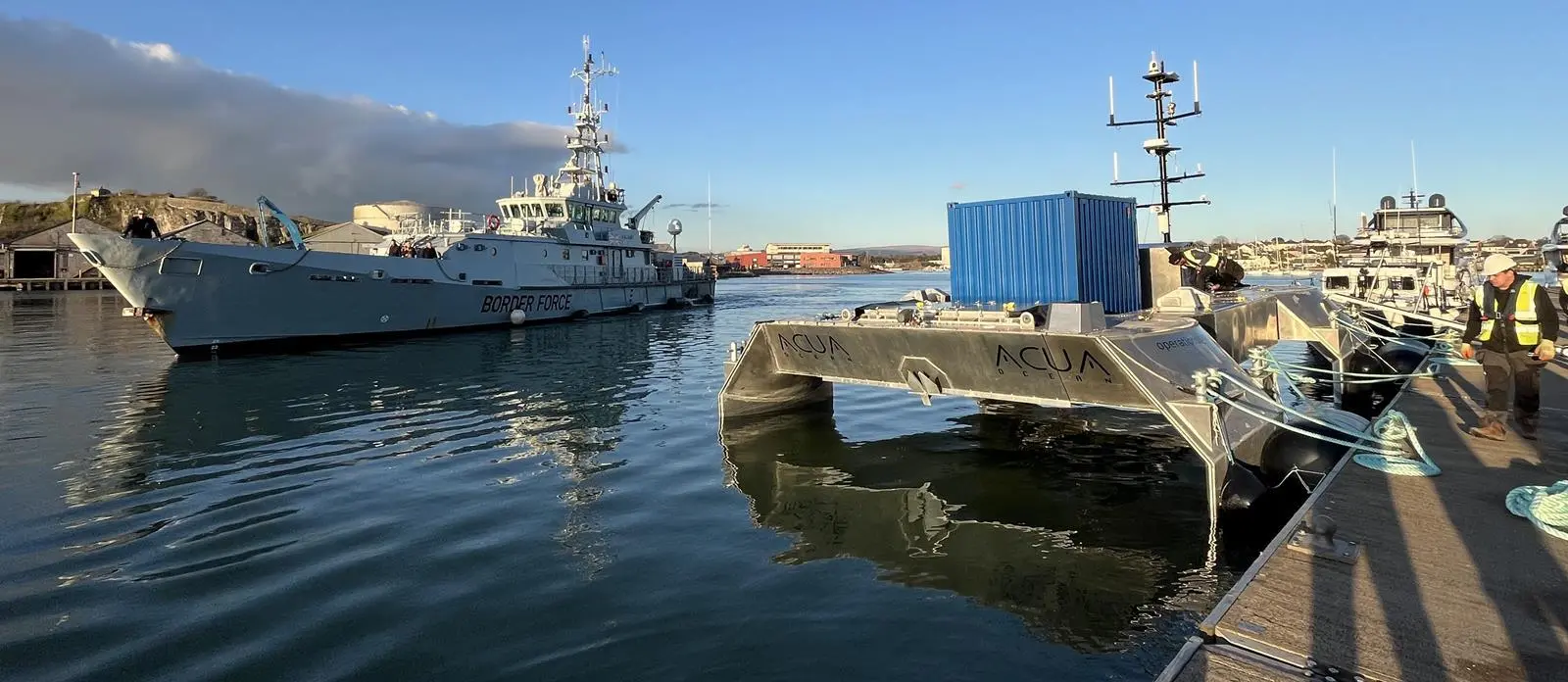
Pioneer and Valiant
Tinmouth also feels that the current situation, where small autonomous vessels are used in ports and harbours but not offshore, will remain the same for the time being, as no other vessel has achieved regulatory approvals, nor have competitors developed hull forms that provide the required stability and payload capabilities for offshore operations.
“For the future, Acua Ocean wishes to trial Pioneer’s very stable modular payloads in higher sea states of 4m plus wave heights. We are excited to be collaborating with technical partners to provide pre-engineered integration solutions for several payloads and deployment,” he says. These will include towed arrays, underwater sensor bodies, ROVs and a gondola-deployed MBES (Multi-Beam Echo Sounder) for reliable high-resolution seabed mapping.
“Pioneer was showcased to a global audience at DSEI and London International Shipping Week in September and we have recently announced building our second and third vessels in the Pioneer class,” he says. “We will use strategic partners to deploy systems and sensor payloads and have exciting demonstrations planned for ‘25/26.”