![MaritimeJournal[Seawork]](https://www.maritimejournal.com/wp-content/uploads/2026/09/MaritimeJournalSeawork.svg)

Silent disruptor: Driving the uncrewed revolution
 Part of our special report
Autonomy at Sea · January 2026
All 10 features
Part of our special report
Autonomy at Sea · January 2026
All 10 features
Hampshire, UK-based RAD Propulsion is becoming one of the most quietly influential players in the booming uncrewed and electric-propulsion sector.
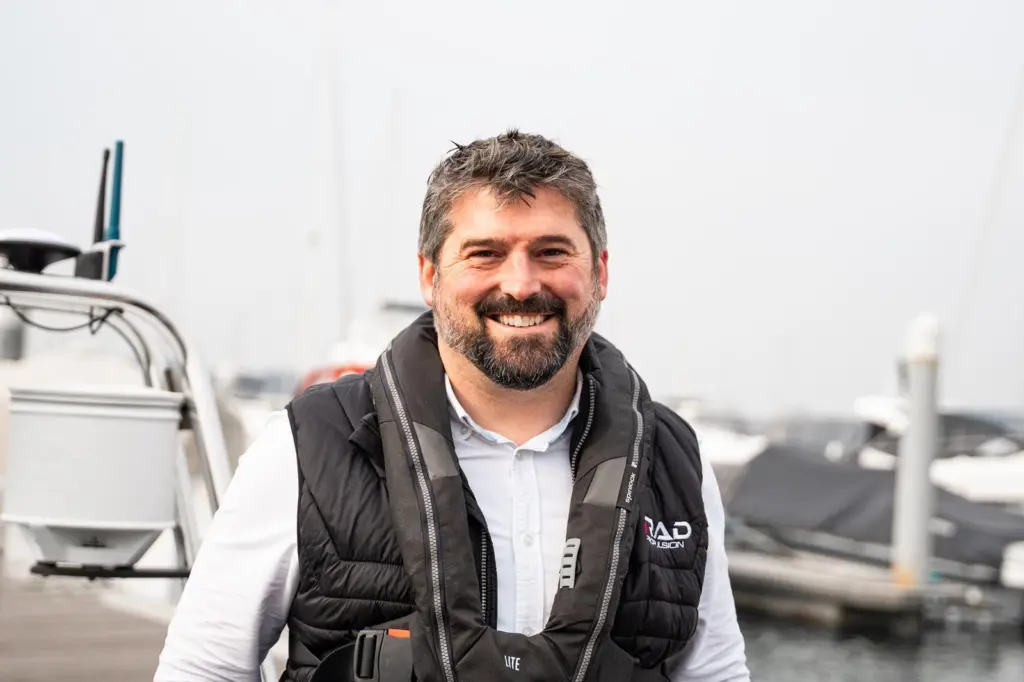
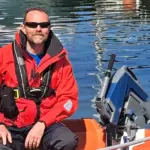
In an interview with Maritime Journal, co-founder and CEO Dan Hook explains how his company is capitalising on the growing demand for uncrewed, long-endurance vessels demanding a lower noise and thermal signature.
Having now supplied drives, batteries and interface units to multiple USV builders – and with more in the pipeline – the company is positioning itself as the enabler of a new generation of smart, electric and remote vessels. It has also delivered full control solutions to several undisclosed clients, contributed consultancy support to multiple USV programmes and developed its own autonomy interface, RADLink, which integrates with standards such as MAVLink.
Hook, a veteran of 25 years in the unmanned marine space, says RAD exists to fill a fundamental skills gap.
“Boat builders historically have been very good at hulls and structures, stability, design and fit out, but not so much the electronics, software, navigation and new electric drives,” he says. “So we built a range of products, like control systems, electric drives and batteries, that boat builders and USV builders can use.”
Autonomy vs remote operation
Public perception often blurs the lines between autonomy and remote operation, but Hook believes the distinction is critical – and widely misunderstood.
“There are very, very few vessels that are truly autonomous,” he says. “To be truly autonomous you don’t have a communications link. You’re out there on your own making decisions based on the environment. There’s only a handful of things doing that, mainly in defence.”
The greater shift for now, though, is remote operation, which is mushrooming at unprecedented speed.
For almost every other vessel, he says, there’s some form of human supervision. The frequency of that supervision varies, but nearly all have a remote operator of some kind.
“I think for routine survey work – cables, pipelines, infrastructure checks – those are going to get more and more autonomous. It’s taken people a while to trust their Roomba (a brand of autonomous vacuum cleaner), but they get there.”
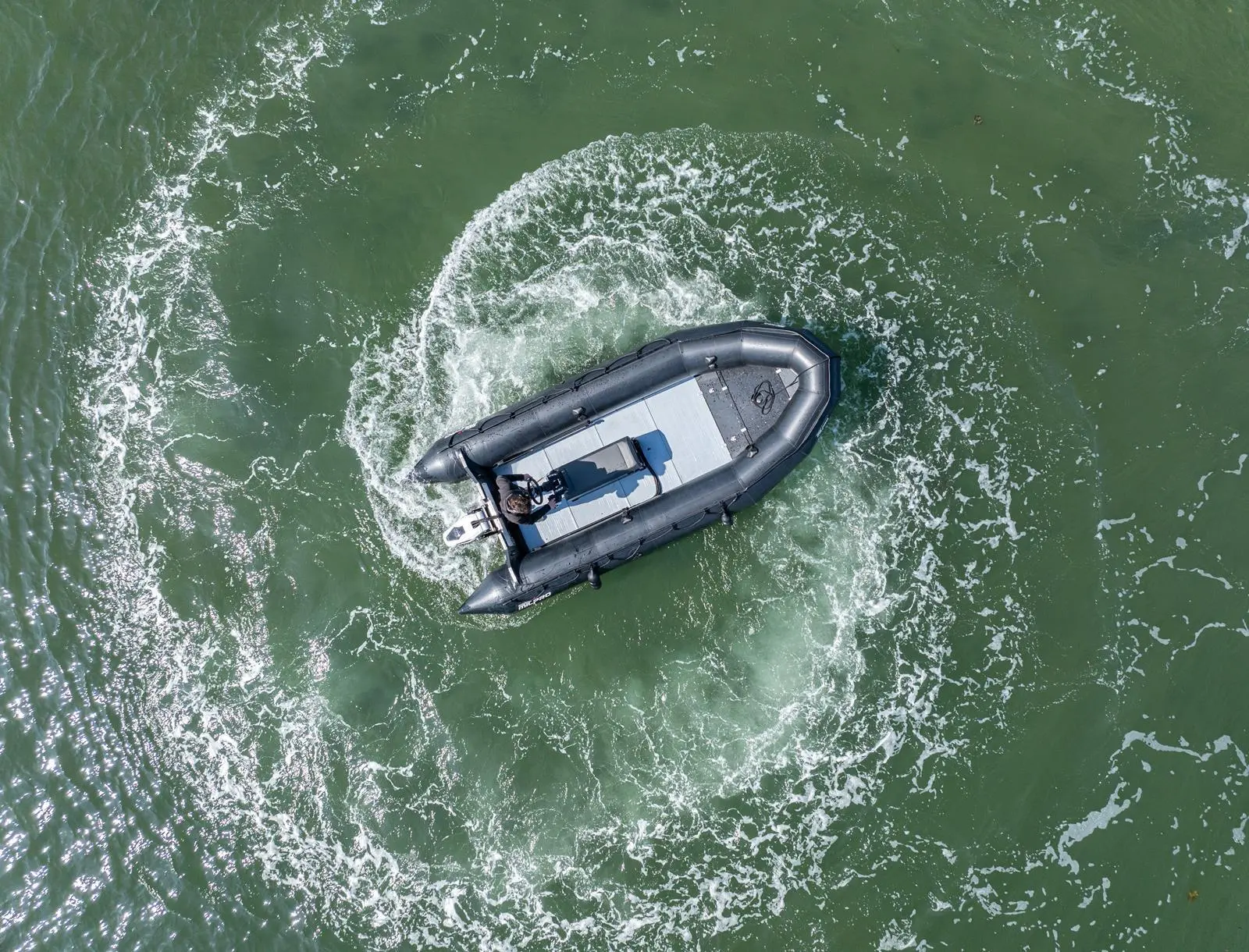
Hook recalls how small the sector was a decade ago.
“Ten years ago I had a pretty good database of everything happening. There might have been 1,000 USVs in the world. Now you wouldn’t be far off finding 1,000 companies doing stuff.”
The number of platforms, he says, has exploded into “maybe 10,000” when including small lake and harbour systems and the proliferation of defence craft.
“It’s massive.”
As operational models shift, vessel design shifts with them. Without crew on board, whole categories of equipment simply aren’t needed.
“If you’re designing it to be uncrewed all the time, there’s no point fitting a loo, internal lights, washing machines, air conditioning, guardrails – the list goes on,” he says. “You save weight, you save power, you save cost… it’s a really positive spiral.”
Not everything can go that way: some vessels will remain dual-role, and Hook acknowledges the limitations.
“Their safety comes top, so if they’re crewed even occasionally, the guardrails are back. When you look at a work boat, so much of it is there because the people are there.”
For uncrewed systems, the barriers ahead are no longer mainly technical.
“The tech is there now,” Hook says. “It’s awareness, training, trust – the human factors. Regulation, insurance, skills. That’s where the big challenges are.”
Defence booms as wind pauses
If any single sector defines the explosion in uncrewed maritime systems, it is defence (see Fincantieri and BMT features in this report).
“Defence has been a really big growth area in the last three years. Massive,” he says again.
The conflict-driven adoption of low-cost surface drones has changed the global landscape: “People have suddenly acknowledged they can do things, they can be quite effective for not a lot of money.”
There are three main uses today, he says: kinetic or weaponised drones; coastal and port patrol craft; and fast-growing interest in logistics.
“I think more and more are soon going to be used in logistics – ship-to-shore transfer, things like that,” he says. “You’ve got companies popping up everywhere building drones, including lots of military ones for the projects in Ukraine and the Far East.”
But other markets are less buoyant.
“Wind farms were really busy a few years back,” he says. “I can’t really comment on the latest numbers, but I’ve got a feeling wind farms have slowed for a few people. I know some of the projects in the US got cancelled and I’m not a wind farm expert, but I know it’s been a bit tough.”
But new niches are emerging. RAD sees rising demand for long-endurance, low-signature vessels – craft that must operate quietly and invisibly for extended periods.
“Demands for low noise and thermal signature are really well suited to our product line,” Hook says. “Electric systems lend themselves to that.”
In the broader commercial world, Hook expects remote operation, not full autonomy, to define near-term adoption, especially in ports.
“I’m pretty sure within 10 years you’ll see most ports with something uncrewed going on,” he says. “It could be CCTV, cleanup, survey… whether it’s more advanced will vary country to country.
“More has happened in the last three or four years than in the 20 before. You can imagine the next three years being bigger than all of it combined.”
Electric future
Electric propulsion, Hook says, is not just the future – it is the logical engineering solution for uncrewed vessels.
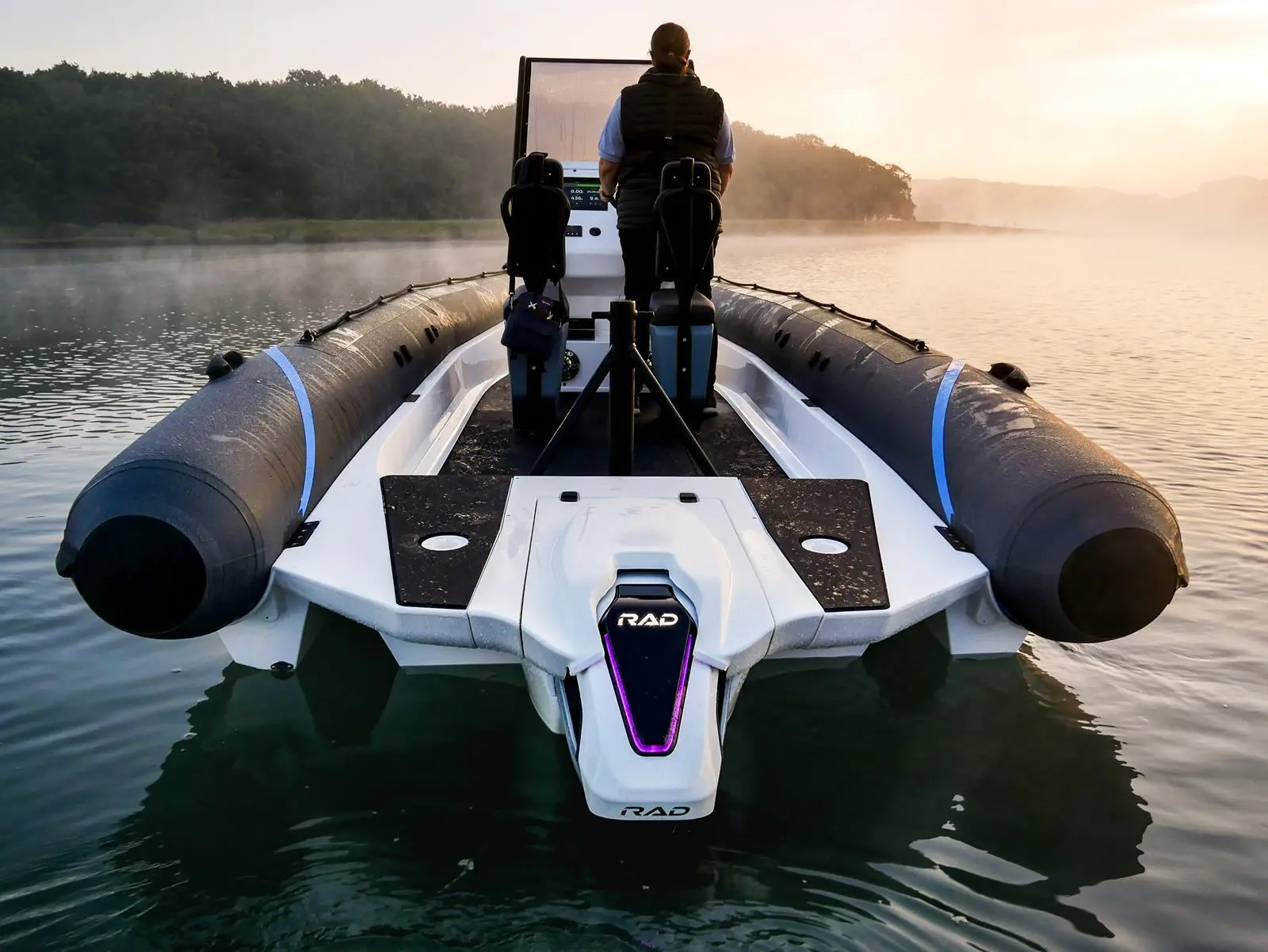
“There’s a really long list of positives of using electric in robotic systems,” he says. “It’s more reliable, more easily controlled, quieter. It suits long-endurance running.”
Whether paired with diesel generators, HVO, solar, fuel cells or all-battery systems, electric architectures unlock performance advantages that conventional drivetrains cannot match. “More and more robotic systems are going electric or hybrid electric,” he says.
This belief shapes RAD’s propulsion portfolio. The company began with a 40kW drive, recently launched a 120kW unit, and is now developing a smaller 6-8kW model.
RADLink, the company’s control and autonomy interface, is central to the company’s philosophy of openness and ease-of-integration.
“We publish our interface standards,” Hook says. “We don’t have proprietary codes that people can’t work with.”
RADLink is designed so that autonomy providers can plug in their own systems with minimal friction.
“I’ve seen it with my own eyes – within a couple of hours, robotics companies that didn’t know our system at all were fully plugged in, interfaced and running. It’s not quite ‘plug a USB in’, but it’s not far off that.”
RAD has supplemented its hardware and interface systems with full control packages for select clients – autopilot, communications, cameras and supervisory control – while building a network of partner companies with their own proprietary autonomy stacks.
Data handling and communication remain key issues for the sector.
“The amount of data generated, although high, is still not that high compared to a bunch of teenagers on TikTok,” he says. “Edge processing is quite a trend – do what you can on board and send only the important bit. If you’re collecting HD video on 10 cameras, most of it is empty sea. You only send images that matter.”
Remote control infrastructure is also maturing, but while technically it could be done from a coffee shop, that’s not going to happen, he says.
“People are worried someone would be on a laptop in Starbucks driving a robot and knock their latte over. Technologically you could do it but in workboat environments, the safety case doesn’t stack up.”
RAD in the field
RAD’s growing project list demonstrates the breadth of its systems, such as a project with Zero USV in Plymouth.
“They’re doing really, really well,” Hook says. “They’re principally focused on defence and coastal monitoring, and they did do some survey work. It’s mainly anti-submarine warfare and coastal patrol.”
In the Netherlands, RAD supplied drives to Damen for a new vessel developed with mobility partner Z-Buzz.
And the company is also involved in three defence projects that cannot yet be named.
“Some are using the drives; some are using a lot more of our control system,” Hook says. “We’re a bit more involved in the actual autopilot and control.”
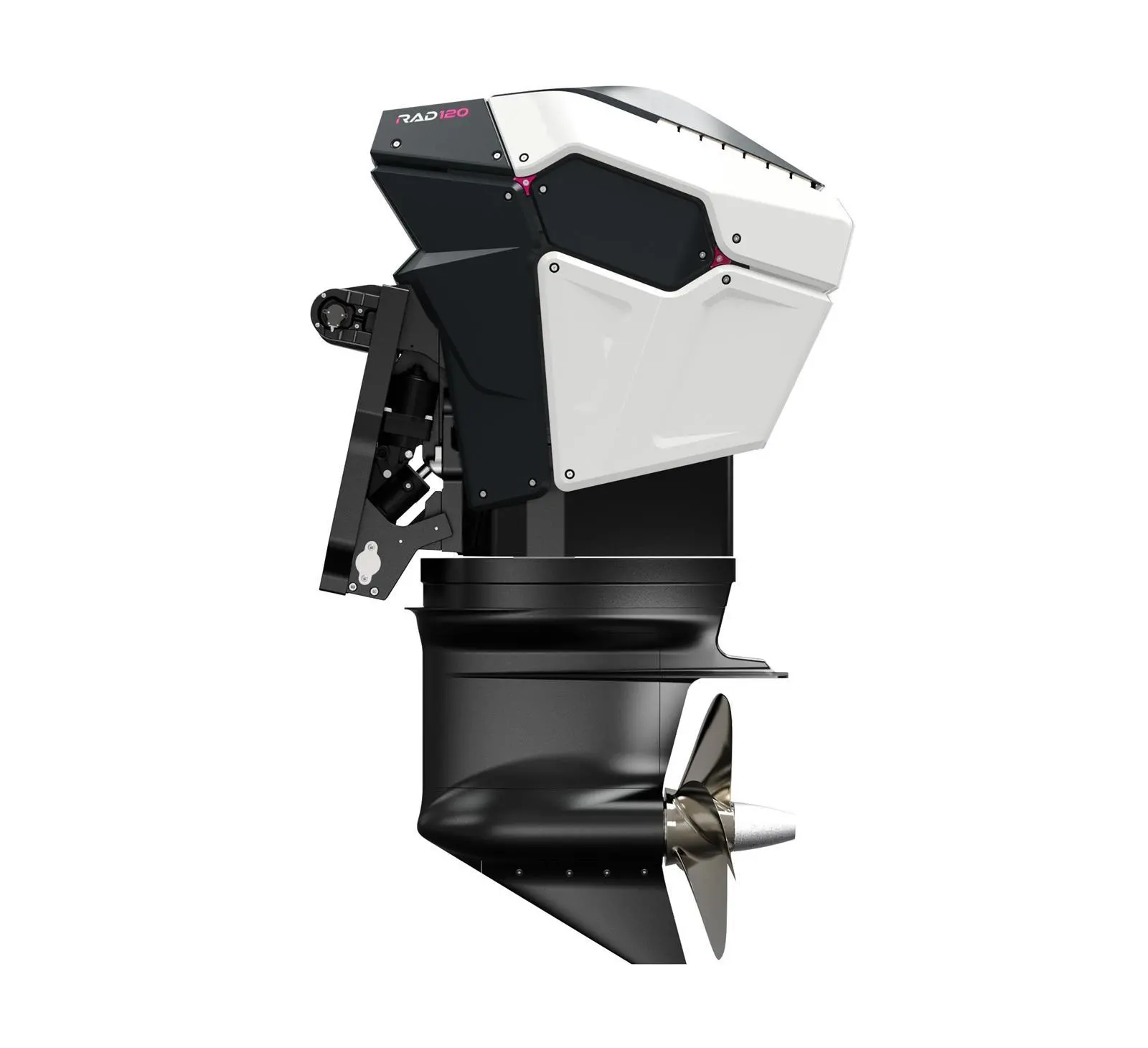
RAD Propulsion’s new 120kW outboard
One of the company’s most distinctive installations lies far from Europe’s defence labs: a 35-metre solar-powered floating hotel on the Chobe River in Africa, equipped with four RAD 40 drives.
“It runs on solar alone,” Hook says. “The whole roof is covered in solar. They get enough energy during the day to fully charge the batteries, and they use the batteries at night to run air conditioning and the kitchen. It’s really cool.”
The 75-tonne vessel showcases what Hook sees as a fast-approaching future: electric systems powering large workboats, pontoons and barges.
RAD’s technology is not limited to uncrewed platforms.
“Probably two thirds, maybe three quarters of our drives are going on crewed conventional boats,” Hook says. “One-quarter or one third are starting to go onto uncrewed.”
As for the near future, Hook highlights the company’s excitement about scaling up.
“We are really excited about our new 120kW drive,” he says. “It gets us into much bigger boats.” RAD will be showing its latest developments at Seawork in Southampton next year, vessel to be confirmed.