

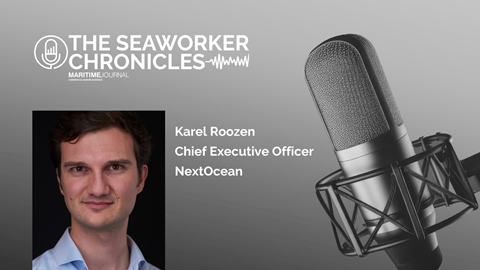
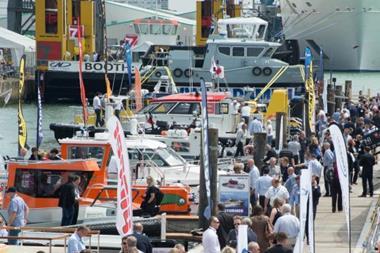
NextOcean has a stand, 9-J120, where there will be hands-on opportunities to meet with the team and see firsthand its ground-breaking wave-prediction technology.

In the podcast you will hear about the inspirations for the company’s tech: how an understanding of what the crews know all about – the higher, ‘out of pattern’ wave that can arrive at any time – sparked the idea in the first place; how the mindset can shift with this technology to anticipation rather than reaction; and how that three-minute prediction time, a tiny window, can change timing decisions in offshore workflows.
NextOcean started around 10 years ago as a spin-off from Delft University of Technology. The CTO and co-founder completed a PhD on wave and vessel motion prediction, with research partly funded by offshore companies looking for a solution to unpredicted high waves during operations.
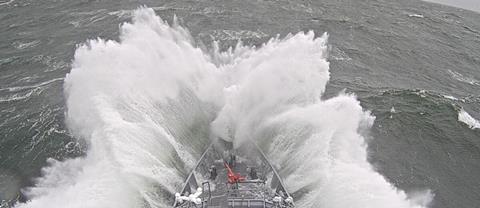
In the interview, Karel frames the company’s drive as working towards a world free of wave-related offshore accidents, which can see crew being flushed off decks, equipment being smashed, helicopter and technician landing and transferring difficulties.
NextOcean’s contribution, as Karel describes it, is the capability to predict on a wave-by-wave basis, allowing crews to see what is coming their way and take action upfront. He describes this as a capability that goes beyond accepting probability, it aims to reduce surprises in the moments that matter.
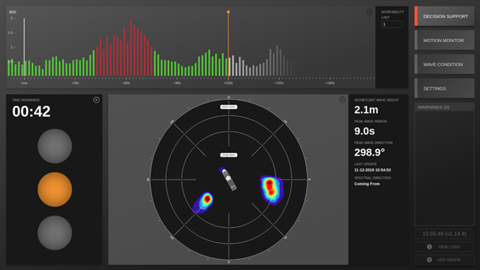
Karel is candid about what can and cannot be reproduced on a show floor. At WindEurope, NextOcean will have a demo user interface running, showing what crews see offshore.
The stand experience is less about spectacle and more about practical evaluation:
- what crews see, and how decisions are supported
- what the system can do, and what it cannot do
- how clients use it in the field, and what they think of it
Key takeaways
- NextOcean’s framing is safety-first, focused on preventing wave-related incidents driven by short-horizon unpredictability.
- NextOcean’s system includes the regular statistical representation of the sea-state in the form of a 2D-Wavespectrum along with Hs and surface current. This calibrates the situation ‘here and now’.
- The shift described is from statistical reasoning and the associated limits to wave-by-wave anticipation, providing near-term decision support.
- The stated lead time is about three minutes, enough to influence timing choices in real workflows.
- Why it matters for Fleet & Technical: If you operate close to weather limits, the question becomes less ‘is the sea state acceptable?’ and more ‘what is coming in the next few minutes?’ A short lead time can be operationally meaningful when the risk is concentrated in specific steps, like transfers, deck work, lifting, or approach and positioning.
Compliance / DPA
Decision defensibility often depends on whether timing choices were reasonable under the conditions. A predictive signal introduces a new kind of evidence and a new expectation, that teams can show they had a warning and acted, or can explain why they did not.
Insurer / P&I
Wave-related incidents often sit in the space between “known risk” and “unexpected event”. A prediction capability changes the discussion toward prevention and foreseeable risk management, especially if it becomes widely adopted and integrated into operating practices.
“With the current state of technology: ‘a huge wave caught us by surprise’ doesn’t have to be the reason anymore,” says Karel.