

With Griffon Marine’s evolution over the past 12 months resetting how the business approaches the support it provides vessel operators with the challenges they are facing today, Mark Downer, CEO, explains why his Trafalgar Wharf shipyard is ready for the future.

For Downer, the first year has already validated that shift. “We’ve seen strong demand straight away, with new contracts, repeat business, and recognition across the industry. But more importantly, we’re seeing a change in the type of conversations we’re having with clients. It’s less about ‘build me a boat’ and more about ‘help me solve a problem’ - whether that’s compliance, cost, capability, or extending the life of an asset.”
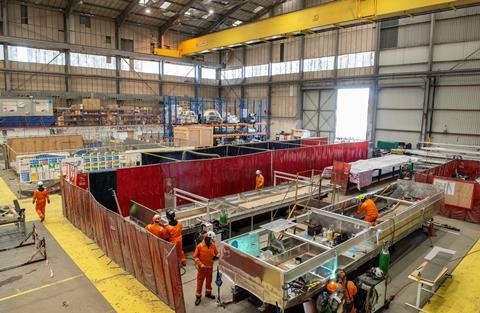
That mindset is anchored at Trafalgar Wharf, where Griffon Marine Shipyard operates as a multi-disciplined facility designed for flexibility as much as output. With over 36,000 sq ft of covered production space, slipway access, and the ability to handle vessels up to 24 metres, the yard is configured to support both new build and complex refit programmes side by side.
But the physical infrastructure is only part of the story. What increasingly sets the yard apart is how it responds to the structural pressures shaping the marine sector -pressures that are forcing operators to rethink how they manage fleets.
“The big three are clear,” says Downer. “Uncertainty around decarbonisation, ageing assets, and constant budget constraints. Those aren’t abstract issues, they’re operational and commercial decisions owners must make now.”
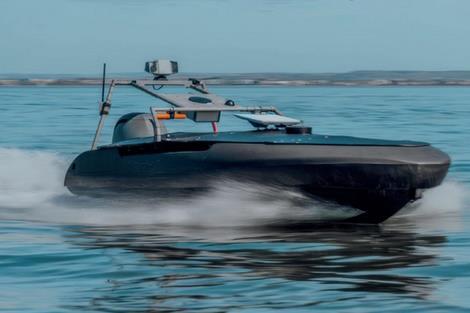
At the same time, the nature of maritime operations itself is evolving. Advancements in maritime technology, alongside the rapid growth of autonomous and remotely operated platforms, are driving further diversification in the type of work entering the yard. This shift is broadening both the scope of projects and the expectations of operators, many of whom are no longer looking for standalone vessels, but integrated solutions that combine platform, payload, and long-term support.
Rather than positioning itself purely as a new-build yard, Griffon Marine has leaned heavily into refit and retrofit, two areas seeing rapid growth across the UK. While often grouped together, they serve different purposes. Refit focuses on refurbishment and overhaul, improving performance, extending life, and modernising vessels. Retrofit, by contrast, is about introducing new technology - engines, propulsion systems, emissions solutions - that weren’t part of the original design.
Both are now central to how fleets evolve.
“In many cases, replacing a vessel simply isn’t the best option,” Downer explains. “Cost, lead times, and uncertainty around future technology and regulation all make that a difficult call. What we’re seeing instead is a much more pragmatic approach, operators asking how far they can push existing assets.”
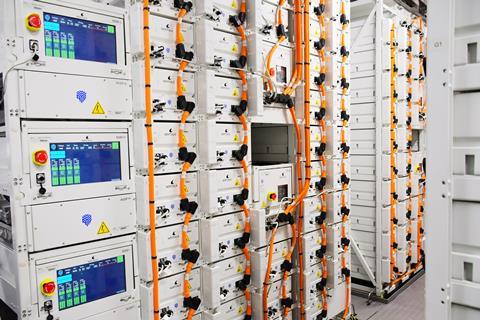
At Trafalgar Wharf, that demand translates into a wide range of practical interventions. Engine and propulsion upgrades are among the most common, alongside electrical upgrades and system replacement, whether transitioning to hybrid systems or preparing vessels for alternative fuels. Alongside this, significantly repurposing or extending the operational capabilities of the platform, effectively making it relevant past its original life-expectancy, whilst the uncertainty settles, is something Griffon Marine are recognised to be experts at. For many operators, it’s a way to delay a decision whilst waiting for clarity and balancing compliance with commercial reality.
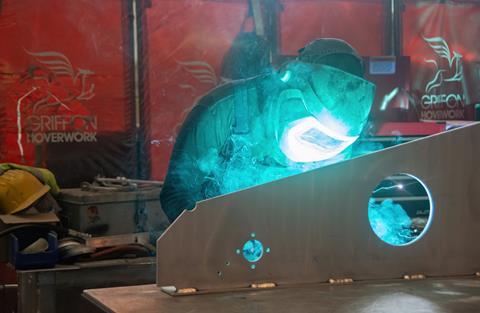
Griffon Marine’s advantage lies in its ability to deliver both sides of that equation within a single facility. Mechanical and electrical engineering teams work alongside fabrication specialists, designing, testing and integrating new systems into existing platforms while maintaining performance and safety standards. The same expertise that underpins new-build aluminium vessels, precision cutting, complex welding, and systems integration, translates directly into retrofit work.
This capability is becoming increasingly relevant as new entrants enter the market - companies developing advanced payloads, autonomous systems, and mission technologies, but without in-house boatbuilding expertise. Griffon Marine’s heritage and proven shipbuilding pedigree position it to bridge that gap, supporting projects across the full lifecycle, from initial design, prototyping and vessel construction through to in-service support.
That crossover is particularly evident in the yard’s recent output. Alongside new-build programmes, including 20-metre aluminium catamarans, 9-metre monohulls, and mid-size hovercraft, the company has completed a major mid-life upgrade of 24 high-speed craft. It’s a blend that reflects where the market is heading.
“There’s no one-size-fits-all solution anymore,” says Downer. “Some clients need new vessels. Others need to extend what they’ve got. Increasingly, it’s a combination of both, and the ability to do that in a coordinated way is where we add value.”
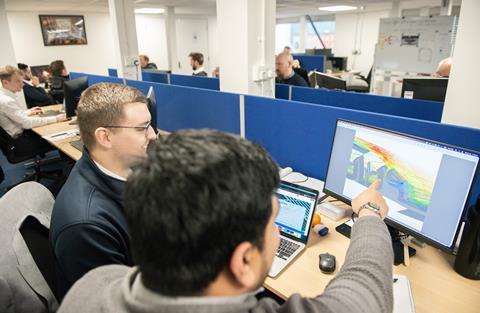
That coordination is reinforced by the wider group structure. Griffon Marine Solutions feeds design and engineering expertise into projects from the outset, while Griffon Marine Support ensures vessels remain operational long after delivery. The result is a more continuous relationship with operators, rather than a single point of engagement.
For Downer, that continuity and the build-up of trust is essential in a market defined by uncertainty.
“Fuel choice is a good example,” he says. “There’s no clear winner yet, and that creates hesitation. But standing still isn’t an option either. What we can do is help clients make incremental, informed decisions, whether that’s installing dual-fuel capability, improving efficiency now, or designing in flexibility for the future.”
That approach also reflects a broader constraint across the industry: capacity. With major shipyards heavily booked, operators are facing long lead times for new builds, delaying both expansion and renewal. Smaller, more agile facilities like Trafalgar Wharf are increasingly filling that gap, particularly for specialist vessels and retrofit programmes.
“Speed matters,” Downer notes. “Not just in terms of vessel performance, but in how quickly you can respond to a changing market. Alongside that we know that our reputation for high quality and on-time delivery is critical in the UK maritime sector and we proudly guard that. If we can help a client finish a prototype quicker or bring a vessel back into service faster or upgrade it without taking it out of operation for extended periods, that has a direct operational or commercial advantage.”
“The operators who succeed will be the ones who stay flexible,” Downer concludes. “That might mean trialling new technology, investing in new assets, but just as often it means getting more from what you already have. Our role is to give them options, and the confidence to act on them.”
In a sector often defined by long cycles and heavy capital investment, Griffon Marine Shipyard is positioning itself differently: not just as a builder of vessels, but as a partner in navigating change, and increasingly, a go-to company for solving complex maritime challenges across design, build, integration, and support.