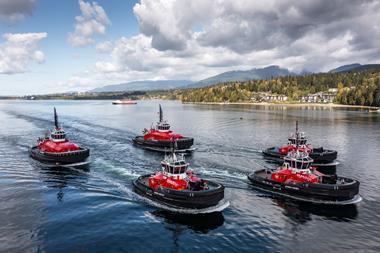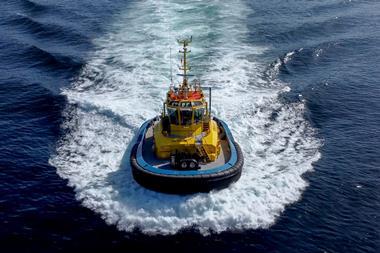



The Foss Maritime Company, based in Seattle, USA, is to build the first three vessels of a new and innovative ‘Arctic’ Class of deepsea tugs.
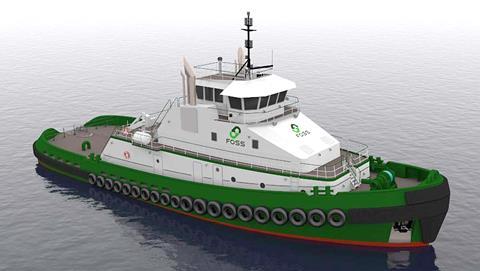
Foss is introducing the new vessel in response to new oil and gas industry opportunities and as a fleet expansion to broaden its capacity to take on large projects in extreme environmental conditions. Construction on the first tug starts in June of this year at the Foss ‘Rainier’ Oregon Shipyard. The yard is being expanded by an additional 10,000 square feet, allowing for larger vessels to be built more comfortably.
Gary Faber, Foss’ president and chief operating officer, said in a prepared statement: “These vessels will be built using the latest advances in technology and equipment. We want to increase efficiency, improve safety and performance and reduce environmental impact. These concerns are paramount to our customers, our stakeholders and our crews involved in offshore drilling and other project work in extreme environments.”
Foss has engaged naval architects Glosten Associates as their partner on the project. The new tugs will meet American Bureau of Shipping (ABS) A1 requirements, including standards for hulls, machinery, towing, anchors and cable, ABS Ice Class requirements, SOLAS requirements for onboard rescue boat and davit and, in keeping with the Foss emphasis on protecting the environment, the Green Passport, which requires an inventory of shipboard hazardous materials that make decommissioning of vessels far safer.
The new tugs are designed to withstand the rigors of Arctic operations and will be positioned to compete for opportunities in the oil and gas industry. Foss has five vessels committed to an Arctic offshore exploration project in the Chukchi and Beaufort Seas and the new construction project will position the Washington based operators to provide services and support with tugs, landing craft, crew boats and barges. The lack of infrastructure in the rapidly thawing Arctic regions increases the need for suitable, robust tonnage for that purpose. The tugs will be used primarily to tow barges with oil field modules, rig topsides and project cargoes worldwide.
Vessels of the new ‘Arctic class’ will be 132 feet (40.23m) in length overall, with a breadth of 41 feet (12.50m) and maximum draft of 18 feet (5.49m). A twin screw propulsion system will be powered by two Caterpillar C280-8 Tier 2 main engines, running on Marine Gas Oil, and generating a total of 7,268 bhp. The main engines will drive two 126 inch (3.20m) diameter five blade, fixed pitch propellers via Reintjes reduction gearboxes. The propellers will rotate in Nautican nozzles, giving the tugs a predicted bollard pull of at least 100 tonnes.
Markey double drum TDSD-40 towing winches with a maximum brake holding capacity of 230 tonnes will be fitted. Each drum will accommodate a 914m of 57mm diameter steel wire towline.
Among the environmental features to be incorporated in the new vessels will be no ballast tanks, eliminating the chance of transporting invasive species; holding tanks for black and grey water to permit operations in no discharge zones such as parts of Alaska and California; energy efficient LED lighting; and hydraulic oil systems compatible with biodegradable oil.
The delivery dates reported for the first hull is early in December 2014, with the second and third to follow at intervals of a year.