





INTERVIEW: Wärtsilä on marine’s electric future
As the maritime industry accelerates its transition to low- and zero-emission solutions, Wärtsilä is playing a commanding role by engineering fully integrated propulsion systems tailored to specific vessels.

Torsten Büssow, managing director of Wärtsilä’s Electrical and Power Systems division, talks to Maritime Journal about the company’s fast-evolving role in the marine battery market.
“We are electrical integrators,” says Büssow. “We don’t have our own factories for batteries. We work with battery makers to create marinized systems that meet the needs of each ship. That’s how we make our input felt in the product.”
Wärtsilä acts as a bridge between battery OEMs and vessel owners, shaping full-electric or hybrid propulsion solutions using its expertise in marine engineering.
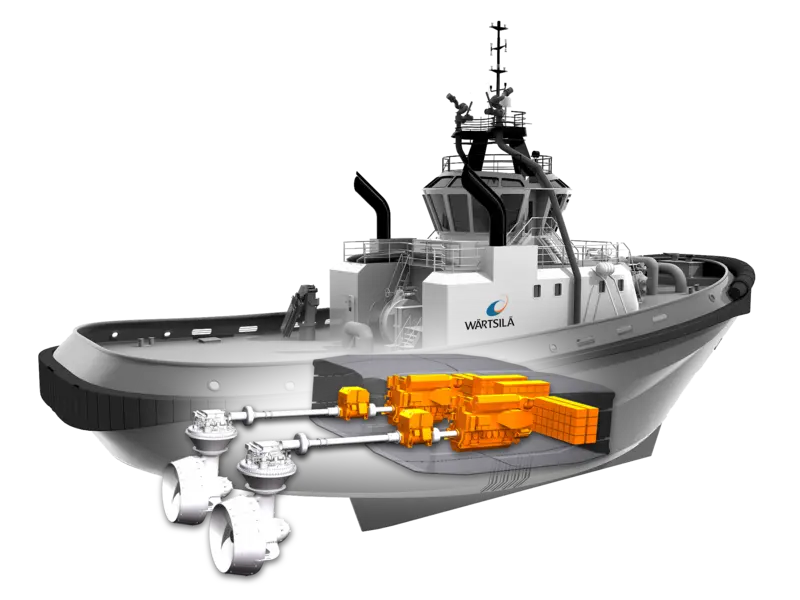
This system-level responsibility means Wärtsilä engineers complete solutions – generators, converters, transformers, and batteries – that are tailored not only for the different demanding marine environments, but the different use cases they can expect.
“The marine market is so small that there are no dedicated factories for marine converters or generators,” he says. “We adapt and engineer existing technologies into robust marine-grade systems.”
Tailoring
Wärtsilä’s integration role also means flexibility across vessel types and battery chemistries. “We have approved suppliers for all chemistries to fulfil different ship specifications,” Büssow says. “A ferry is going to have very different requirements than a tug.”
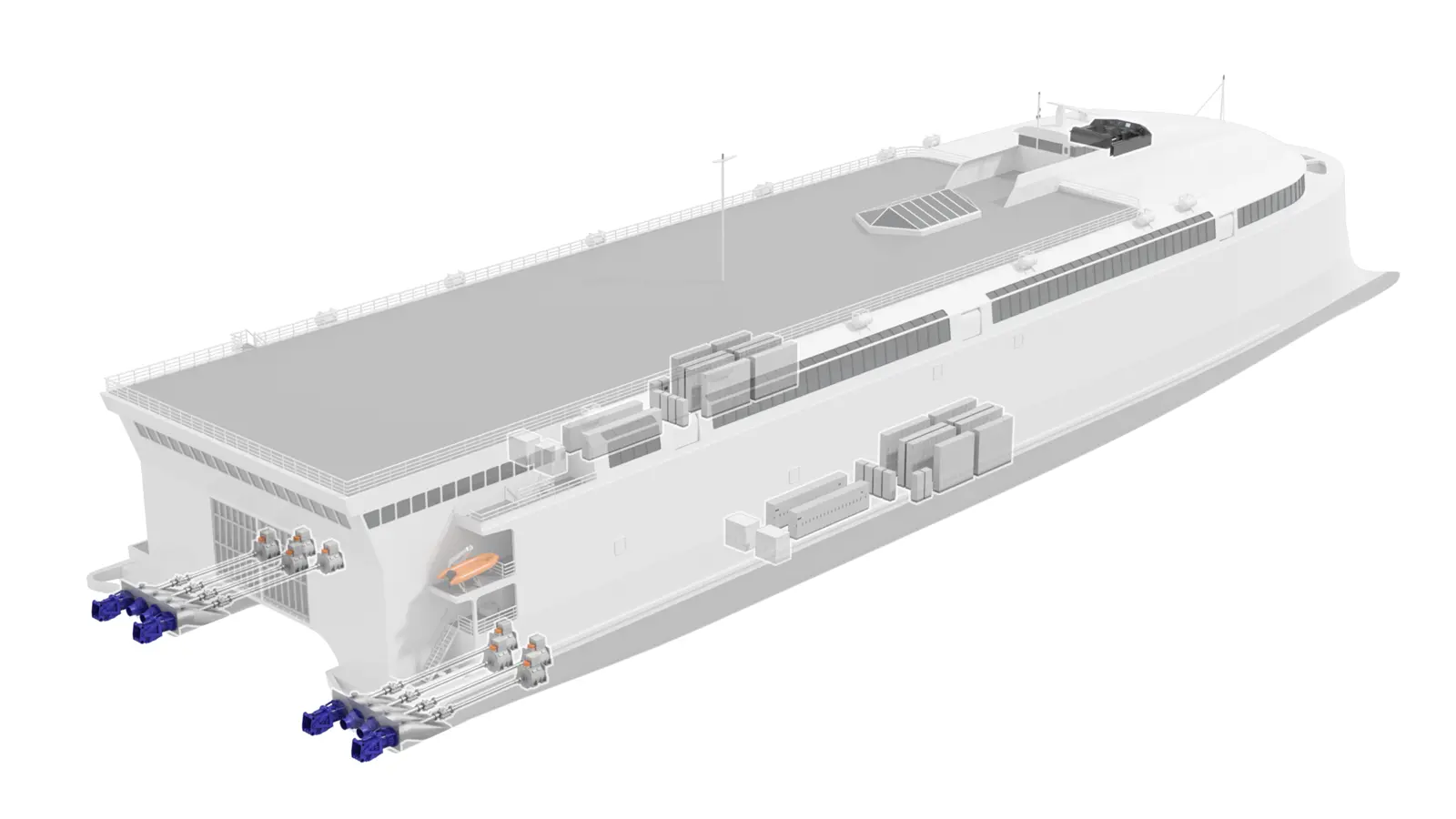
For short-range operations like ferries, the future is already electric.
As Maritime Journal has reported, Wärtsilä is providing the battery electric propulsion system and waterjets for South America’s Buquebus ferry operator in what will be the largest battery installation in marine transport at 40MWh. The batteries are from Corvus Energy and the vessel is being built by Incat. It will have a passenger and crew capacity of 2,100, car capacity of 225 and more than 2,000 square metres on one level.
“Anything below three hours of operation will go battery-electric,” he says. “We’re delivering those vessels today.”
Hybrid propulsion systems are also in high demand, especially in offshore markets, where vessels can save up to 25% in fuel by using batteries during standby or DP modes. “That’s a short payback time,” he says.
On the infrastructure front, change is coming fast. “In the ferry market, charging comes with the terminal – it’s not a chicken-and-egg problem,” says Büssow. For larger commercial ports, EU regulation is driving progress. “Shore power connections are mandatory by 2030 for passenger and container ships. This infrastructure is what batteries will use.”
Some vessels are being built with batteries specifically for zero emissions in port, in cases where shore power is not yet available. “There’s a clear business case there,” he says.
Retrofits and battery engineering
Wärtsilä has completed around 30 battery retrofits, making it the most experienced player in this niche.
“It’s not a big part of what we do, but nobody has done as many as we have,” he says. “Four years ago when we started this decarbonisation I would say every vessel will have a battery. It sounded very funny at that time, but now not so.”
According to Büssow, these retrofits have delivered immediate benefits in efficiency and emissions reduction.
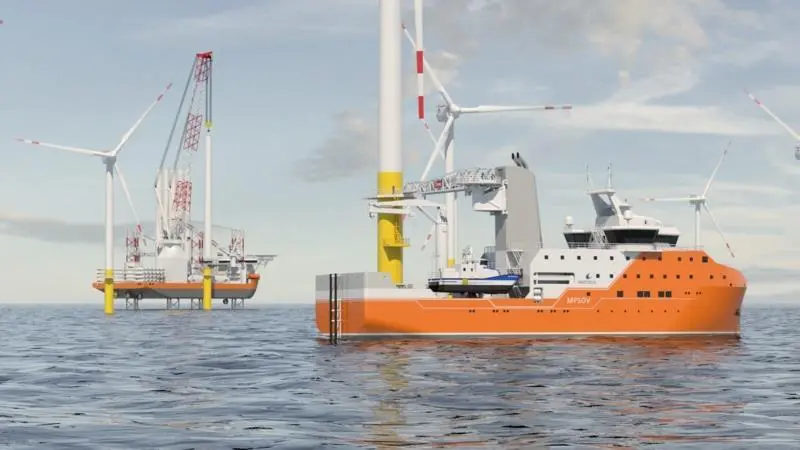
“Offshore vessels, for example, are perfect candidates. They often need two engines running in DP mode, even at low loads. Batteries allow the engines to operate more efficiently, closer to 80% load.”
Battery lifespans are engineered with practicality in mind.
“You don’t engineer batteries for the 25-year vessel life. You engineer for 10 years, because the technology advances so fast,” he says.
To ensure a battery will last the full 10 years, the company oversizes it so that it actually has more capacity than is needed. There is no need to use the full capacity on day one, but it means there will be plenty left by year 10.
“It’s pure engineering criteria – oversize it so it lasts 10 years,” he says.
Safety and supply chain concerns
One of the most talked-about challenges in the battery space is thermal runaway, the catastrophic chain reaction that begins in an over-heated cell and spreads to other cells, risking fire outbreak.
According to Büssow, marine batteries are far better protected than their automotive counterparts.
“Marine batteries are protected either on the cell-to-cell level or the module-to-module level,” he says. “It’s forbidden to use inflammable materials between the cells. There’s a huge difference in safety design.”
Even in the rare case of cell failure, systems are designed to prevent escalation.
“There’s always dual or triple temperature sensing. If two sensors report high temperatures, that cell or module is shut off immediately,” he says. Fire suppression systems, including water or coolant flooding, are also in place. The outcome?
“Globally, there have only been two or three marine battery incidents – and those happened years ago. It shows the safety systems work.”
Despite growing concern about the environmental impact of lithium-ion battery production, Büssow is says it does not affect marine because it will be led by the automotive market and the consumer.
“Marine batteries use the same cells as car batteries. We benefit from that market’s push for cleaner supply chains,” he says. “As regulations like the EU battery passport take hold, the consumer market will solve this for us.”
Chemistry choice also plays a role.
“There are lower-cobalt options like LFP (lithium iron phosphate), which are cheaper and more sustainable. We tailor chemistries to each vessel’s operational profile.”
Battery future
Although battery-only propulsion is not yet viable for transatlantic container ships, it is increasingly the go-to solution for ferries, offshore wind vessels, and port operations, with the Ropax sector Wärtsilä’s biggest so far.

“We’ll see small merchant ships move to full battery-electric. For others, hybrid is a fuel-saving device – and it works today,” he says Büssow.
Indeed, Wärtsilä now holds about 25% of all marine battery capacity installed globally. “We have more than 1GWh of marine battery systems installed. That’s a quarter of the total – and it’s growing,” he says.
But while it’s growing, there will be no short-term end for diesel.
“Deep-sea ships will still use combustion engines – but they’ll consume less and less, fuel,” he says. “Batteries are here to stay, and they’re improving fast. This isn’t future technology – it’s being sold while we speak. Dong, dong, dong.”
Related Articles
 ACCESSORIES & EQUIPMENT
 ACCESSORIES & EQUIPMENT
 OTHER NEWS