



As Britain begins the process of leaving the European Union in the wake of the Brexit vote, stakeholders across the UK marine renewable energy sector are busy coming to terms with the likely long-term implications.
So, what impacts have been felt by the wave, tidal and offshore wind sectors so far? What can we expect over the next few years - particularly as the implications of EU exit become a concrete reality?
'SOVEREIGN RESOURCES'
Although the Brexit decision has certainly ruffled a lot of feathers amongst the political and media classes, early indications suggest that any potentially negative (or indeed positive) business and financial impacts have not yet been felt by the UK marine renewable energy sector. As Neil Kermode, Managing Director at the European Marine Energy Centre (EMEC), explains, this is at least partly because the sector is 'known to be flexible' - meaning that it is prepared to 'work with whatever comes.'
"Being firmly in the innovation space, it is inconceivable that the UK would not want to exploit its sovereign resources and make the most of the opportunities this new technology offers, particularly when it already has a world lead," he says.
Meanwhile, Jennifer Webber, Director of External Affairs at RenewableUK - the country's leading not for profit renewable energy trade association - points out that investment in the British marine renewable energy sector is 'still strong,' with a number of new developments ongoing. That said, she admits that the marine sector continues to study ongoing developments 'closely.'
Despite this largely upbeat assessment, there are some signs that the fall out of the Brexit saga is beginning to dent confidence amongst potential investors. According to Anders Jansson, Commercial Director at the Swedish wave energy company CorPower Ocean, the 'additional uncertainties' relating to future funding and government investments in the marine energy sectors is 'obviously' a negative development - particularly for those investors considering ploughing money into the UK.
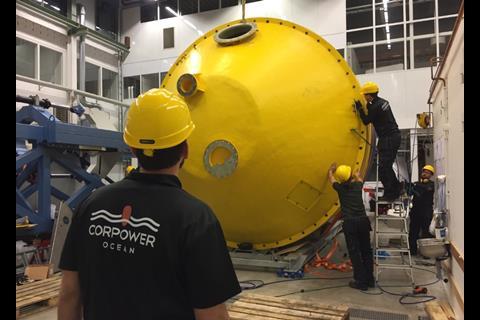
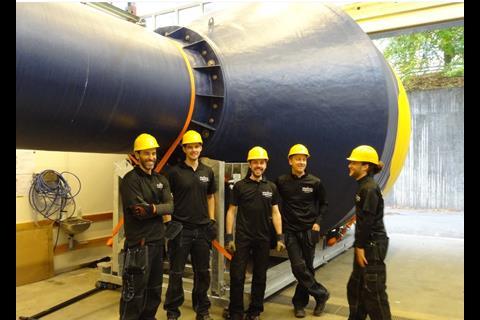
Even so, Jansson stresses that 'no real actions' have yet been taken - and he reveals that the company continues to work according to its 'set plan' as far as the UK is concerned. Such a 'business as usual' attitude is likely to be greeted with relief by many in the UK wave energy sector, particularly those based north of the border. This is particularly true because it means that, following the completion of dry testing of the next generation wave power plant in Stockholm (as well as the award of a contract from Wave Energy Scotland), it now looks as though CorPower Ocean intends to go ahead with the installation of the system at the EMEC facilities in Scotland during the summer as planned.
FOSTERING CERTAINTY
Although the UK marine energy sector seems to be keeping an even keel so far, there are ominous signs of potentially stormy water on the horizon - largely stirred up by uncertainty over long term policy and funding implications. Jansson believes it is 'too early to say' what the ultimate implications of the Brexit decision will be - particularly since the industry is still in the dark 'about what the UK government plans to do in order to compensate for the loss of EU funding and how trade deals will look' - meaning that most actors continue to work 'according to set targets and business as usual.'
Such concerns over funding uncertainty are especially salient for CorPower, given the fact that the company was awarded a €4m grant by the European Commission (EC) for its WaveBoost project in November last year. Even so, he argues that continuing 'unknowns and uncertainties' make marine energy developers hesitate to move business or invest in projects in the UK - and warns that the country's lead 'is likely to be lost to France, Portugal, Ireland and other coastal countries in the EU.'
"However, the UK is in desperate need to increase the amount of energy production - and with such a vast potential in wave and tidal, we believe that the UK will be a large market in the future," he says.
In helping to avoid the prospect of the UK marine renewable energy sector slipping down the international league tables, Webber agrees that the UK government now has a crucial role to play in fostering an ongoing sense of certainty - and believes that stability in UK policy is the 'most important thing for investment in UK renewables.'
"The climate change act commits us to binding carbon targets, and renewable energy has a key role to play in these," she says.
"The marine sector has benefitted from innovation funding from Europe, and it's important that as part of the upcoming industrial strategy the Government explains how it will encourage this innovative sector," she adds.
Looking ahead, Webber says it is important that organisations across the UK marine renewables sector continue to work on effective Brexit strategies - and she confirms that RenewableUK is currently working with offshore wind, wave and tidal companies to 'understand the impact on them, and to coordinate views into Government.'
"Government has been clear that it is open to representation and keen to work with industry to maximise future trading opportunities. Offshore technologies are global markets and the new Department for International Trade is well organised to help British firms access these global markets," she adds.
Kermode agrees that the future success of the sector will depend on the UK's access to innovation funding - and is confident that government assurances that innovation is to be encouraged 'should mean that the work done will be safeguarded.' Given the ongoing change, as well as the uncertainty on the horizon - Kermode also urges organisations operating in the sector to adopt a flexible approach and to 'keep focused on what it does best - safely doing clever, complicated innovations in the ocean.'
By Andrew Williams