





Maritime Law Focus: Get your terms right!
Using clearly defined and properly incorporated terms and conditions in contracts is not just good practice: it can be the difference between insurers paying out or denying a claim, writes Jennie Harris, at Ocean Legal.

A recent Court of Appeal decision has highlighted a risk that marine businesses might overlook: that insurance policies may not be enforceable if the correct terms have not been used in the contract.
In the case of Lonham v Scotbeef, D&S Storage stored goods for Scotbeef under what it believed were standard industry terms.
When a large quantity of stored meat was found unfit for use, Scotbeef sued. D&S argued that their liability was limited under Food Storage and Distribution Federation terms but the court disagreed because D&S had not successfully used those terms in its contract with Scotbeef – so liability caps and exclusions didn’t apply.
D&S’s insurer, Lonham Group, then refused to pay out, relying on a breach of a key clause in the insurance policy that required D&S to trade on its approved trading terms and make sure the terms were used in its contracts. Because D&S had failed to use them effectively in practice, D&S’ insurer was within its rights to refuse cover.
What this means for commercial marine
Standard-form contracts are very common in the commercial marine industry, such as BIMCO contracts for charter parties, ship management and general agency agreements, contracts of affreightment and towage.
Many commercial combined marine policies will include similar provisions to those in the Lonham v Scotbeef case. Whether you’re a naval architect, ship manager, sale or charter broker, vessel operator or boatyard owner your insurance policy is likely to state explicitly that you must contract with clients on industry-standard or insurer-approved terms. These approved terms will contain clauses such as exclusions and limitations of liability and risk which are acceptable to insurers.
Failure to use these terms, or failure to properly incorporate them, can put you in breach of your insurance contract.
Why “proper incorporation” matters
Simply referencing terms is not enough. You must actively ensure that your clients are bound by them. In practice, that means:
• Obtaining written acceptance (or proof of acceptance) where possible
• Consistently using the same terms across your business
• Clearly referring to your terms in all quotations, order confirmations, contracts and invoices
• Providing a copy of those terms with your proposals.
However robust your standard terms are, they may be unenforceable if not properly incorporated, leaving you without key defences and potentially voiding insurance cover in a claim.
Lessons from the court of appeal
In Lonham, the court interpreted the “Duty of Assured” clause strictly. D&S was required to take all reasonable and practical steps to ensure their approved terms were incorporated. Their failure was not just a contract management oversight: it was a breach of a warranty under the Insurance Act 2015 (the “2015 Act”).
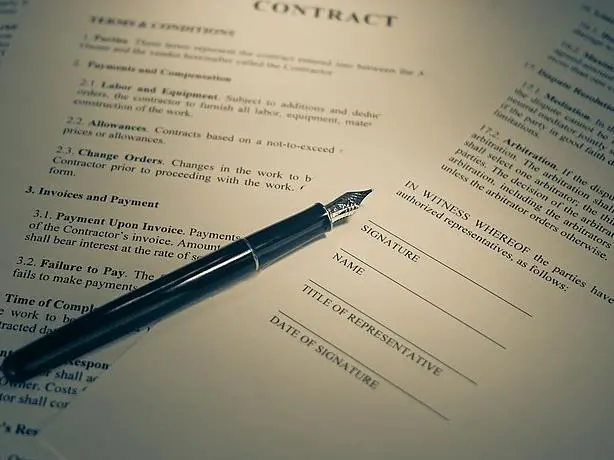
Under section 10 of the 2015 Act, any breach of warranty can suspend the insurer’s liability until the breach is remedied. Here, since the FSDF Terms weren’t used at all, the breach was ongoing, and the insurer had no liability for the resulting loss.
1. Review your insurance policy: Identify whether your cover is conditional on using specific terms
2. Where appropriate, use industry standard terms and read them carefully to ensure they are suitable
3. If necessary, work with your insurer/broker to get sign-off on your own terms
4. Ensure proper incorporation: Build procedures into your client onboarding to guarantee your terms are properly included and accepted
5. Train staff and review regularly: Make sure your team understands the importance of contract terms and carry out periodic reviews with your insurer/ legal advisor.
The message from Lonham v Scotbeef is loud and clear: failure to use, and properly incorporate, industry-standard or approved terms may not only expose your business to legal risk, it can void your insurance protection entirely. In a sector where claims can be high value and complex, this is a risk no commercial marine business can afford to take.
Protect your business: use the right terms and make sure they’re properly incorporated into your contracts.
Ocean Legal is a specialist law firm which provides tailored legal solutions to the commercial marine sector for a price agreed upfront. | www.ocean-legal.com | contact@ocean-legal.com
This article does not constitute legal or other professional advice. Readers should seek appropriate legal guidance before coming to any decision or either taking or refraining from taking any legal action.

Related Articles
 INDUSTRY NEWS
 ENVIRONMENT
 INSURANCE, LEGAL & FINANCE