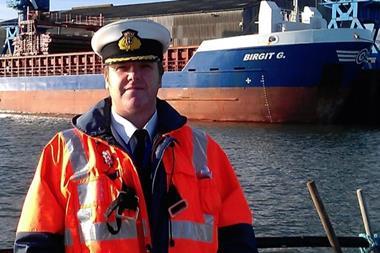


It took a chance meeting in a barber’s shop before it occurred to George Kinnaird, from the landlocked north English town of Huddersfield, that he could have a career at sea.
He’d been chatting to the barber about leaving college with no idea what to do with his life, when a chief vessel engineer overheard the conversation and told him about the cadet route.
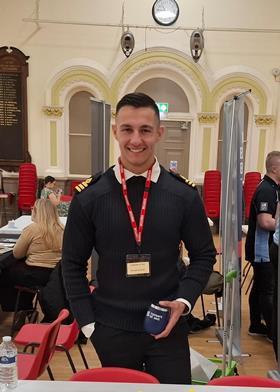
“The engineer told me he’d been in the same position as me, and had stumbled across the training pathway that gives you money to live on while you’re training, career prospects and a great future – and before I knew it I was on the right track,” says George, 27.
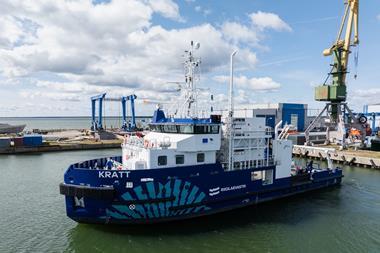
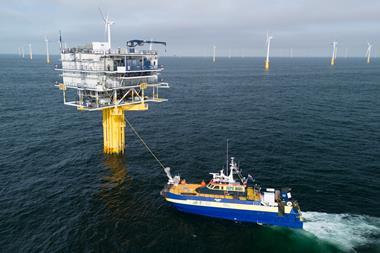
Seven years later, George is chief mate on the Putford Jaguar, a 67.8 x 15m standby vessel with PR30/33 Daughter Craft that operates at RWE’s Sofia offshore wind farm almost 200km off the northeast coast of England. With installed capacity of 1.4GW across 100 wind turbines, Sofia is set to be one of the biggest offshore wind farms and also one of the furthest from shore.
Life on the bridge
The five-phase route to becoming an officer starts at college, covering the fundamentals: maritime law, navigation, collision regulations, stability and the laws of the sea. Theory is then put into practice at sea, building the layered competency that shapes a professional mariner.
“When I first started I didn’t have a love for the sea because I didn’t know anything about it,” says George. “But I love technology and seeing all that combined on the bridge of a ship, and being in a leadership role, I suddenly realised people’s lives were in my hands.”
George now takes his turn at the helm of the Putford Jaguar as she sails up and down outside the wind farm waiting for any call to action – if a fire should break out on the substation where technicians are housed, for example.
Putford Jaguar is one of North Star’s fleet of offshore support vessels.
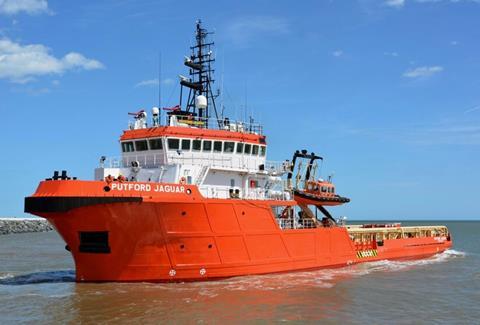
The crew will spend 28 days on board then return to shore for 28 days, unlike the technicians on the substation within the wind farm, who do the usual two week-on, two week-off rota.
Day-to-day work is often about monitoring: the wind, the weather, whether the rescue craft are in working order, and general maintenance across the whole vessel. George will take over the bridge for four hours, during which time he commands the manoeuvring of the vessel, makes sure operations are running smoothly, and responds if there’s a green light to enter the wind farm. Then there is a careful hand-over to the next in charge.
“We are constantly in communication with the other vessels working in the wind farm – that’s vital,” says George. “There may be three other vessels, some with technicians, and we need to coordinate which vessels are coming and going from the wind farm.
“The turbines are a mile apart, but that’s not a large distance in shipping terms,” he says. “Ships can’t stop quickly or manoeuvre very tightly, so if you get a green light to go into the wind farm you have to check everything – power, regulation distance, everything. That’s why all vessels have to leave the wind farm at night, for that extra level of safety because it’s such a confined space.”
He talks about it casually now but it was a different story when George first ventured out to sea.
“When you first go out there and see only sea around you, you feel very vulnerable,” he says. “Once you go in the rescue craft, on a drill, for example, and there’s no shoreline or solid ground to put your foot on anywhere in sight, it’s a very, very vulnerable place to be.
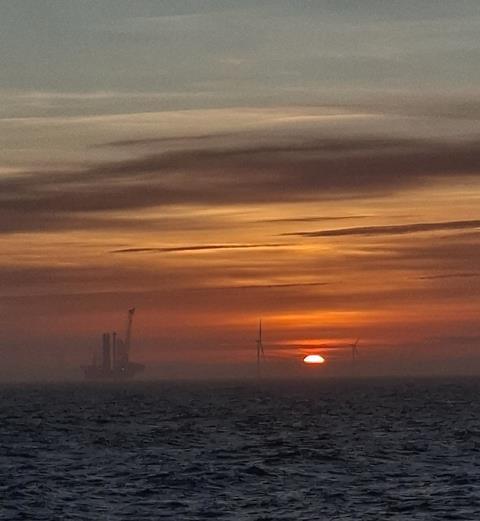
“But it’s such a beautiful place to work in. I will never get over the sunrises and sunsets.
“We see everything from dolphins to jellyfish rising up to the sea surface in the summer like a field of flowers.
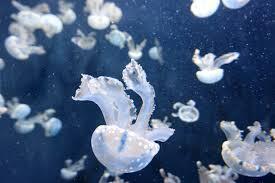
“We see baby seals on the legs of a rig, whales, crimson skies. I’d never seen anything like the stars – although I’d been told about them, with no light pollution they are amazing.
“You can imagine how the Greeks came up with the constellations.”
Life off the bridge
As a rugby player hoping to make the Scotland team in June, George spends a lot of his free time on Putford Jaguar in the gym.
Each person has their own en suite cabin, and everyone gets together at least once a day for a meal – with lookouts swapping in and out.
“We do have a laugh together, we do quizzes and things,” says George.
Homesickness can be a challenge, and part of the job is to look after those who suffer from it, while photos, familiar objects and even teddy bears can make their way on board to help.
“Starlink has been a game changer,” says George. “Being able to talk to your loved ones face to face has made a massive, massive difference.”
It’s not all sweetness and light – spending 28 days with the same people will lead to arguments, “but you learn about each other’s habits,” he says. “You’re usually with the same crews, and you reach an equilibrium, you get to a stage of understanding, and to know what topics to avoid.
“You have to give understanding to get it back.”
In George’s crew of 14, there is one female – a medic, who George says is just treated as one of the crew.
“Women should be on board ships – it’s a very male-dominated situation but there is loads of promotion trying to get women into maritime. North Star are very keen to educate and provide facilities for them – there are plenty of opportunities, and that’s important, even if they’re not taken up.”
Future on the bridge
George is enthusiastic about the energy transition when it comes to the new fuels on ships, as long as it’s done at a sensible pace.
“With the future fuels coming in I think it’s amazing but I do hope they will be implemented slowly because is has to be safe,” he says. “There are power sources there and available. I’m passionate about the renewable sector and I want to get into the dedicated SOV’s, but if it’s getting implemented you need it to be triple safe.”
George’s passion is something he’s keen to share, and regularly visits colleges and training centres to talk about his voyage from a land-locked town to the beauty of the open seas.
“I want to tell people who are in the position I was in – I was going in a downward spiral,” he says. “Now I’m hoping to become a captain as soon as I can.
“I’d love it to happen tomorrow.”