![MaritimeJournal[Seawork]](https://www.maritimejournal.com/wp-content/uploads/2026/09/MaritimeJournalSeawork.svg)


The Power of Plenty – Interview with Volvo Penta CEO Anna Müller
Commercial marine is in a state of flux when it comes to the future: there is a lot of uncertainty around with the environment agenda and the changes having to be made.
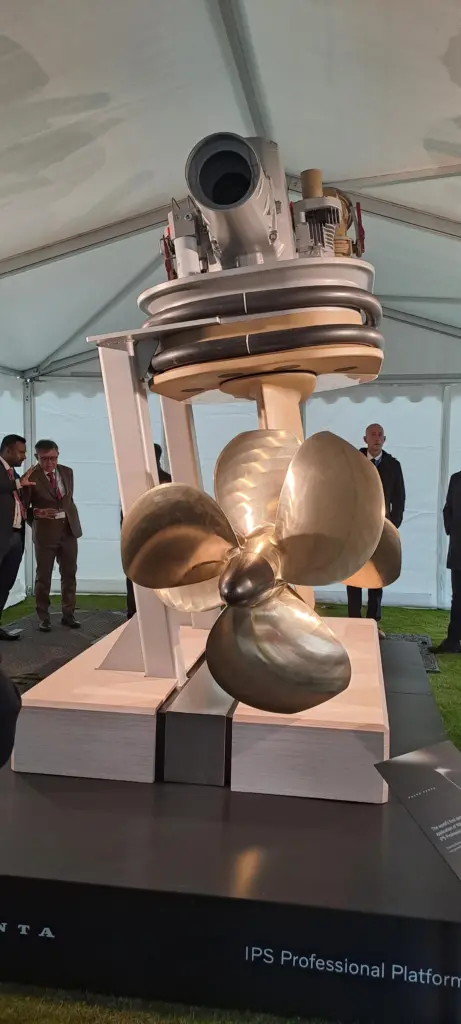
It’s prompting new designs and propulsion systems, and Volvo Penta is at the heart of this trend. Its most recent innovation is an upgraded IPS Professional Platform – ‘IPS’ standing for Inboard Performance System – which is an integrated helm-to-propulsion scalable system that we have explored here.
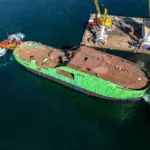
The company launched the upgraded platform in a crew transfer vessel that was officially christened before heading off to work in an offshore wind farm in Scotland.
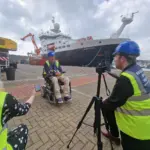
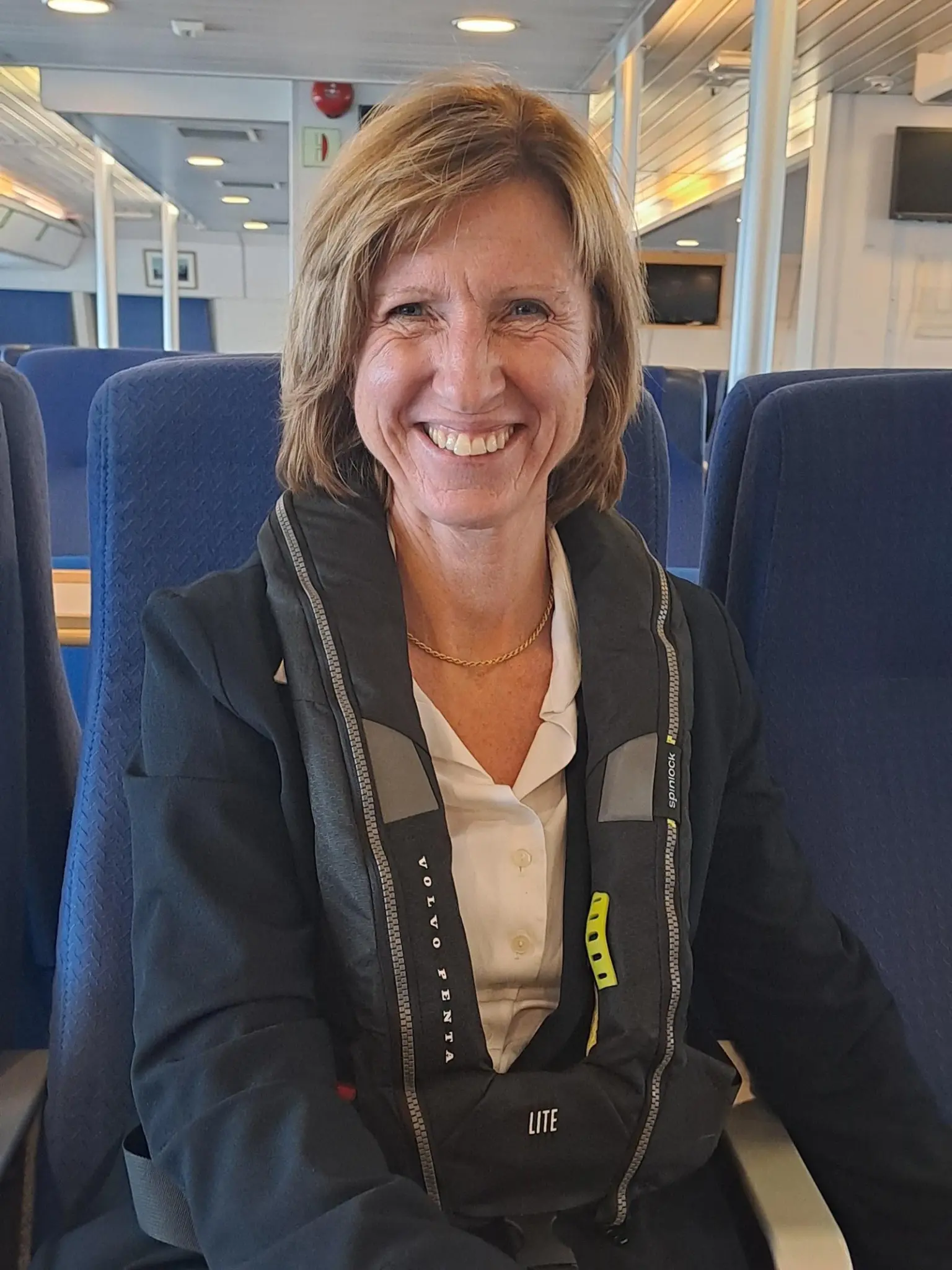
We spoke to CEO Anna Müller on the Volvo Penta 40 test ferry, which demonstrated its advanced Assisted Docking function to journalists and guests during a two-day launch event in Gothenburg.
“My background is automotive,” says Müller. “Though I actually went over to Volvo Penta in 2014 for two and a half years before going back to Volvo trucks for almost seven years. I didn’t start out in the engineering area – it was completely different, and I’ve been mainly on the commercial side and service market.
“But I came back to Volvo Penta in September last year, and took the helm on the 1st of December. It’s a fantastic business.”
Müller says Volvo Penta’s ethos is delivery to customers and working with partners – like Northern Offshore Shipping (N-O-S), whose CTV was the first commercial vessel in which the new IPS platform was installed.
“Our cooperation goes way back,” she says. “Back to 2007, when they were one of the first companies to install an IPS system in one of the first crew transfer vessels.
“They are like us – very progressive, innovative and pioneering, with an emphasis now on Volvo Penta’s strategy to pioneer sustainable power solutions. So we are very close in pushing development together.”
Müller knows the company has to be wise to the challenges of the market, especially now, and to approach them it almost has to lead with innovation.
“Not only innovation – also being fast and nimble, looking and working closely with your customers, understand the market and where development is heading. Of course we have strength as Volvo Penta, being part of the Volvo Group, where we have access to a lot of technical development on top of the base technology that we can apply in the marine area.”
Automation, sustainability and fuels
Müller believes automation is important, and the company is working a lot with the rest of the group.
During the trials at Volvo Penta’s Krossholmen test centre in Gothenburg, journalists were invited to try out a couple of boats with Assisted Docking functions and other smart features. Volvo Penta is testing around 30 vessels at a time at the centre.
The Assisted Docking function is a semi-automatic system, and simple touches to the joystick hold the vessel in position, move it sideways or front and back, rotate it on its own axis and is just one piece of equipment that underlines the importance of automation and sustainability as far as Volvo Penta is concerned.
“We are always looking forward and the sustainability journey that we are on is of course continuously on our agenda,” Müller says. “We are continuously reviewing our product plans and engineering planning to see how we prioritise going forward, in certain segments.
“On the industrial side, we clearly see a case for full fully electric. So we are pursuing that absolutely. We are also working on moving forward with hybrids with alternative fuels and also with this system that’s actually in the vessel we’re on – right now, with the IPS Professional Platform we have a lot of flexibility and we are ready for the future with the possibility of going fully electric or in hybrid form, or with alternative fuels.”
Müller believes different segments of the industry will have different kinds of propulsion systems or fuels – though she acknowledges it can all change. Diesel, she believes, will play a part for a while to come – as will the internal combustion engine.
“From the Volvo perspective we say that the internal combustion engine definitely has a role to play, but it should be fuelled with green fuels,” she says.
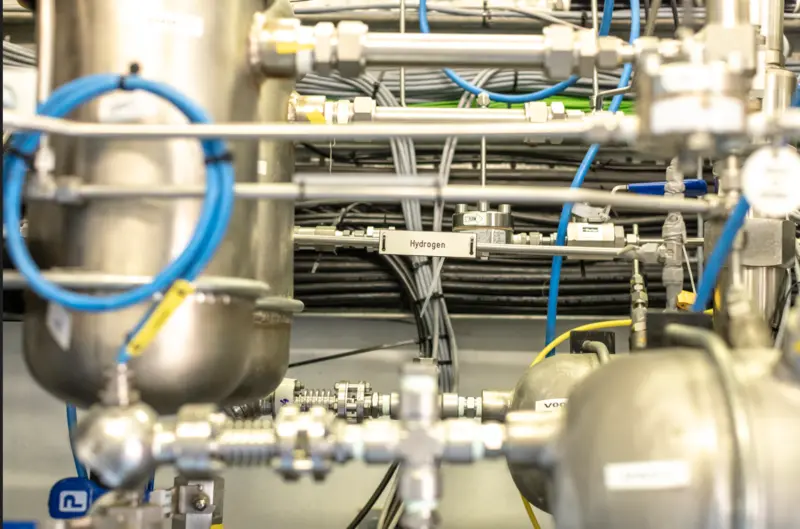
“Then what we use as a fuel I think is going to develop: for instance, all our diesel engines are prepared and certified for HVO (hydro-treated vegetable oil) use. We see methanol discussions ongoing, and we are looking at hydrogen going directly into the internal combustion engine as a fuel.”
She accepts that industry may need to come together with the complex infrastructure changes that will be needed to keep ships moving.
“To be true to our brand we will continue to be pioneering, offering sustainable power solutions, productivity and experience,” she says. “That is what we are all about – the company is working on this 365 days a year, and that’s us.
“It’s the power of plenty.”