![MaritimeJournal[Seawork]](https://www.maritimejournal.com/wp-content/uploads/2026/09/MaritimeJournalSeawork.svg)






Training programme launched for saturation divers
A training programme for saturation divers has been launched by subsea technology company DEEP, with courses set to begin in the UK from autumn 2026.
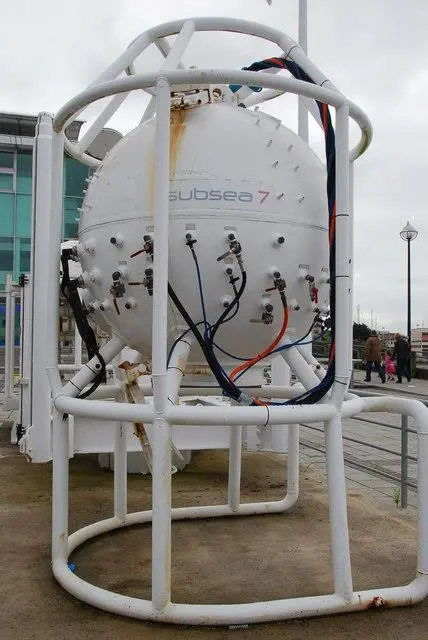
Applications are now open for the company’s UK Health and Safety Executive (HSE) Closed Bell Diver training, which will be delivered from a new facility in southwest England. The site, at DEEP’s purpose-built campus, is described as the most advanced closed bell diver training system in the world and the only one of its kind in the Northern Hemisphere.
The training complex has been built on a bespoke barge system within a protected freshwater quarry, offering depths of up to 80 metres. It features a six-person living chamber and a three-person diving bell, allowing trainees to simulate real offshore saturation diving conditions in a controlled, year-round environment.
Saturation divers are among the most specialised professionals in the offshore industry. They live for days or weeks at a time inside pressurised chambers, allowing their bodies to become “saturated” with breathing gases.
This enables them to work at extreme depths without the need for repeated decompression. Transported to the seabed in a closed diving bell, they carry out critical subsea tasks such as inspecting and repairing pipelines, installing offshore infrastructure, and supporting oil, gas and renewable energy operations.
At an IMCA conference in January 2025, delegates heard the harrowing tale of Chris Lemons, who survived despite an accident in which he was starved of oxygen for 41 minutes.
The story was made into a Netflix documentary.
Dennis Nelson, CEO of Deep Institute, said the facility represents a significant step forward in diver training.
“The course is ideal for divers who have completed surface-supplied training and gained industry experience, and who are now looking to take the next step in their career development. It provides a pathway into saturation diving and access to opportunities in the North Sea and around the world,” he said.
Nelson said the system could have wider applications in future, including training for habitat divers and professionals from scientific, research and military backgrounds who need to work underwater for extended periods.
On successful completion, candidates will receive the UK HSE Closed Bell Diver certification, a prerequisite for working as a saturation diver in offshore oil, gas and renewable energy sectors, both in the North Sea and globally.