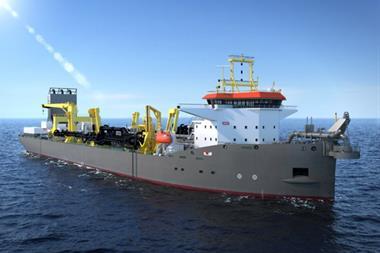


Boskalis has financed its mega-cutter suction dredger ''Krios'' through an innovative Export Credit Agency (ECA) covered loan.
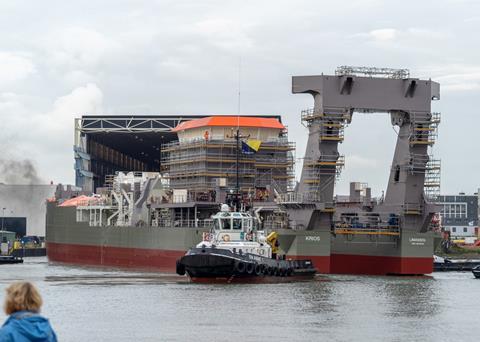
With this €121 million facility, Boskalis has refinanced a substantial part of the ship's construction costs. The ECA covered loan under the domestic cover arrangement was introduced by the Dutch Ministry of Finance in 2019. The arrangement targets indirect export, which in Boskalis' case is the newbuild Krios which will be deployed in projects outside of the Netherlands. The 152m LOA Krios features a total installed power of 23,886kW and was built by Royal IHC in the Netherlands.
Meanwhile, Boskalis has secured three contracts for coastal protection and port maintenance activities in Germany which carry a combined value of €45 million.
The first contract was awarded by the German Waterways and Shipping Office WSA Weser-Jade-Nordsee to upgrade the existing coastal defence on the island of Wangerooge to provide flood protection for the island's residents.
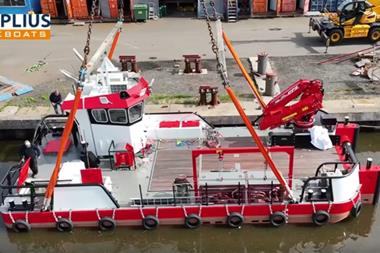
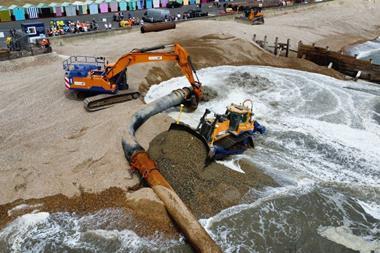
This project will be executed with a local German partner and involves the reinforcenment of groynes and revetments for which 200,000 tonnes or rock will be used. A backhoe dredger and a number of split barges will be deployed for works which commenced last autumn and are expected to be completed late this year.
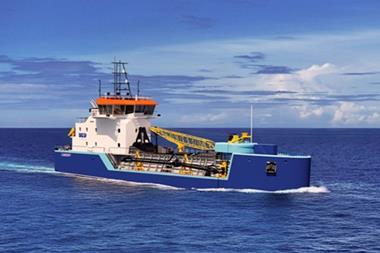
Boskalis also received a contract from WSA Weser-Jade-Nordsee for maintaining a 90km long section of the shipping fairway of the river Weser between Nordenham and Bremerhaven. under a two year maintenance contract Boskalis will dredge a total of some 14 million m3 of sand and silt, which will be deposited at designated locations along the river. Boskalis will deploy a medium sized trailing suction hopper dredger to carry out works which will start early this year and last until the end of 2022.
The third contract that Boskalis secured was awarded by Niedersachsen Ports for the maintenance of the port of Emden, one of the largest German North Sea ports. In works which commenced last November, Boskalis will maintain the port at the required depth by dredging an annual volume of some 2.7 million m3 of sand and silt. A trailing suction hopper dredger has been deployed for two consecutive years.
By larz Bourne