



Taller turbines will mitigate against bird collisions for two Vattenfall offshore wind farms.
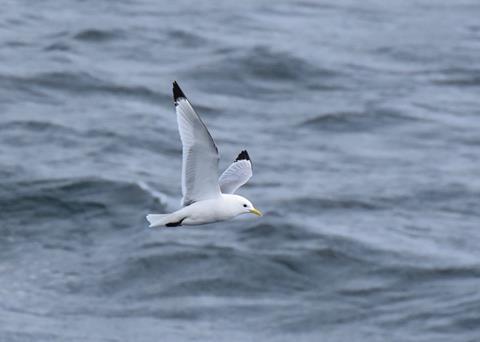
Vattenfall sensitively sited individual turbines for its Norfolk Vanguard and Norfolk Boreas wind farms 45km off the coast of Norfolk, UK, and made them taller. This has enabled the company to maximise the wind energy that could be generated off the Norfolk coast, whilst minimising the impact on biodiversity.
Kathy Wood, head of consenting at Vattenfall, said: ““Delivering fossil fuel-free energy must be done in a way that protects biodiversity and Vattenfall is continually working to minimise negative impacts.”
Extensive mitigation research
So far, Vattenfall has engaged with more than 100 specialists on its Norfolk Vanguard and Norfolk Boreas wind farms, which will see up to 360 turbines providing clean energy to 3.9m homes.
Protecting flight paths, breeding habitats, food chains and foraging areas of seabirds, led the company to consult ornithologists during the five-year planning process for the wind farms.
Data from seabird studies revealed that most birds fly close to the sea surface. Higher up, the number of birds decreases. So, if developers put turbines on higher towers and moved rotors away from the sea surface, collisions would decrease.
Vattenfall chose to increase the minimum blade tip clearance from 22m to 30m from sea level on each of the 360 turbines. The density of the turbines was reduced and the team had to investigate if turbine installation vessels existed large enough to install the taller turbines.
By Rebecca Jeffrey